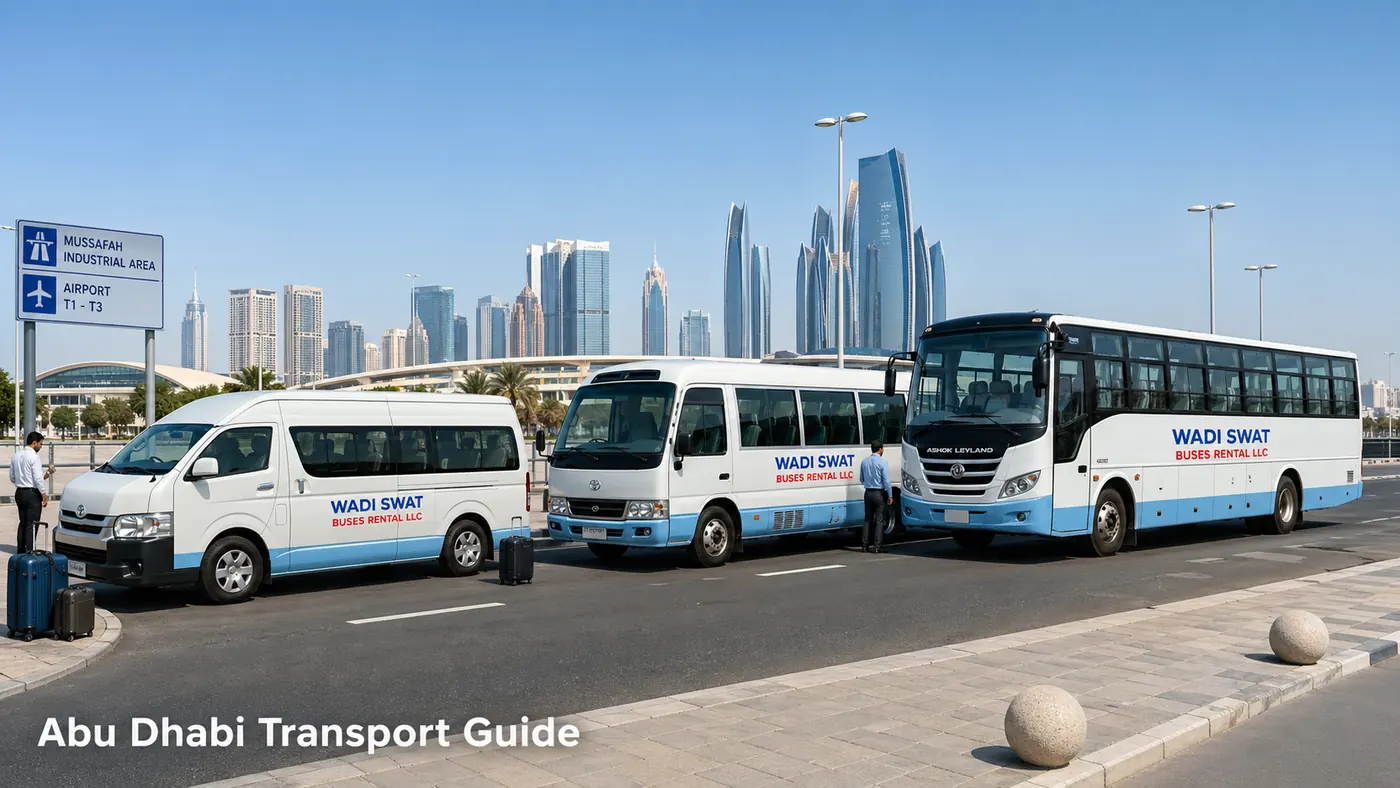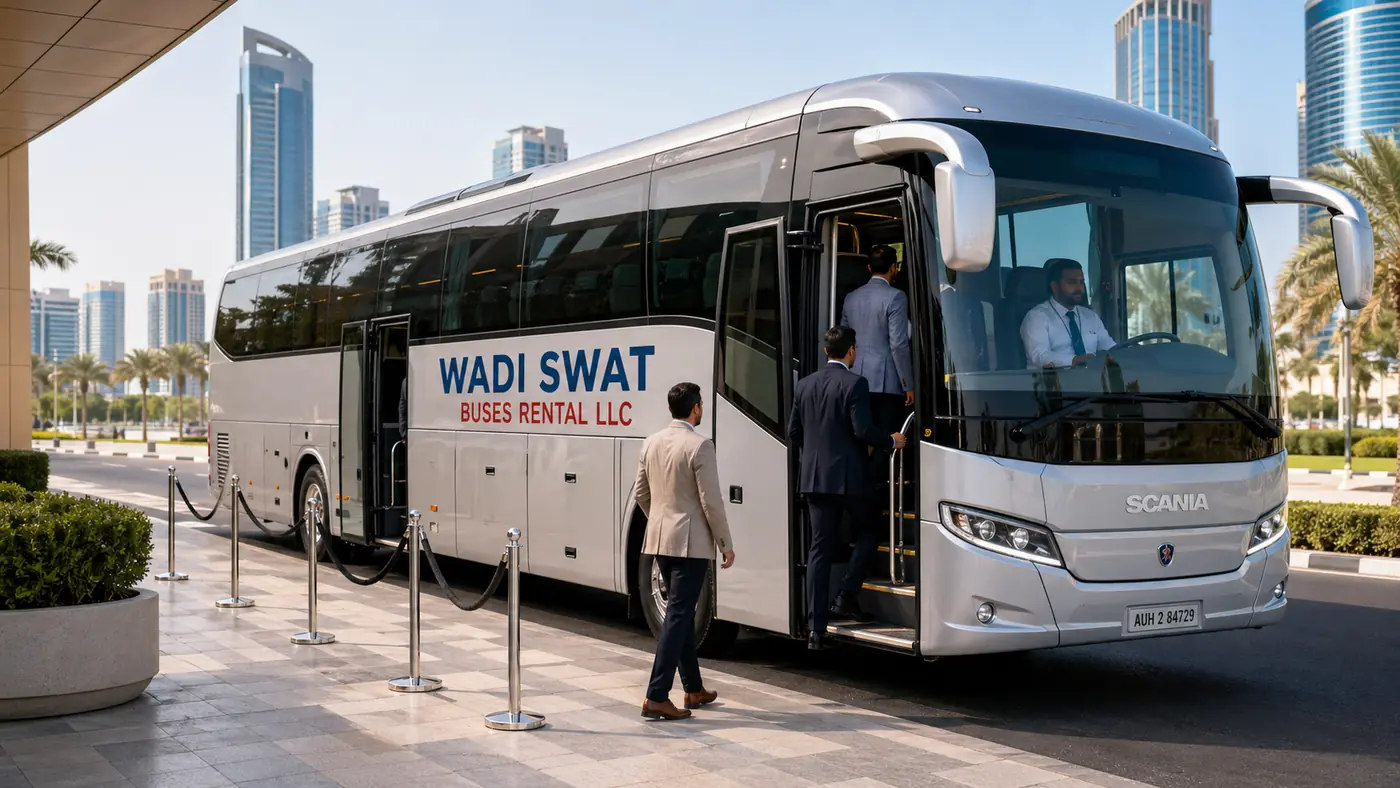
Longer Abu Dhabi commute corridors mapped properly
Focus on long-distance routes, shift timing and city-to-site staff transport.
Staff transport Abu Dhabi is built for employers who need dependable daily movement across offices, mixed-use districts and longer commuter corridors without leaving timing, routing or fleet fit to chance.

Focus on long-distance routes, shift timing and city-to-site staff transport.
HR teams, administration teams, office managers, facilities teams, operations managers, procurement teams and employers running repeat commuter routes
The Abu Dhabi market rewards route clustering, stronger timetable control and vehicle matching that suits both access conditions and employee comfort.
Recurring transport fit based on real seat planning and daily route structure.
Abu Dhabi staff transport usually involves longer travel distances, wider destination spread and a mix of office, mixed-use and site-linked movement. A strong page here should help buyers understand how route structure, timing control and vehicle fit come together before they focus only on seat count.

The route, passenger profile and service format determine whether this page is the right match.
Abu Dhabi generates recurring commuter demand from offices, business parks, mixed-use districts and employers moving teams on repeat schedules.
Route planning in Abu Dhabi has to account for peak windows, access controls, curb limitations, parking rules and realistic arrival buffers.
Pickup design usually works best through grouped stops, practical assembly points and timed drops that reduce delay at busy work locations.
Corporate Shuttle Abu Dhabi, Executive Transport Abu Dhabi or Airport Transfer Abu Dhabi may be more suitable for smaller premium groups, guest-facing transport or non-recurring movement.

This service adds the most value where the company needs daily staff pickup and drop, fixed reporting windows, feeder routes, longer commuter runs and repeated office or site movement that must remain stable across the week.
If the requirement is mostly a premium one-off ride, airport-only movement or a small occasional transfer, a more specific service page will usually suit the buyer better than a recurring staff route model.
Confirm parking, gates, permits, loading areas, waiting limits and any site-specific procedure before the vehicle is allocated.
Most routes are built by first mapping employee origins, destination spread, access conditions, traffic windows and stop practicality. In Abu Dhabi, the right design often matters more than the bus itself because distance and route discipline shape the daily result.

Small teams, airport groups and access-sensitive routes.

Medium groups, repeated shuttles and practical local movement.

Daily employee and workforce routes with higher passenger volume.

Longer journeys, events and groups requiring added comfort.
Some employers need simple morning and evening routes, while others need split schedules, delayed returns, shift overlap coverage or regular service across different duty patterns. The schedule has to be built around those operating realities rather than copied from a standard template.

Clear standards help buyers compare providers on more than price alone.
Commercially aware route planning with access realities, load suitability and practical operating discipline
Professional driver allocation, punctual reporting, route familiarity and service discipline suited to recurring transport
Safe boarding, disciplined routing, sensible stop design and practical loading-point control throughout the daily operation
Consistent scheduling, route stability, responsive coordination and continuity planning for repeated transport demand
Flexible recurring booking structure with room for route review, capacity changes and timetable adjustment as demand evolves
In Abu Dhabi, buyers usually need a clearer view of longer commuter distances, mixed office-and-site movement, spread-out destinations and the effect of wider road corridors on daily timing. A useful local section should explain how route structure, comfort, access and operating discipline combine to support repeated employee movement across the capital.
Abu Dhabi generates recurring commuter demand from offices, business parks, mixed-use districts and employers moving teams on repeat schedules.
Route planning in Abu Dhabi has to account for peak windows, access controls, curb limitations, parking rules and realistic arrival buffers.
Pickup design usually works best through grouped stops, practical assembly points and timed drops that reduce delay at busy work locations.
The Abu Dhabi market rewards route clustering, stronger timetable control and vehicle matching that suits both access conditions and employee comfort.

Share route, date, timing, passenger count, luggage and access notes.
The team checks feasibility, duty structure and suitable vehicle categories.
Review the included items, exclusions, payment terms and change conditions.
Approve the scope, keep one named coordinator and confirm final trip details.
These answers cover the route, vehicle and commercial points buyers usually review before confirmation.
Route design usually starts with where people live, when they need to report and whether the movement is city-based, site-linked or spread across wider Abu Dhabi travel distances.
Minibuses are often more practical when the team is mid-sized, the stops are fewer and access points do not justify a higher-capacity bus.
Yes. A single plan can support office destinations, outer business areas and longer-distance links as long as timing and stop logic are mapped properly.
Key inputs include headcount, route length, pickup concentration, service frequency, work hours and any access restrictions at the destination.
Yes. The service is mainly intended for ongoing staff mobility rather than one-time executive or guest transport.
It is usually more route-driven, more timing-sensitive and more dependent on long-corridor planning than a casual shuttle arrangement.
Share the exact pickup and destination, service date, reporting and return times, passenger count, luggage, stops, waiting, access conditions and whether the service is one-time or recurring.
The vehicle is matched to the registered passenger load, usable luggage space, route length, access restrictions, comfort expectation and operating format. Seat count alone is not enough.
Changes can be reviewed, but a new stop, different time, longer waiting or new destination may affect feasibility, driver duty, parking and price. Written approval is required.
Review the vehicle category, route, duty hours, waiting, tolls, parking, permits, overtime, payment terms, cancellation conditions and the method for approving later changes.
For Abu Dhabi staff transport, the best starting point is the route itself. Once the stops, reporting times and passenger volume are clear, it becomes much easier to shape a practical quote and the right vehicle mix.

Accurate journey information helps us review the route, match the correct vehicle and calculate the operating scope properly. Send the essentials below and our team will shape the recommendation around your actual requirement.
Pickup, destination, boarding points, drop-off points and any preferred route.
Service date, departure and return times, duty hours and expected waiting.
Confirmed passenger numbers and any expected variation between trips or shifts.
Luggage volume, parking, security gates, permits and site or coach restrictions.
Van, minibus, staff bus or luxury coach—or allow our team to recommend the best fit.
One-time journey, weekly service, monthly contract or long-term recurring transport.