Route and Stop Details
Share the exact pickup, destination, planned stops and entrance or gate instructions.
Wadi Swat provides chauffeur-driven bus rental in Dubai with licensed, RTA-permitted drivers for airport transfers, hotel guest movement, staff transport, corporate travel, conferences, weddings and private events, school or institutional trips, Dubai tours and inter-emirate journeys. Choose from 7–10 seater minivans, 12–15 seater passenger vans, 23–30 seater Toyota Coasters and minibuses, 35-seater buses, 50–53 seater luxury coaches and high-capacity staff buses. One-way, hourly, half-day, full-day, weekly and monthly duties are available, and selected Dubai transfers start from AED 300. Your final quotation depends on the route, vehicle, operating hours, waiting, luggage, fuel treatment, Salik, parking, permits and availability. Send the pickup, destination, date, timings, passenger count and luggage for a written quotation.
Main vehicle sizes: 12–15, 23–30, 35, 50–53 and 67+ seater options.
Route and Stop Details
Share the exact pickup, destination, planned stops and entrance or gate instructions.
Passenger and Luggage Fit
State the passenger count, luggage and any boarding or mobility requirement.
Timing and Duty Window
Confirm the reporting time, required arrival, waiting, return and operating days.
Service Format
Tell us whether the requirement is a transfer, retained duty, daily route or contract.
Access and Operating Conditions
Mention parking, permits, security gates, coach restrictions or site procedures.
Written Commercial Scope
Check the vehicle, included items, exclusions and rules for later changes before approval.
Request a Route-Based Quote
Send one complete journey brief so the team can check feasibility, vehicle suitability and the correct commercial scope.
Speak With the Booking Team
Discuss a one-time journey, recurring route or contract with a booking representative who can review the actual operating requirement.
When you send us a Dubai bus rental requirement, we check more than the seat count. Your route is matched to a licensed passenger transport operation, an insured vehicle category, the required passenger capacity, a maintenance-ready fleet and an agreed backup and operations process before confirmation.
Your service is arranged through our UAE passenger transport business, with Dubai and Sharjah operational licensing. For vendor onboarding, we can provide the applicable trade licence and Dubai RTA Establishment Card through the agreed channel.
Tell us your passengers, luggage, pickup point and duty. We allocate from 12–15 seater vans, 23–30 seater Coasters and minibuses, 35-seater buses, 50–53 seater luxury coaches and 67+ seater staff or workforce buses rather than quoting by seat count alone.
Your assigned vehicle is covered under our fleet insurance. If your company requires insurance copies or validity checks for a site, event or contract, send the checklist with the enquiry so the correct records can be reviewed before deployment.
If an assigned vehicle cannot continue the duty, our operations team checks the route, passenger load, timing and available replacement category and arranges a suitable backup according to the confirmed service scope and availability.
Vehicles follow scheduled maintenance and weekly inspection. Reported defects are reviewed before the vehicle returns to duty, helping reduce avoidable disruption on daily routes and contract transport.
Your confirmed pickup points, reporting time, return, waiting and approved extra trips stay against one written scope. For recurring or site transport, named booking and operations contacts coordinate route changes and service issues.
Need documents with the quote? Add your vendor, site or event checklist when you request pricing. We will confirm which company, vehicle, driver and insurance records apply to your service.
Start with the actual passenger count, then allow for luggage, equipment, mobility needs, pickup access and journey length. Seat numbers help shortlist the vehicle, but the practical choice is the category that safely fits the passengers and bags for the confirmed route.
For families, VIP guests, hotel passengers, airport pickups and small office teams where easy city access and light luggage are priorities.
Compare 7–10 seater vans →For airport groups, hotel transfers, small staff teams and daily Dubai movement. Large suitcases can reduce usable passenger capacity, so share the bag count before confirmation.
Review 12–15 seater van fit →For medium staff routes, airport groups, events, schools or institutions and sightseeing. Our published cards include a 23-seat Toyota Coaster and a 30-seat Toyota Coaster, each supplied with a driver.
Compare 23–30 seater minibuses →If you search for a 32-seater bus, we normally check the requirement against an available 34-seat Mitsubishi Rosa or 35-seat bus after confirming luggage, access and comfort needs.
Compare 34–35 seater buses →For 40–42 passengers, 50-seat groups or a 52-seat requirement, we check the 50–53 seater coach category so capacity, luggage and coach access are confirmed before booking.
Compare 50–53 seater coaches →For employee shifts, camp-to-site transport and fixed workforce routes. State whether AC or non-AC transport is required, plus gate access, route length, shifts and overtime.
Review high-capacity staff buses →Not sure between two sizes? Send the passenger count, large-bag estimate, pickup and destination pins. We will check the practical vehicle class rather than quoting from the search term alone.
Check My Bus SizeWadi Swat's passenger-transport service is driver-included: the confirmed van, minibus or bus is supplied with a licensed, RTA-permitted driver for the agreed duty, and we do not offer self-drive buses under this passenger-transport service. Send the pickup, destination, date, passengers, luggage and duty hours; your written quotation then states how fuel, Salik, parking, waiting, permits, overtime and any driver meals or accommodation are treated.
Your confirmed vehicle and licensed driver are supplied together for the agreed duty. You are not arranging a separate chauffeur or coordinating two suppliers for the passenger-transport service.
Give us the reporting time, required arrival, waiting, stops and return. A five-hour duty and a ten-hour duty are quoted from their actual operating scope; a half-day price should not be assumed to be exactly half of a daily rate.
The driver is included. Fuel, Salik, parking, airport or venue charges, permits, waiting, overtime, additional trips and VAT should be shown as included, excluded or separately chargeable before you approve the booking.
A new stop, longer waiting or extended return can change distance, driver duty and cost. Send the change before operation so the revised scope and commercial effect can be confirmed in writing.
Dubai summer comfort: Tell us if rear-cabin cooling, higher comfort, luggage space or another vehicle standard is important. Passenger vans, minibuses and luxury coaches are different from the separate AC and non-AC workforce-bus categories.
Indicative public rates can help you compare vehicle categories, but your final quotation is based on the complete duty. The route, timing, passenger profile, service format and commercial conditions determine the vehicle and operating arrangement. The written quotation should identify what is included, what is excluded and how later changes will be handled.
| Planning input | Why it matters | What to provide |
|---|---|---|
| Route and access | Distance, travel time, gates, parking and vehicle access affect feasibility. | Exact pickup and destination pins, stops and entrance notes. |
| Timing and duty | Reporting, return, waiting, split shifts and overnight duty affect allocation. | Date, reporting time, required arrival, return time and operating days. |
| Passengers and luggage | Usable capacity depends on bags, mobility and boarding—not seat count alone. | Passenger count, luggage and any child, supervision or access needs. |
| Service format | A transfer, full-day duty, recurring route and monthly contract need different scopes. | Frequency, contract period, shifts and extra-trip expectations. |
| Commercial conditions | Salik, parking, permits, VAT, meals, accommodation and later changes must be clear. | Client or vendor requirements and items to include or exclude. |
Before approval: Compare the full written duty before approval. Two quotations are not equivalent when they use different vehicles, operating hours, waiting rules or included charges.
Choose the format that reflects how the vehicle will actually be used. A transfer, retained duty, recurring route and contract have different timing, allocation and commercial requirements.
One planned journey from a confirmed pickup to a confirmed destination, with any agreed stop stated before departure.
The vehicle and driver remain assigned for an agreed operating window that may include waiting, several stops or a changing itinerary.
A repeated service built around pickup clusters, operating days, shift times and a process for passenger or stop changes.
If you need the same vehicle on repeated working days, send the route, shifts, duty hours and contract period. Your monthly quotation should record the operating scope before service starts.
Select the closest format, then send the route, schedule and passenger details. The booking team will clarify any condition that changes the duty.
Use this table as an initial guide. Final suitability depends on the complete passenger load, luggage, access, comfort requirement and journey length.
| Transport Need | Suitable Starting Category | Typical Seats | Information Needed Before Quoting | What to Share Before Quoting |
|---|---|---|---|---|
| Airport Group Transfer | Passenger van or high-roof van | 8–15 | Easy access for smaller groups; luggage must be checked against usable space. | Flight, terminal, passenger count, bag estimate and meeting point. |
| Daily Staff Route | Toyota Coaster or staff minibus | 20–34 | Practical for repeated pickup points and medium employee groups. | Pickup order, shifts, operating days, site gate and change process. |
| Executive Corporate Transfer | Luxury van or executive vehicle | 6–10 | Privacy, presentation and comfort for guests or management. | Passenger profile, luggage, waiting, itinerary and preferred standard. |
| School or Academic Movement | Purpose-specified school vehicle | 22–71 | Only after the required vehicle, driver, supervision and approvals are clear. | Student ages, route, timetable, attendant needs and institution requirements. |
| Workforce Site Movement | Staff or workforce bus | 35–84 | High capacity for accommodation-to-site and shift-based duties. | Passenger list, shift cycle, air-conditioning, site gate and overtime rules. |
| City Tour or Event Shuttle | Luxury coach or tour bus | 35–53 | Comfort and luggage capacity for itineraries, events and longer journeys. | Ordered itinerary, parking, holding area, driver breaks and final return. |
Commercial Items to Confirm Before Approval
Write down the charges and responsibilities that could otherwise be assumed. This allows the customer, booking team, operations team and accounts department to work from the same commercial reference.
Core duty information
Keep the approved route, schedule, passenger profile and vehicle category together with the quotation.
Items that may create an additional charge
A change after approval can alter distance, driver duty, parking, vehicle allocation or the operating window.
For procurement and administration
Retain the approved quotation, clarifications, route brief, purchase order or LPO and change record as one file for service and invoice review.
For private groups and visitors
Clarify airport or venue charges, waiting, parking, additional stops, driver meals or accommodation and the return arrangement before paying or confirming.
How much does it cost to rent a bus in Dubai? The published Wadi Swat vehicle cards below give model-specific hourly, daily and weekly planning ranges. For the most-searched capacities, a 23-seat Toyota Coaster is AED 670–1,275 per day, a 30-seat Toyota Coaster is AED 695–1,345 per day, 34–35 seat models span AED 715–1,370 per day, and 50-seat luxury coaches span AED 810–2,295 per day depending on the model. Driver inclusion is shown on the cards; the final written quotation depends on route, duty hours, date, waiting, fuel treatment, Salik, parking, permits and availability.
| Search / Group Size | Vehicle We Price Against | Hourly Planning Range | Daily Planning Range | Practical Answer |
|---|---|---|---|---|
| 23 seater | Toyota Coaster 23 Seater | AED 80–95 | AED 670–1,275 | Exact 23-seat model is published in our fleet. |
| 30 seater | Toyota Coaster 30 Seater | AED 90–105 | AED 695–1,345 | Exact 30-seat model is published in our fleet. |
| 32 passengers | 34–35 Seater Class | AED 90–155 | AED 715–1,370 | We normally check a 34- or 35-seat vehicle rather than promise an exact 32-seat unit. |
| 40–42 passengers | 50–53 Seater Coach Class | AED 105–320 | AED 810–2,295 | A full-size coach is normally checked because a 35-seater is too small. |
| 50 seater | 50 Seater Luxury Coach | AED 105–320 | AED 810–2,295 | Price varies by Higer, Scania, Yutong, Mercedes and other model class. |
| 52 seater | 50–53 Seater Coach Class | AED 105–320 | AED 810–2,295 | A 52-seat request is quoted from an available 50–53-seat coach that fits the group. |
Half-day and airport pricing: selected Dubai transfers start from AED 300. Half-day or short retained duties are quoted from the actual vehicle, route, operating hours and waiting; we do not assume a five-hour duty is automatically 50% of the daily rate.
12–15 Seater Vans for Smaller Groups and Restricted Access
Useful for airport guests, hotel transfers, small staff teams and city routes where a larger vehicle may be unnecessary or difficult to position.
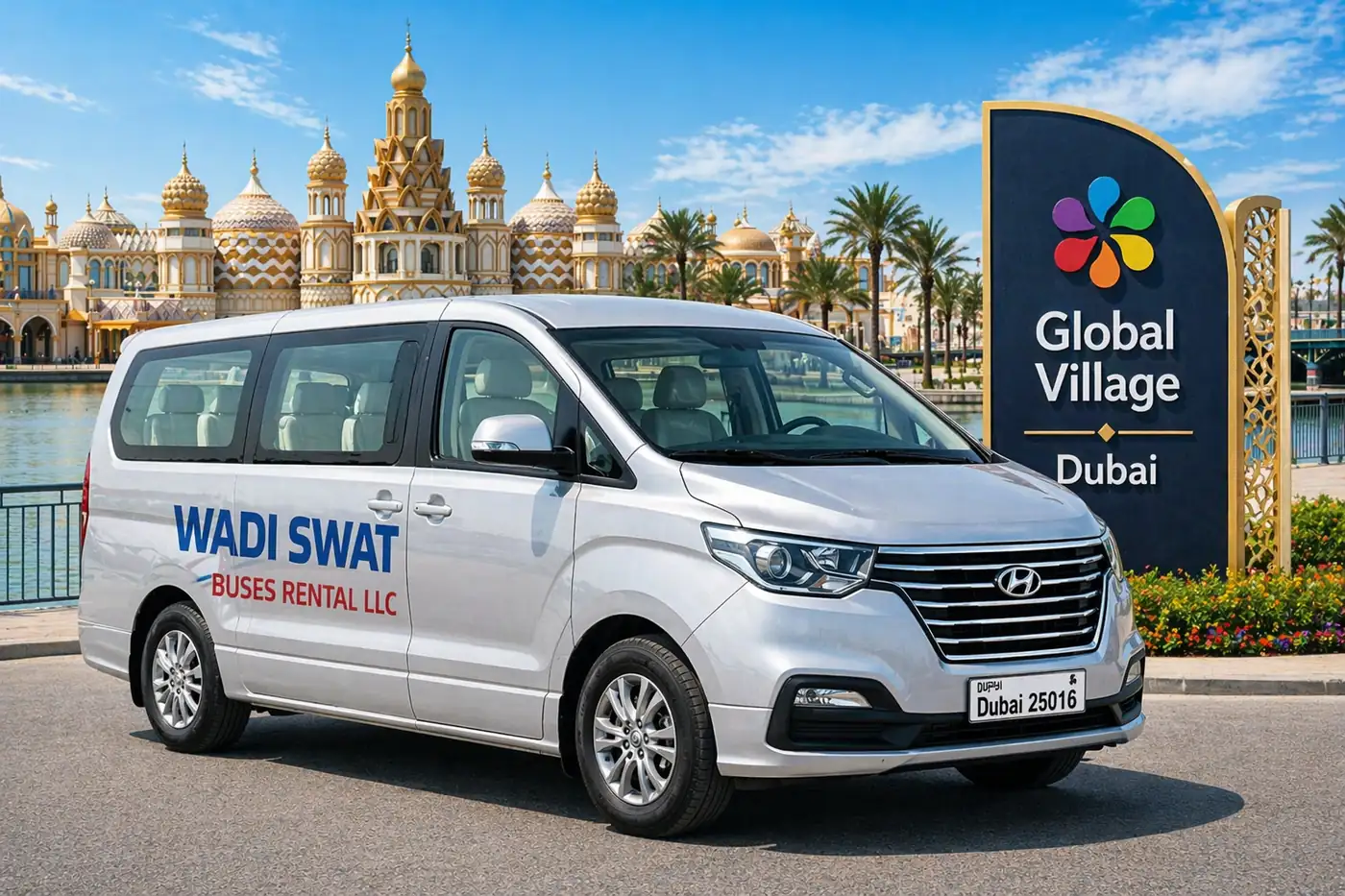
Hyundai H1 12 Seater Van Rental Dubai
12 Seats • Driver IncludedBest for airport transfers, hotel guests, small private groups and light-luggage city travel.
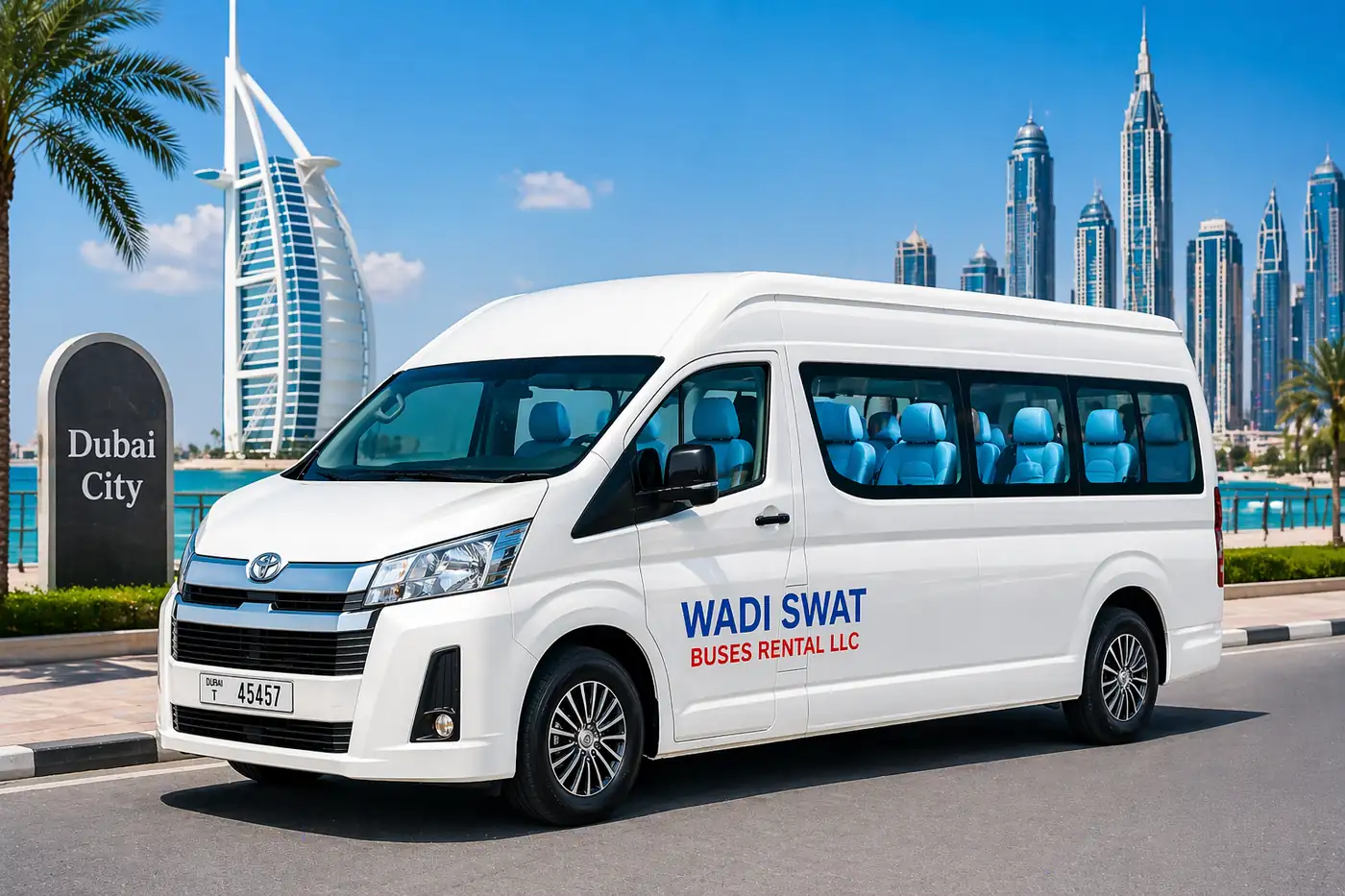
Toyota Hiace 13 Seater Van With Driver
13 Seats • Driver IncludedA practical choice for staff pickup and drop, office teams, hotel transfers and repeated Dubai routes.
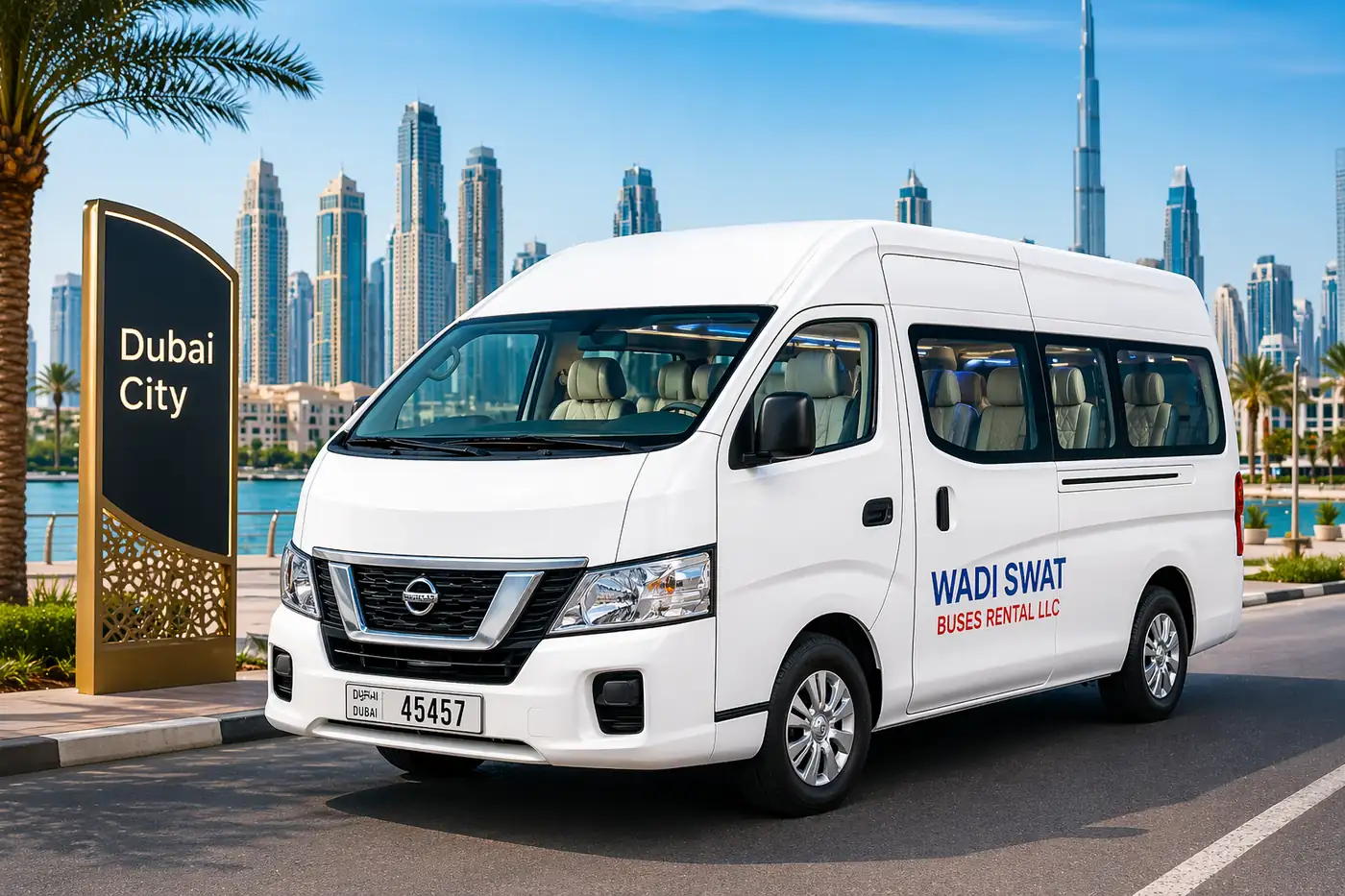
Nissan Urvan 14 Seater Van for Rent in Dubai
14 Seats • Driver IncludedSuitable for airport pickup, family groups, tours and private transport with moderate luggage.
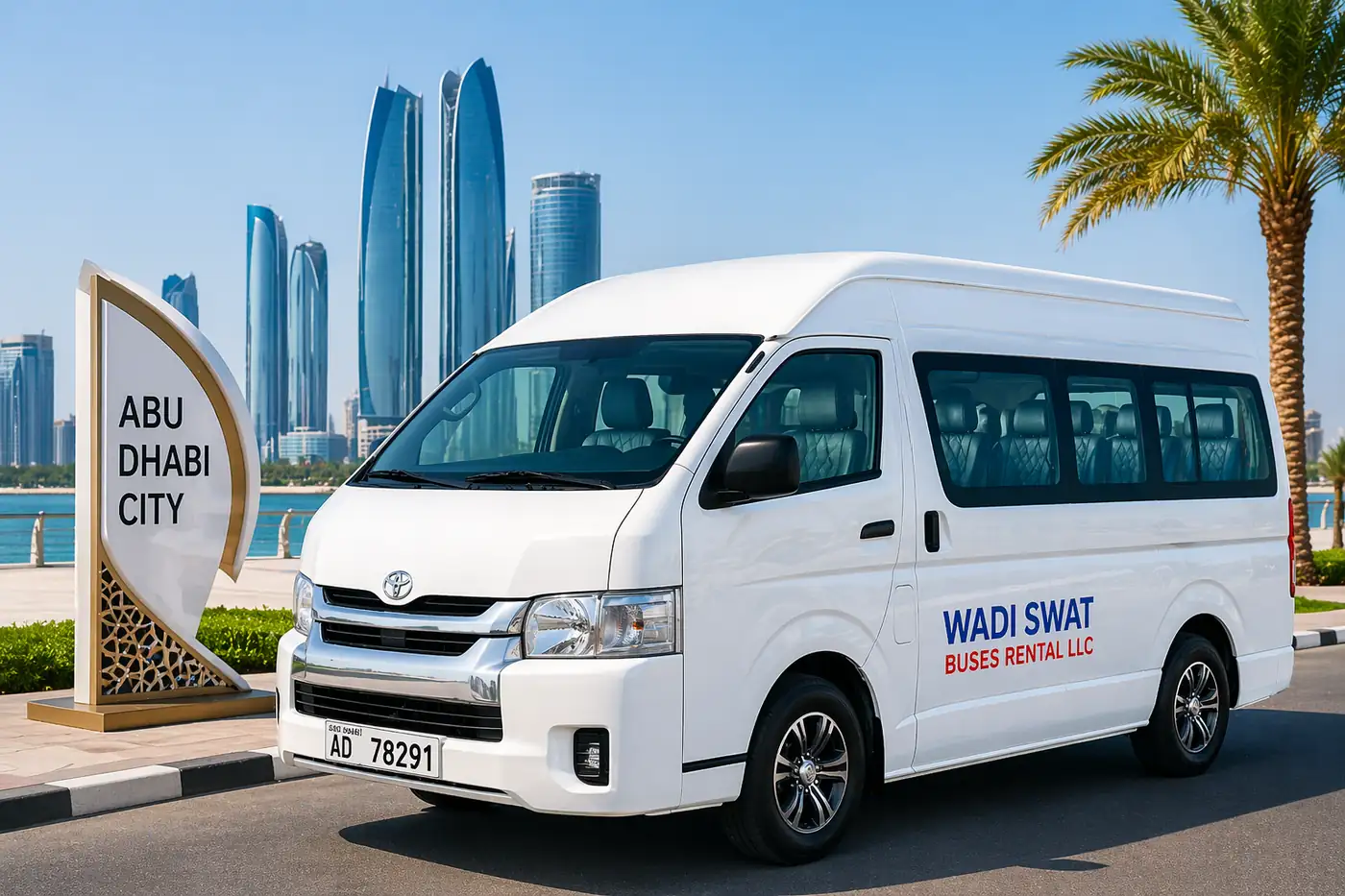
Toyota Hiace 15 Seater High Roof Van Hire
15 Seats • High Roof • Driver IncludedHigh-roof passenger van for group transfers, staff movement and easier boarding with added luggage flexibility.
20–34 Seater Minibuses for Medium Groups and Shuttle Duties
A practical middle range for staff routes, hotel groups, school or institutional trips and events that need more capacity than a van without using a full coach.
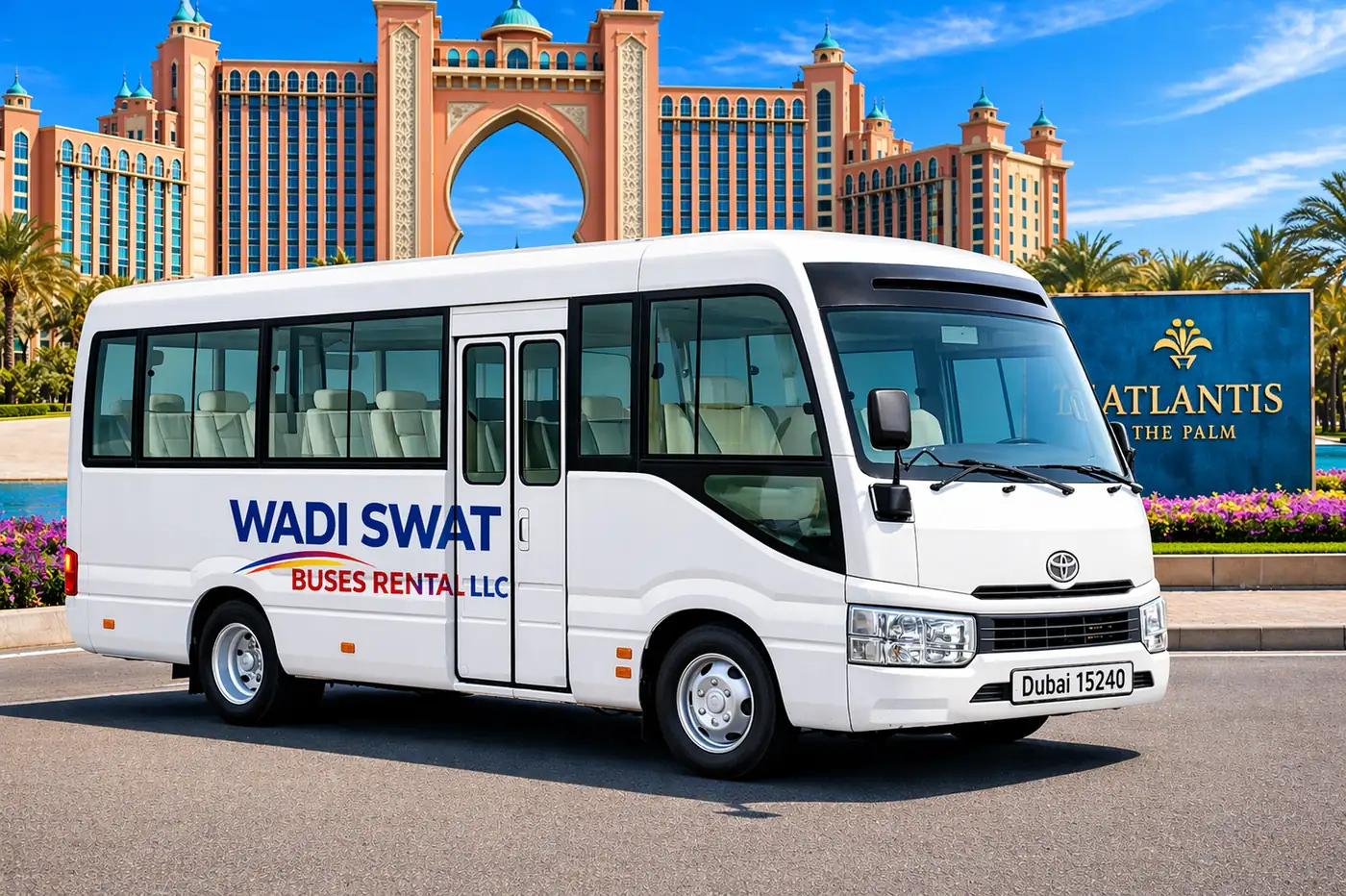
Toyota Coaster 23 Seater Minibus Rental Dubai
23 Seats • Driver IncludedPopular for company transport, airport groups, hotel shuttles, events and medium-size group travel.
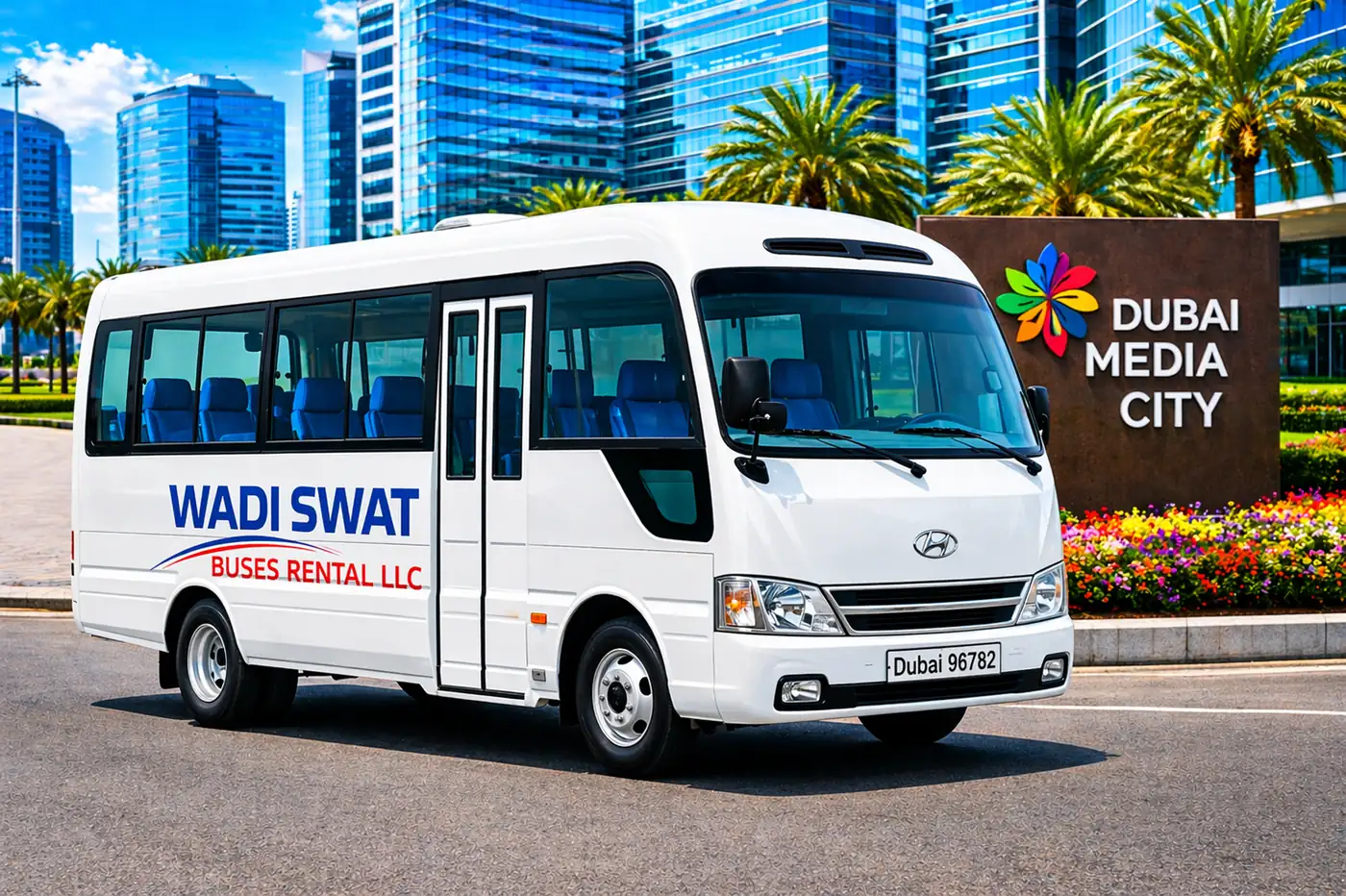
Hyundai County 25 Seater Staff Minibus
25 Seats • Driver IncludedBuilt for staff transportation, daily pickup routes, corporate shuttles and organised group movement.
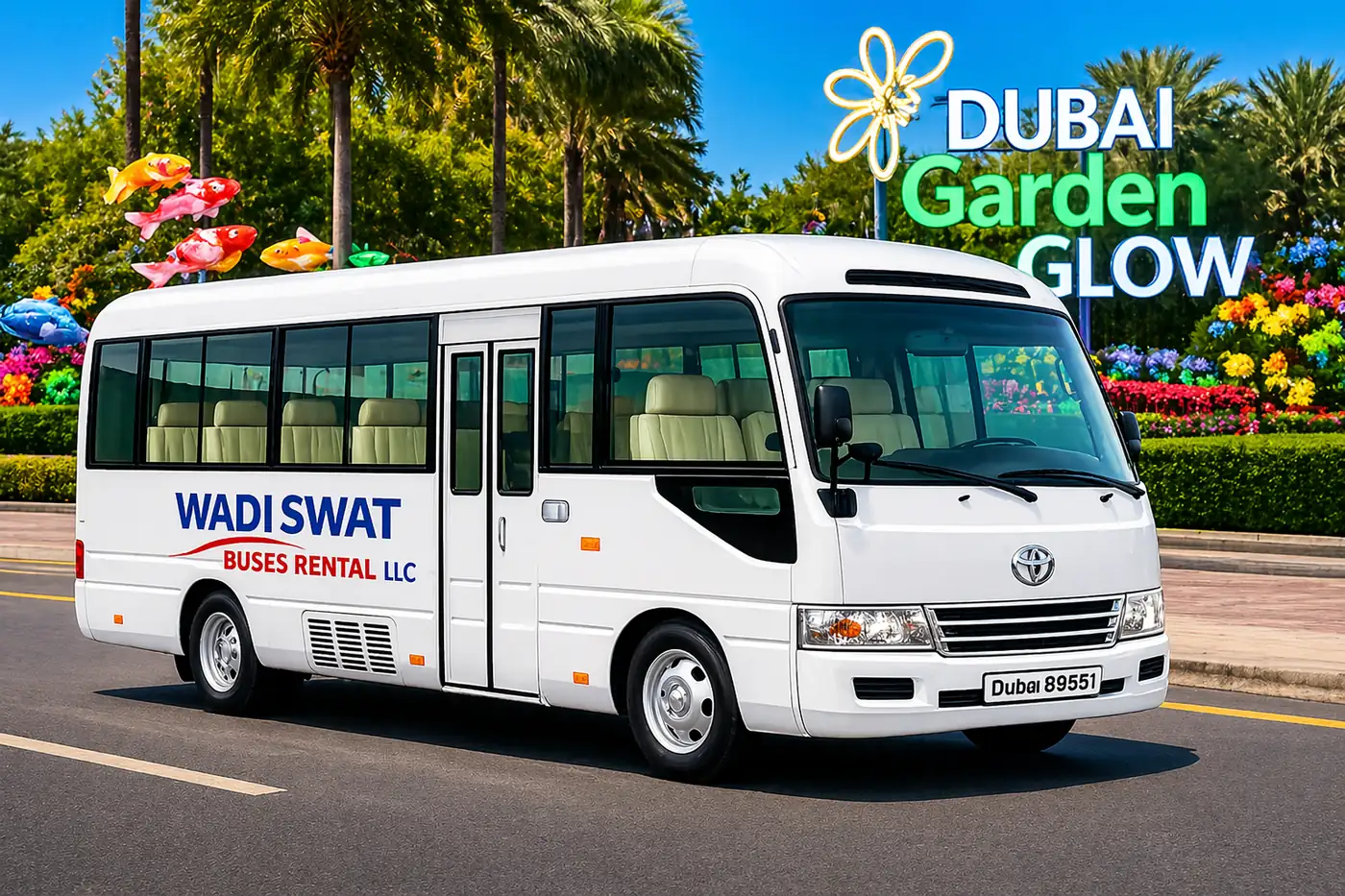
Toyota Coaster 30 Seater Bus Hire With Driver
30 Seats • Driver IncludedUseful for staff routes, event transfers, school or institutional trips and group transport with a driver.
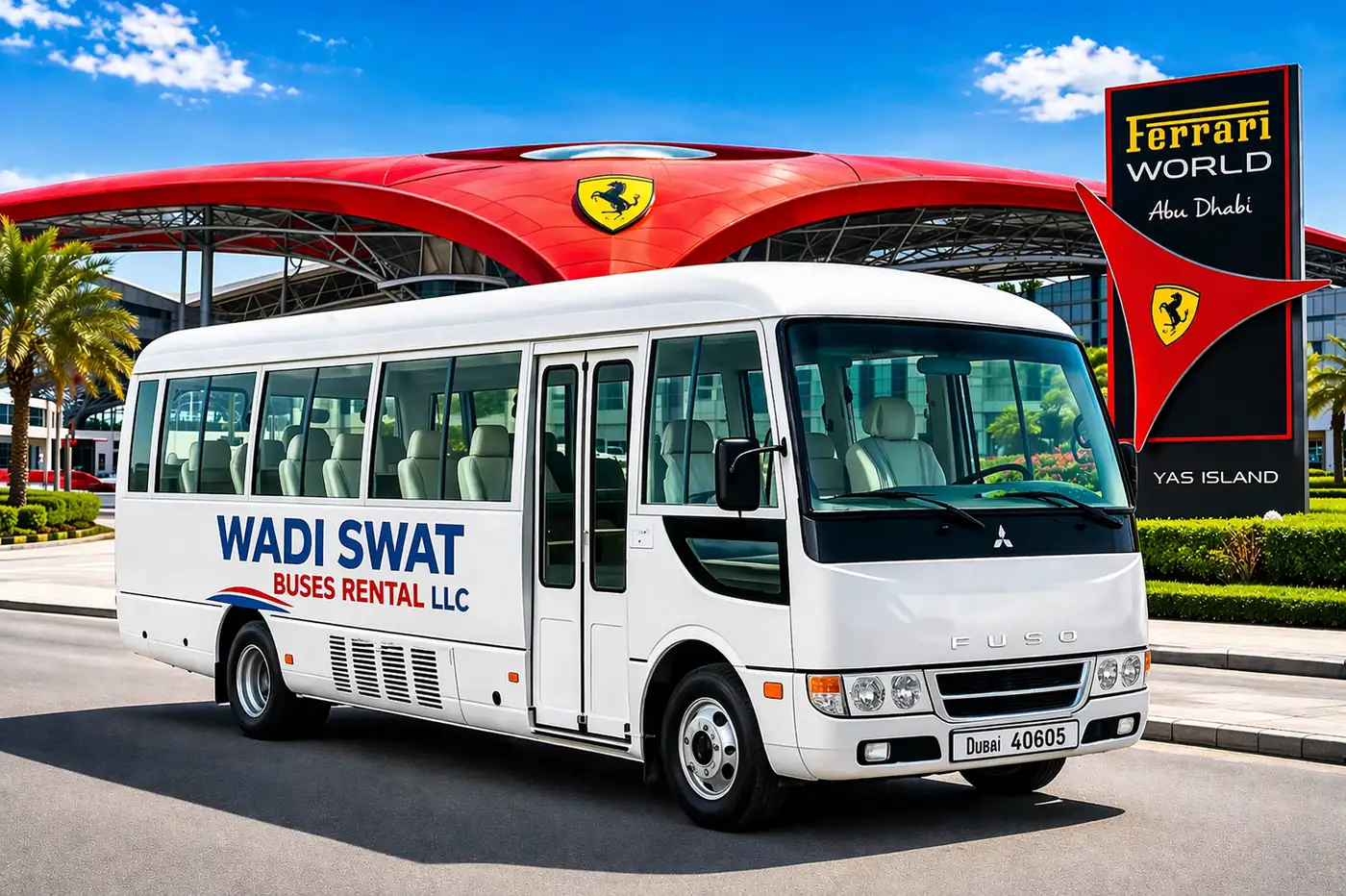
Mitsubishi Rosa 34 Seater Minibus for Groups
34 Seats • Driver IncludedA flexible mid-size bus for larger groups, tours, events, staff movement and inter-emirate travel.
50–53 Seater Luxury Coaches for Larger Groups and Longer Journeys
Designed for conferences, tours, hotel groups and inter-emirate travel where luggage space, ride comfort and presentation matter as much as capacity.
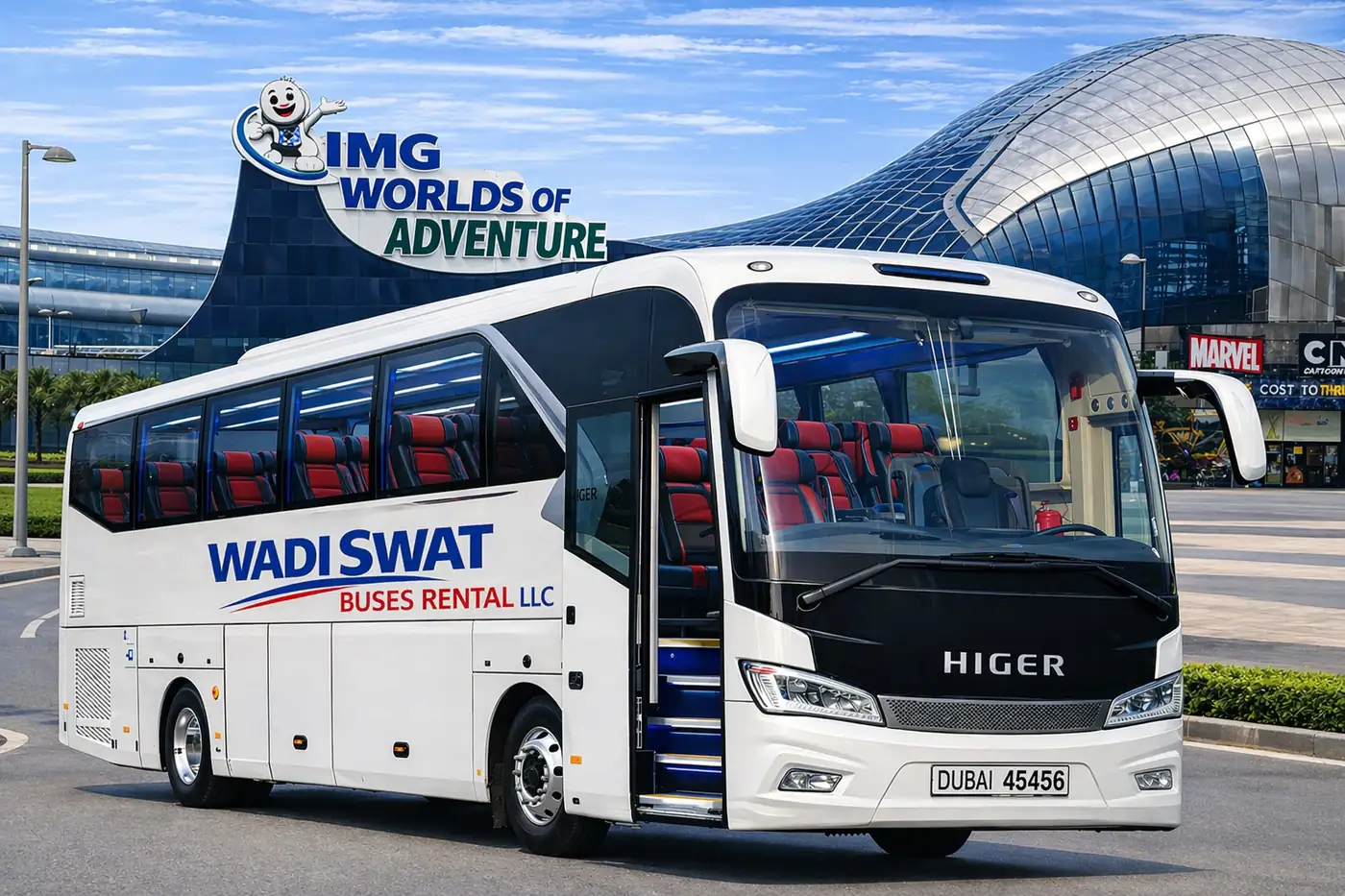
Higer 50 Seater Luxury Bus Rental Dubai
50 Seats • Luxury Coach • Driver IncludedLuxury coach option for tours, conferences, weddings, events and long-distance group transport.
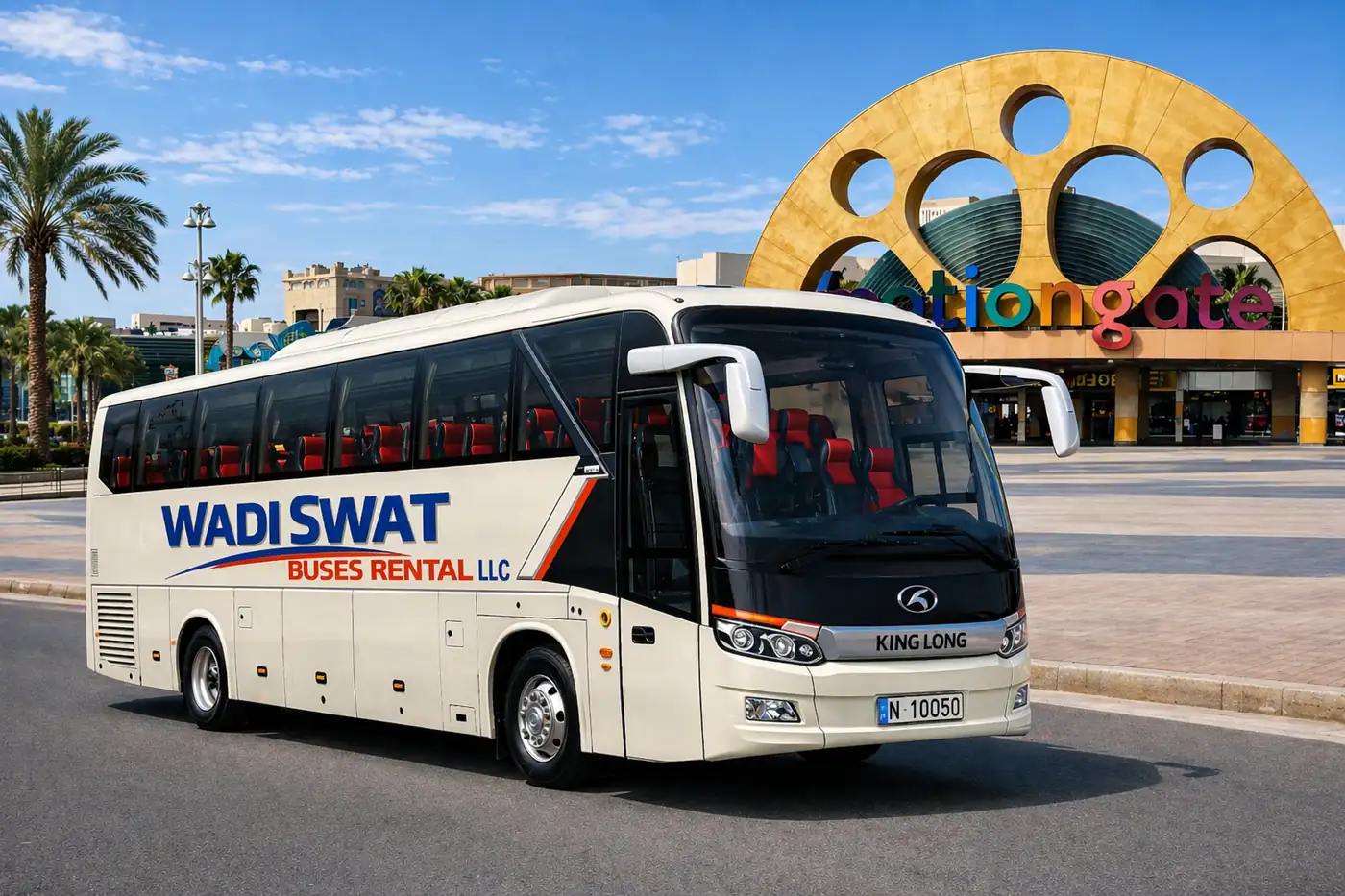
Kinglong 53 Seater Coach Hire Dubai
53 Seats • Luxury Bus • Driver IncludedLarge coach for corporate groups, hotel guests, delegations, tours and premium event transportation.
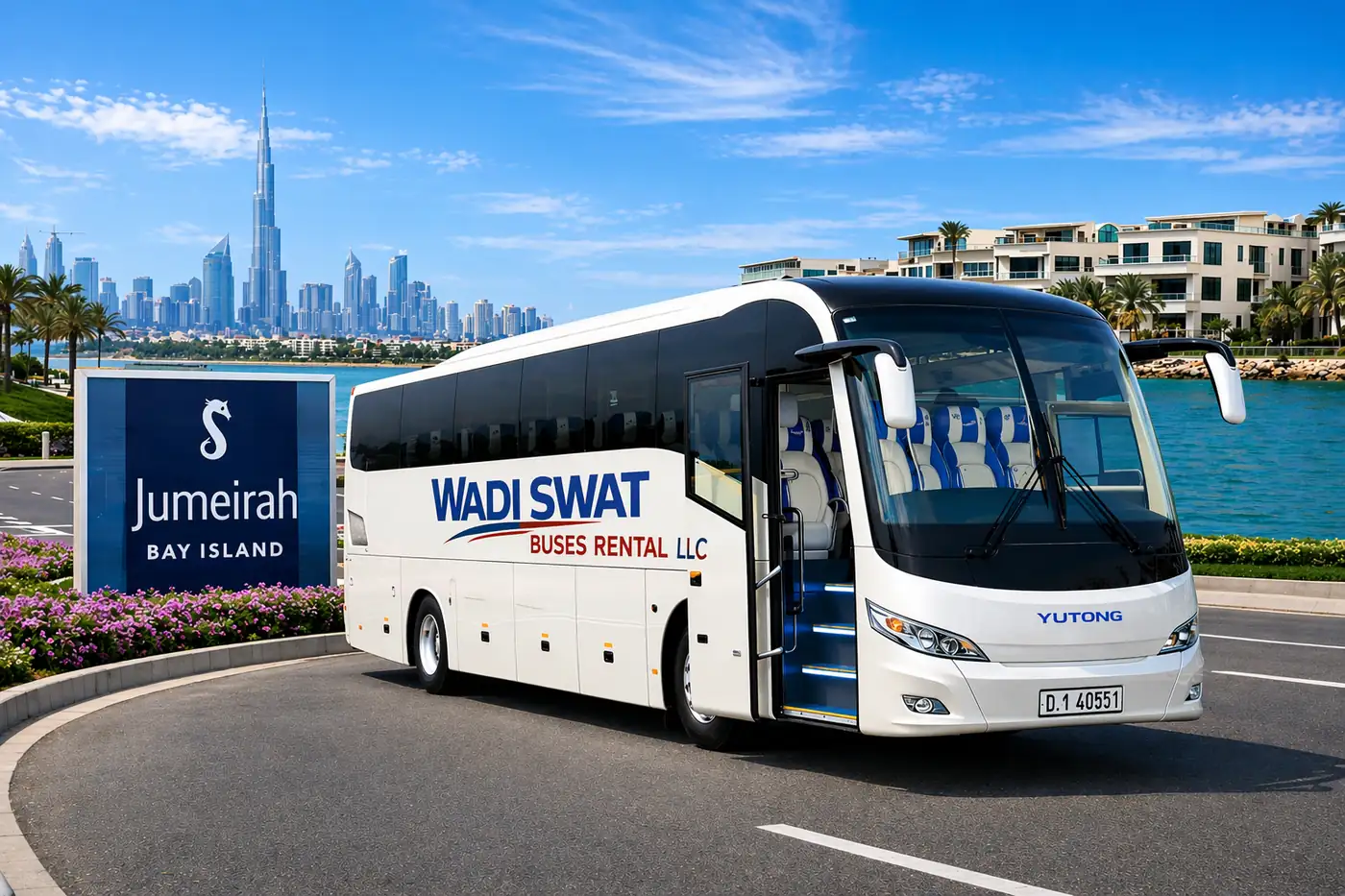
Yutong 50 Seater Bus With Driver
50 Seats • Luxury Bus • Driver IncludedComfort-focused bus for tourist groups, conferences, airport transfers and longer UAE journeys.
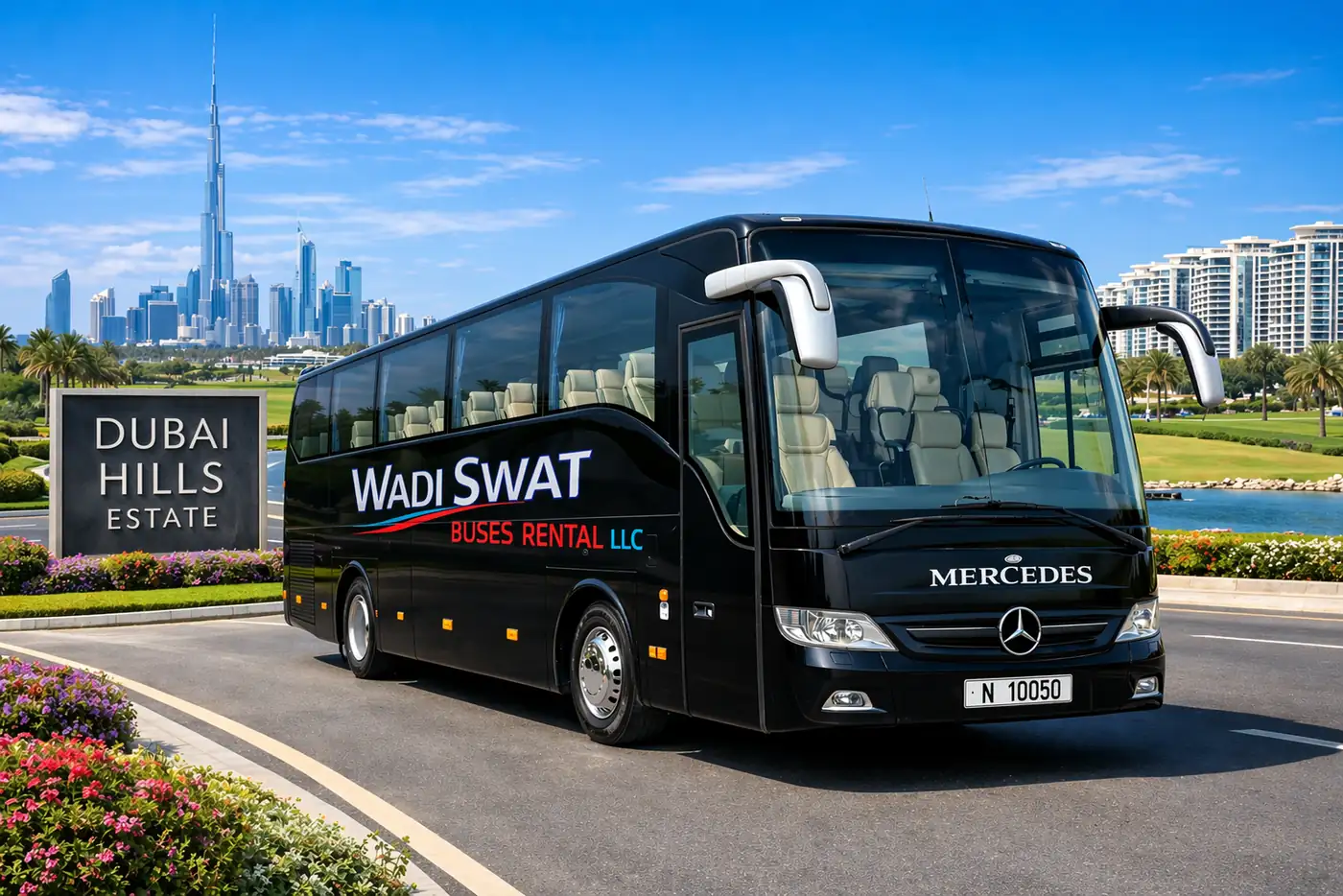
Mercedes 50 Seater Luxury Coach Rental
50 Seats • Mercedes Coach • Driver IncludedExecutive coach for premium group travel, corporate events, hospitality programmes and long-distance duties.
49–71 Seater Staff Buses for Repeated Employee and Workforce Routes
Built for scheduled company and project movement where shift times, pickup clusters, access and reliable daily capacity drive the decision.
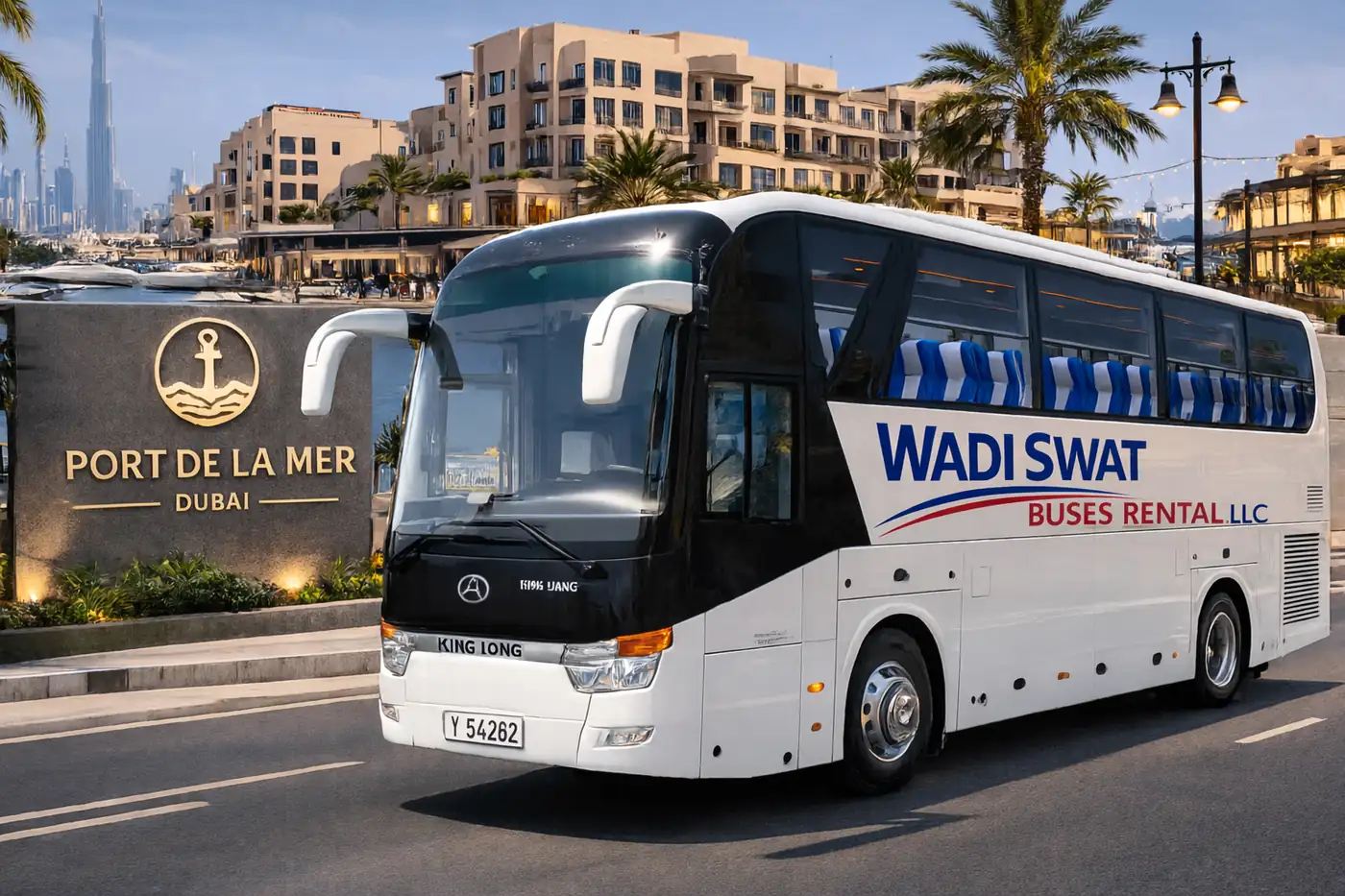
Kinglong 50 Seater Staff Bus Rental Dubai
50 Seats • Staff Bus • Driver IncludedDesigned for employee transportation, fixed pickup points, shift routes and recurring company contracts.
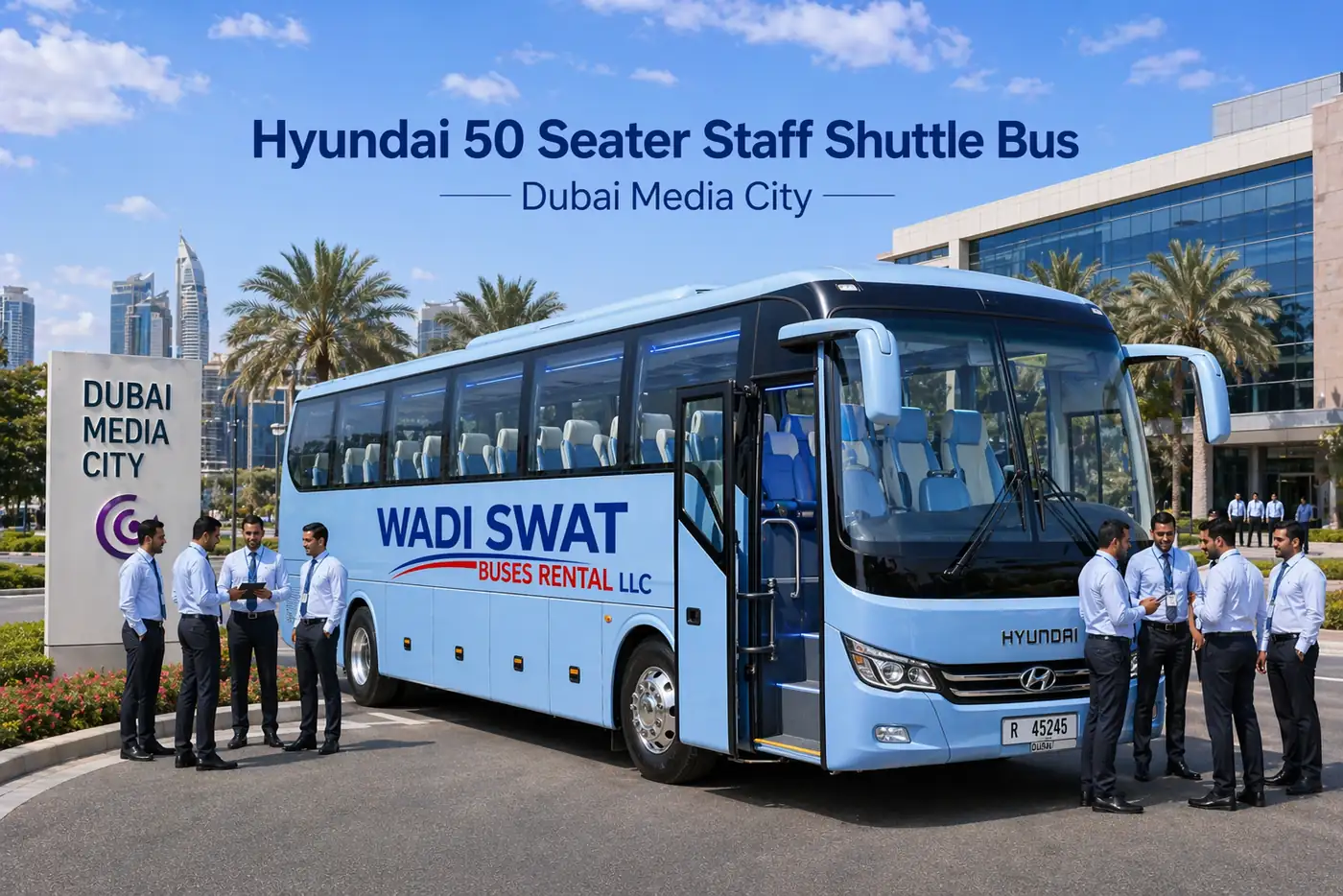
Hyundai 50 Seater Employee Shuttle Bus
50 Seats • Shuttle Bus • Driver IncludedDaily staff shuttle for offices, hotels, industrial sites and scheduled employee pickup and drop routes.
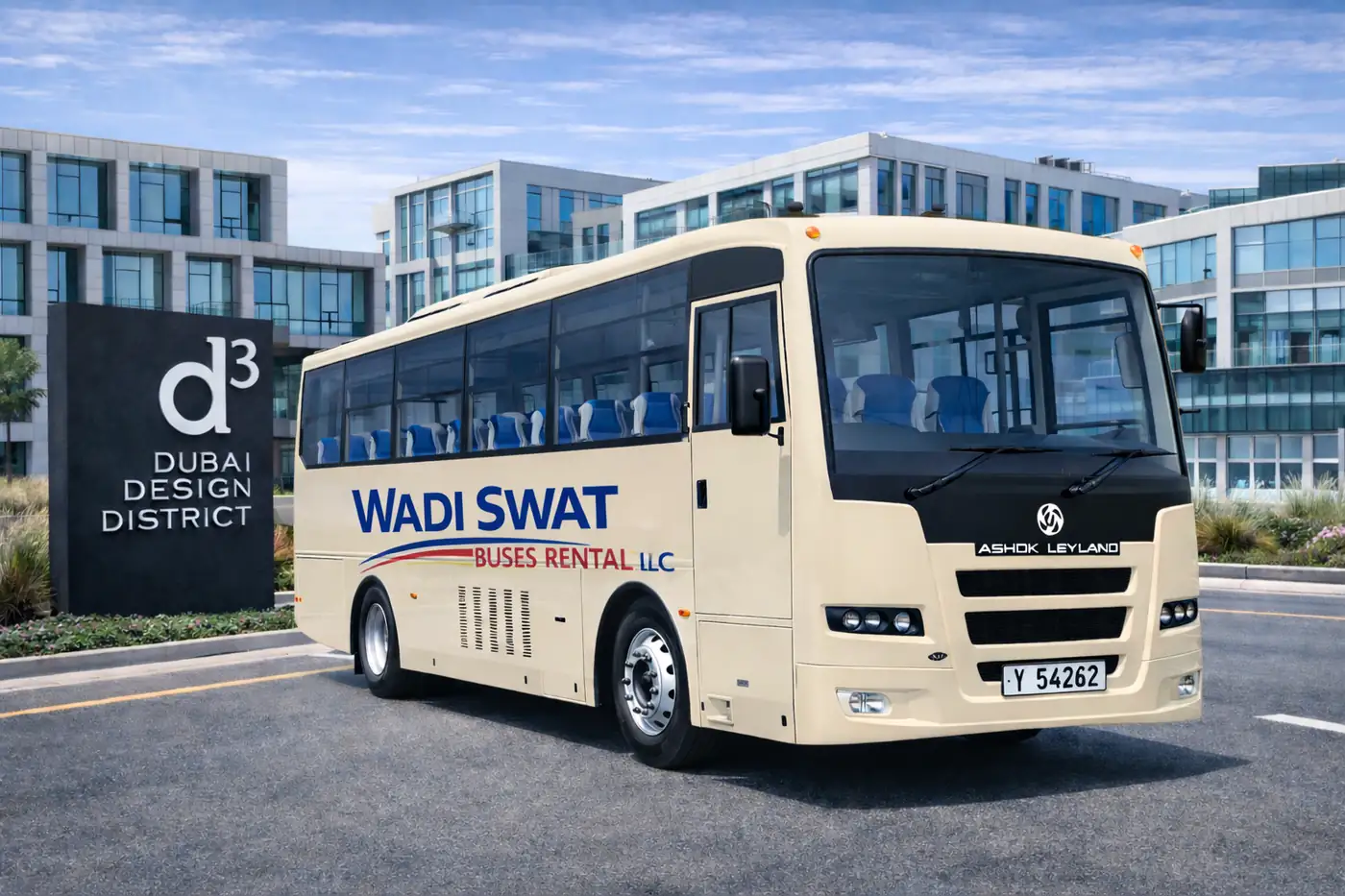
Ashok Leyland 60 Seater Staff Transport Bus
60 Seats • Staff Transport • Driver IncludedHigh-capacity staff transport for factories, projects, accommodation routes and fixed shift schedules.
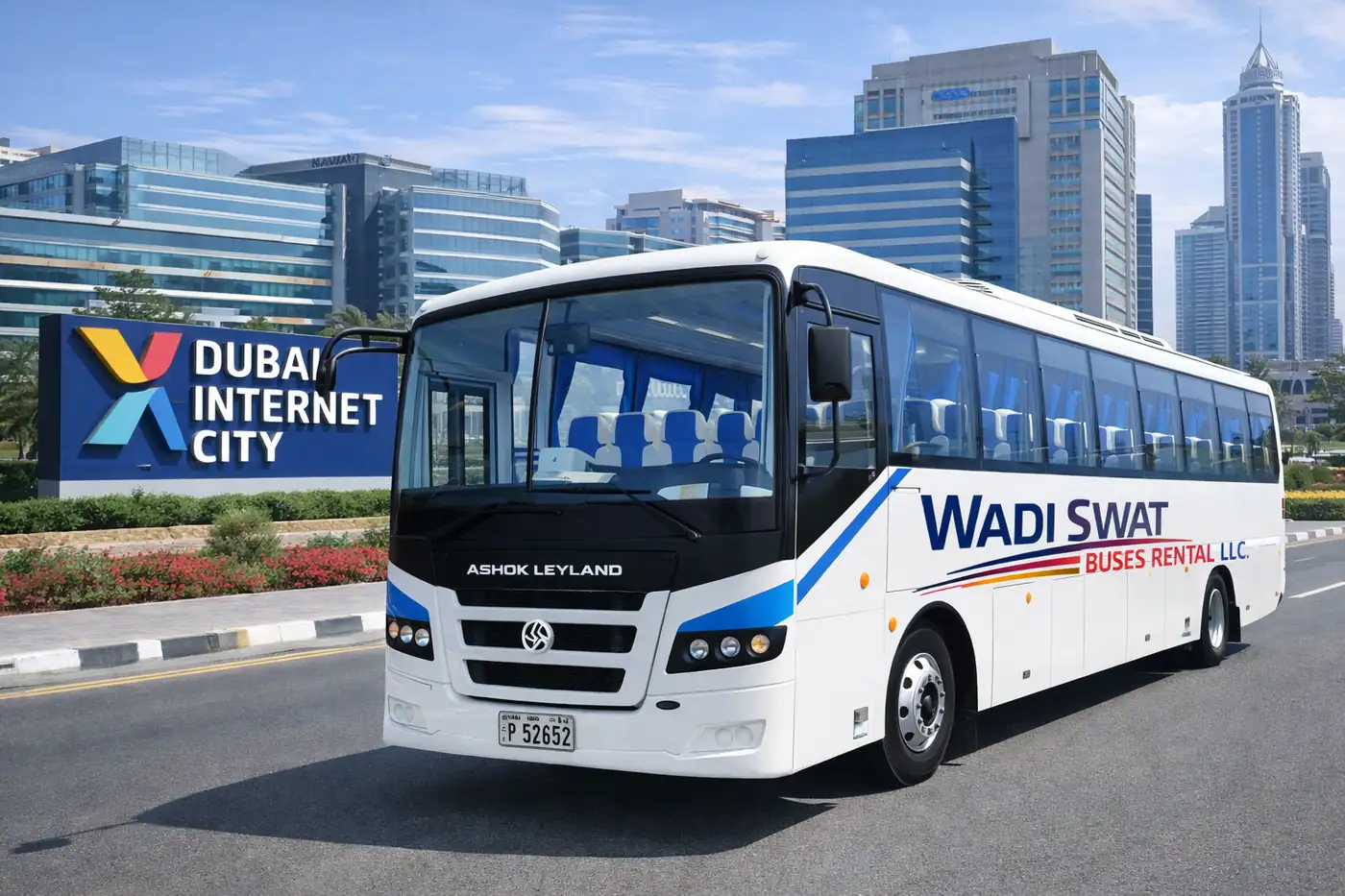
Ashok Leyland 71 Seater Workforce Bus Rental
71 Seats • Workforce Bus • Driver IncludedLarge workforce bus for industrial sites, labour accommodation, project teams and recurring high-volume routes.
Mini Vans, Luxury Vans, Mid-Size Coaches and Air-Conditioned Workforce Buses
This group ranges from compact executive movement to high-capacity project transport. Choose by passenger profile, presentation, luggage, journey length and the operating conditions of the route.
7–10 Seater Mini Vans for Families, Guests and Small Teams
Compact vehicles for city access, private transfers and small business groups where flexible pickup and easy positioning are useful.
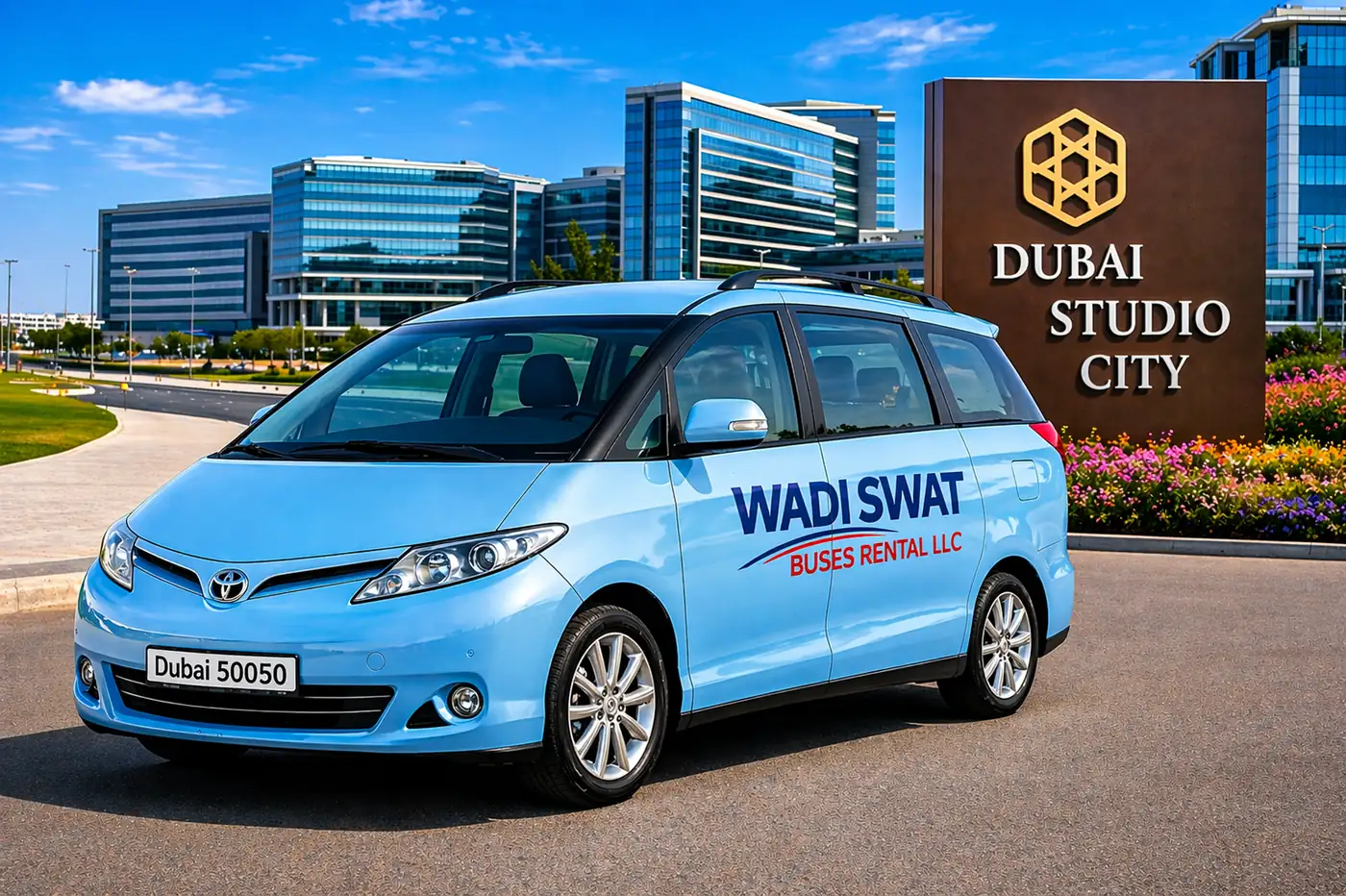
Toyota Previa 7 Seater Van Rental Dubai
7 Seats • Passenger Mini Van • Driver IncludedCompact option for families, airport pickup, hotel guests and small private groups moving around Dubai.
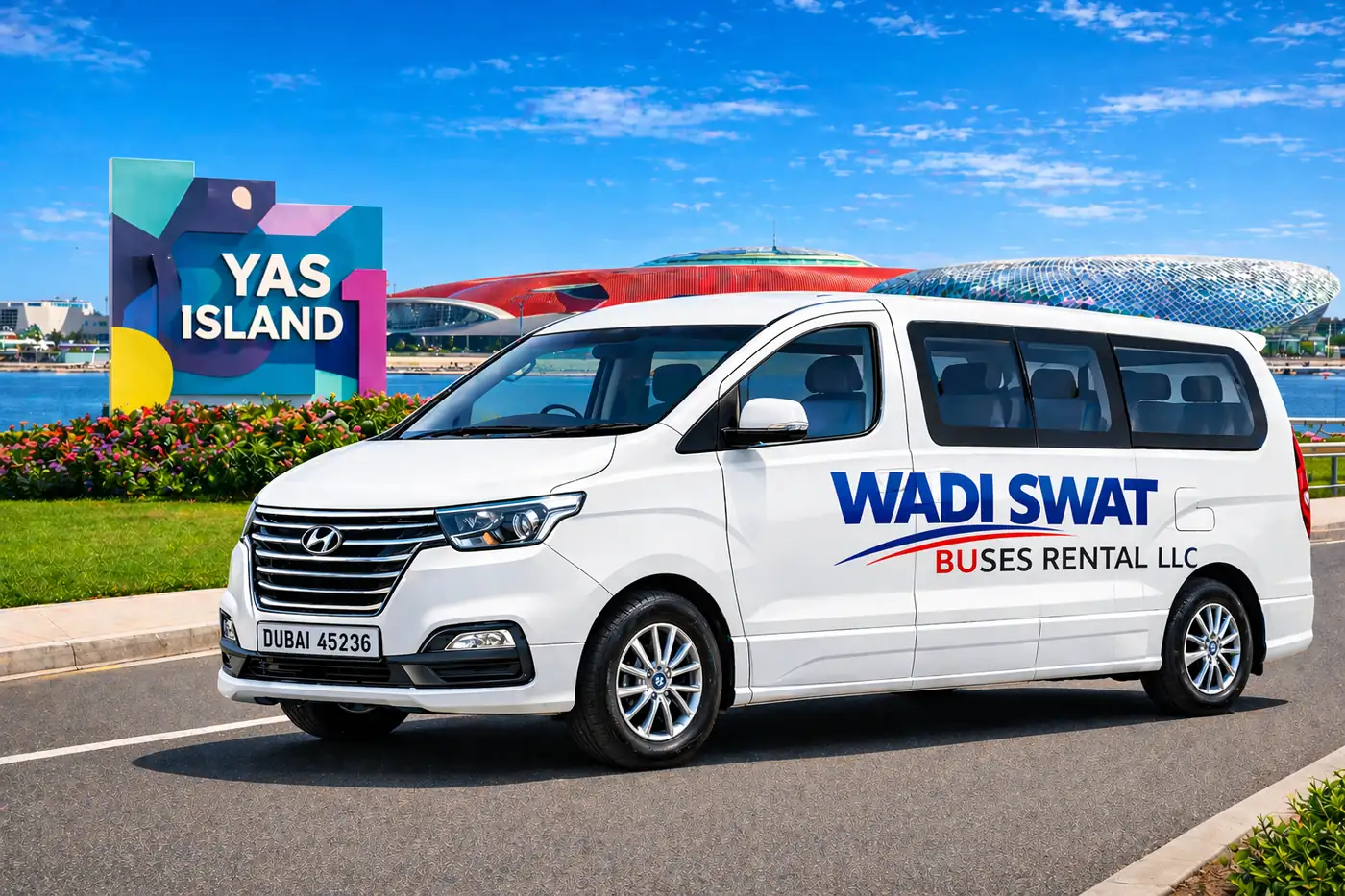
Hyundai H1 9 Seater Minivan With Driver
9 Seats • Mini Van • Driver IncludedConvenient for small staff teams, executive transfers, airport trips and point-to-point city transport.
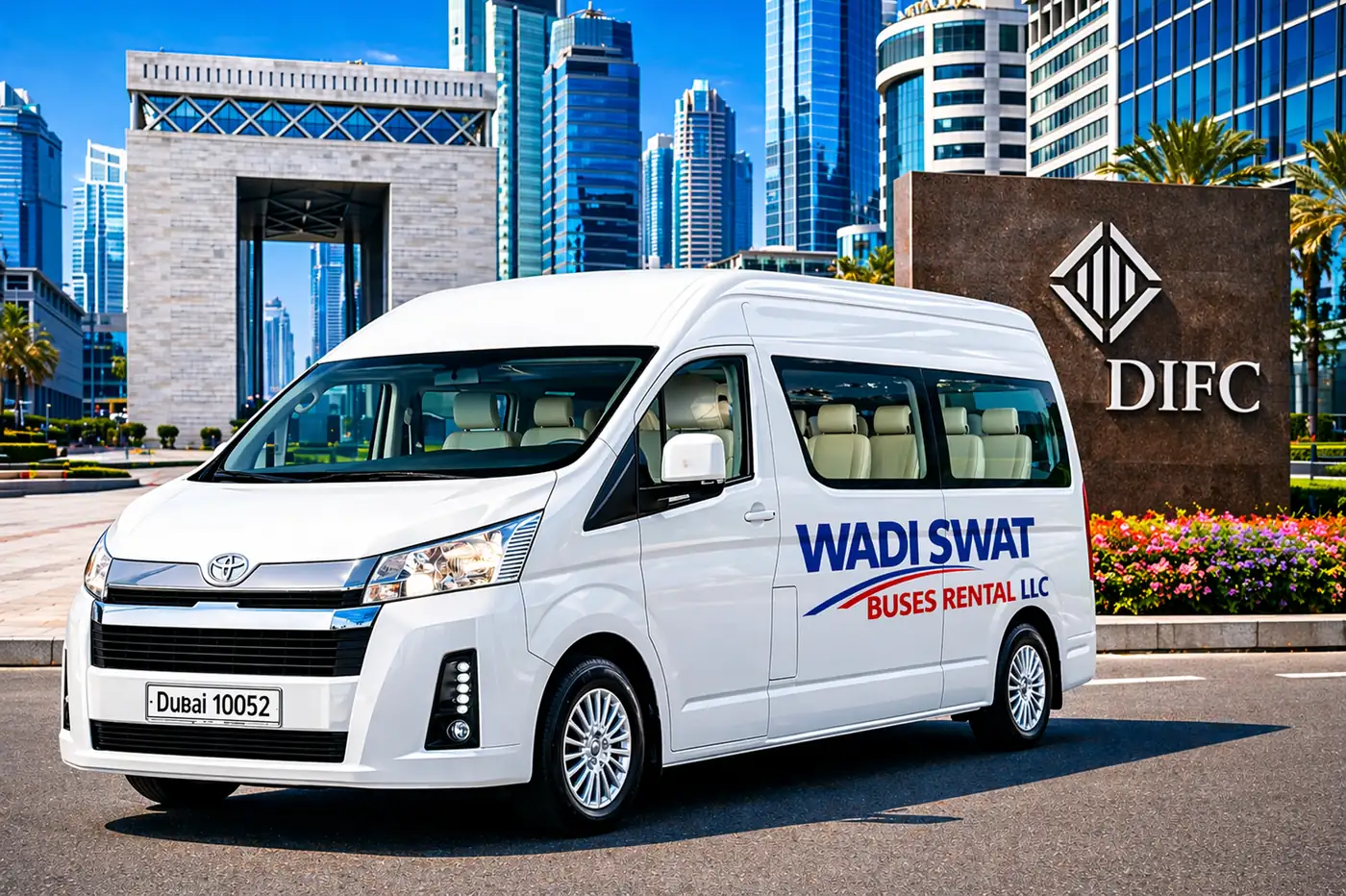
Toyota Hiace 10 Seater Van for Rent Dubai
10 Seats • Mini Van • Driver IncludedFlexible van for airport transfers, private groups, hotel movement and smaller company transport requirements.
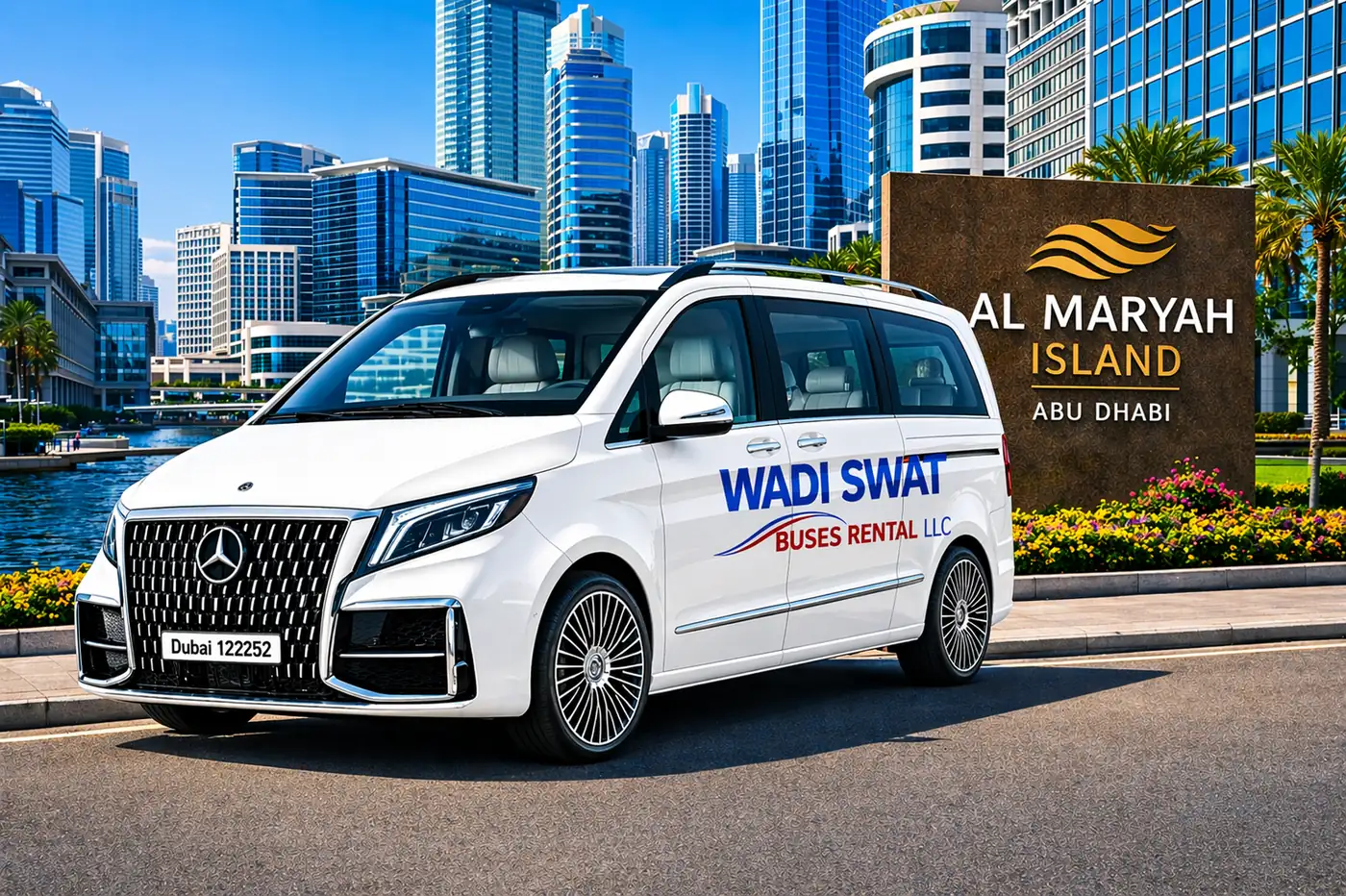
Mercedes Vito 8 Seater Executive Van Hire
8 Seats • Executive Van • Driver IncludedExecutive van for VIP guests, business travel, airport transfers and premium small-group transport.
Luxury Vans for VIP, Hospitality and Executive Group Travel
Use this category when privacy, interior finish, luggage and presentation matter more than maximum seat count.
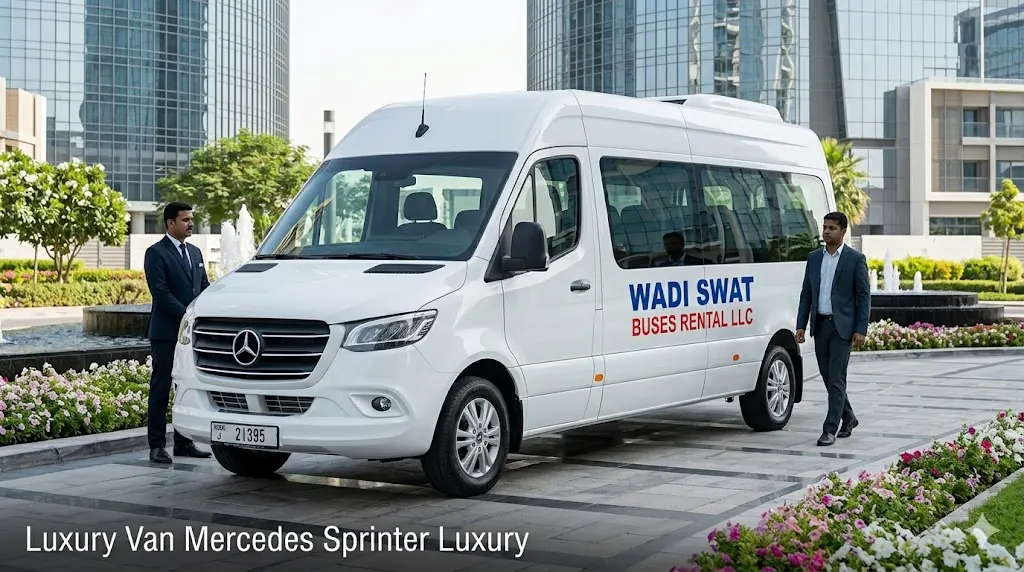
Mercedes Sprinter Luxury Van Rental Dubai
Luxury Van • Group Comfort • Driver IncludedPremium group van for corporate guests, airport transfers, hotel transport and executive event movement.
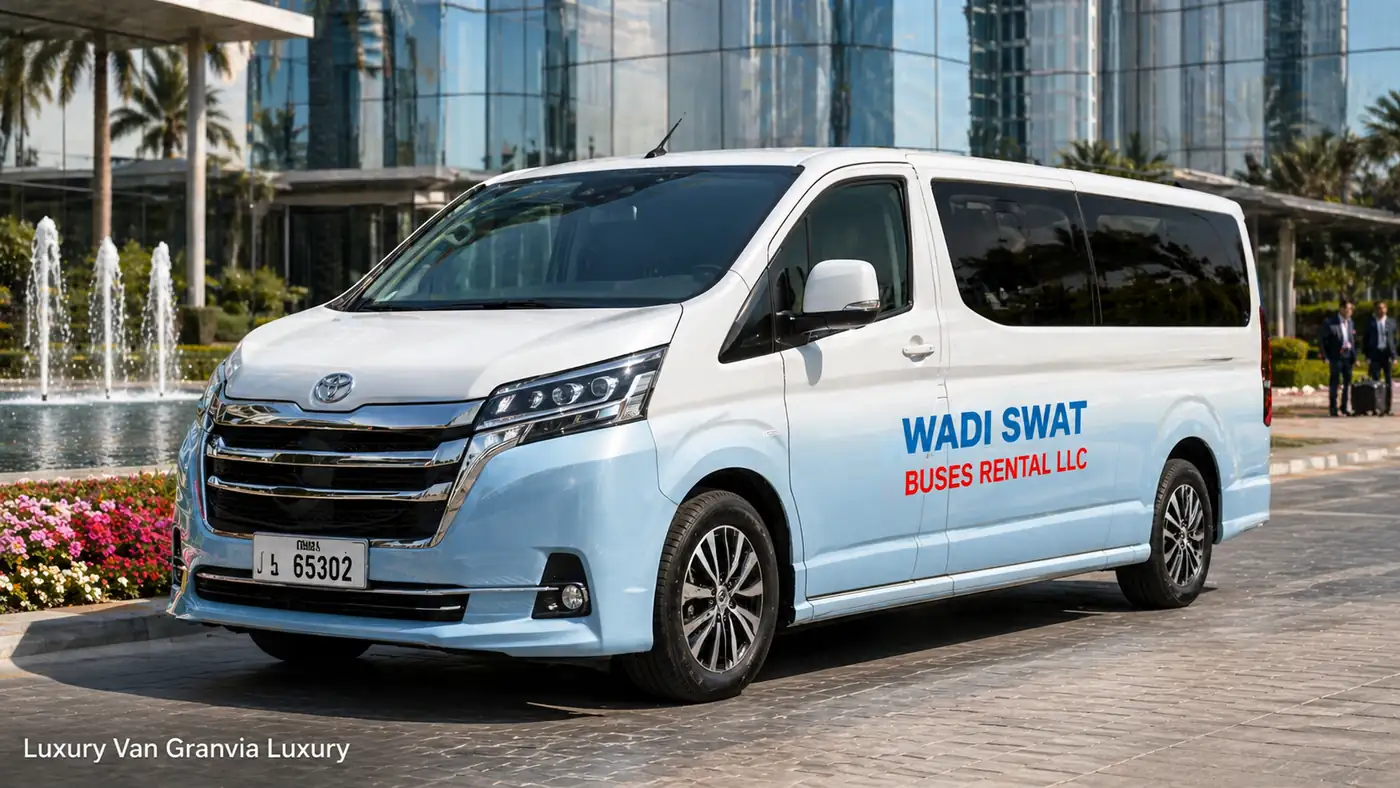
Toyota Granvia Luxury Van With Driver
Luxury Van • Family Travel • Driver IncludedComfortable luxury van for families, hotel guests, airport travel and private chauffeur-style group movement.
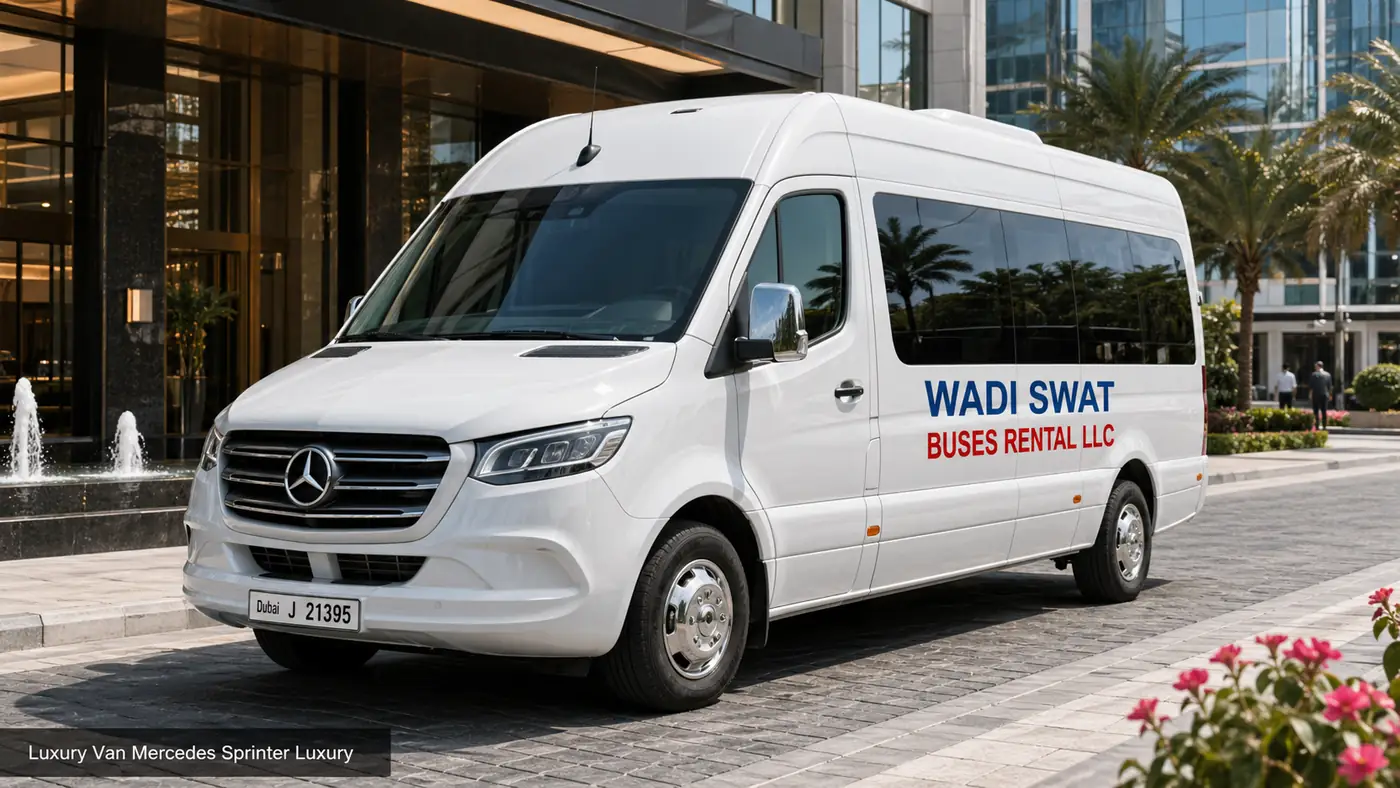
Mercedes Sprinter Executive Van Hire Dubai
Executive Van • Corporate Groups • Driver IncludedExecutive Sprinter for business groups, delegations, hospitality transport and premium airport transfers.
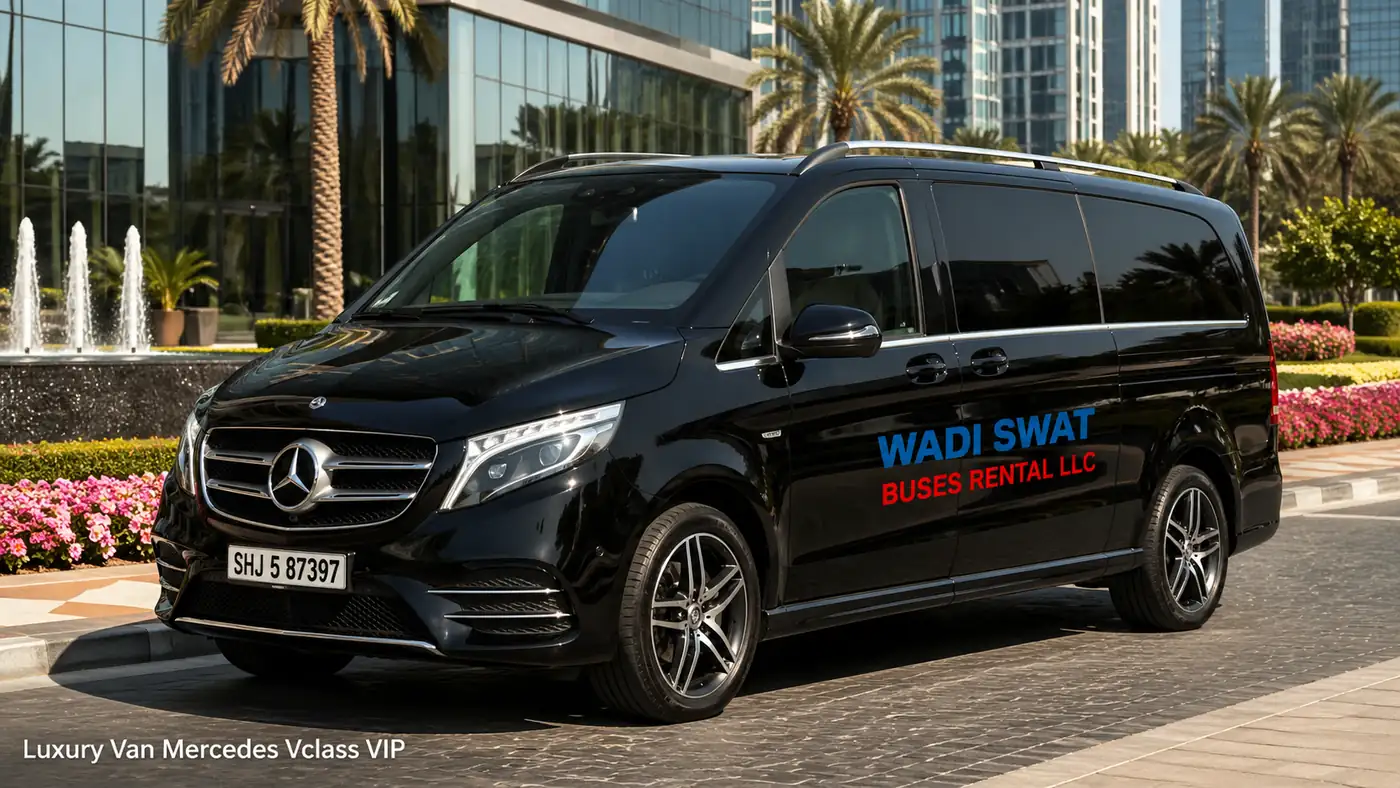
Mercedes V-Class VIP Chauffeur Van
VIP Van • Chauffeured Comfort • Driver IncludedVIP vehicle for executive airport pickup, hotel guests, meetings and discreet premium passenger transport.
35 Seater Luxury Buses for Premium Medium-Size Groups
More space and comfort than a standard minibus without the footprint of a full-size coach; useful for delegates, events and private programmes.
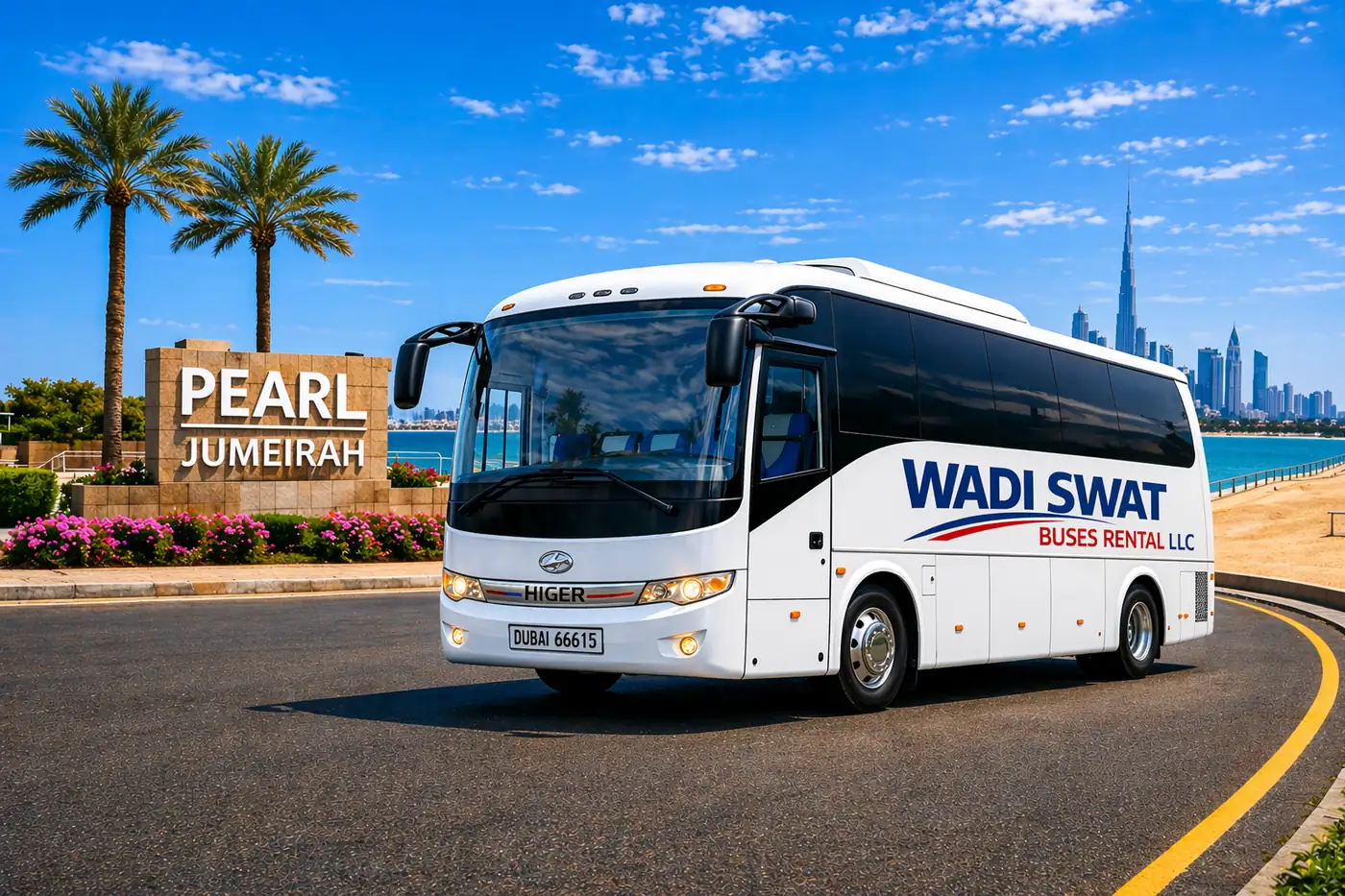
Higer 35 Seater Luxury Bus Rental Dubai
35 Seats • Luxury Bus • Driver IncludedMid-size luxury coach for corporate events, tours, conferences, weddings and organised group travel.
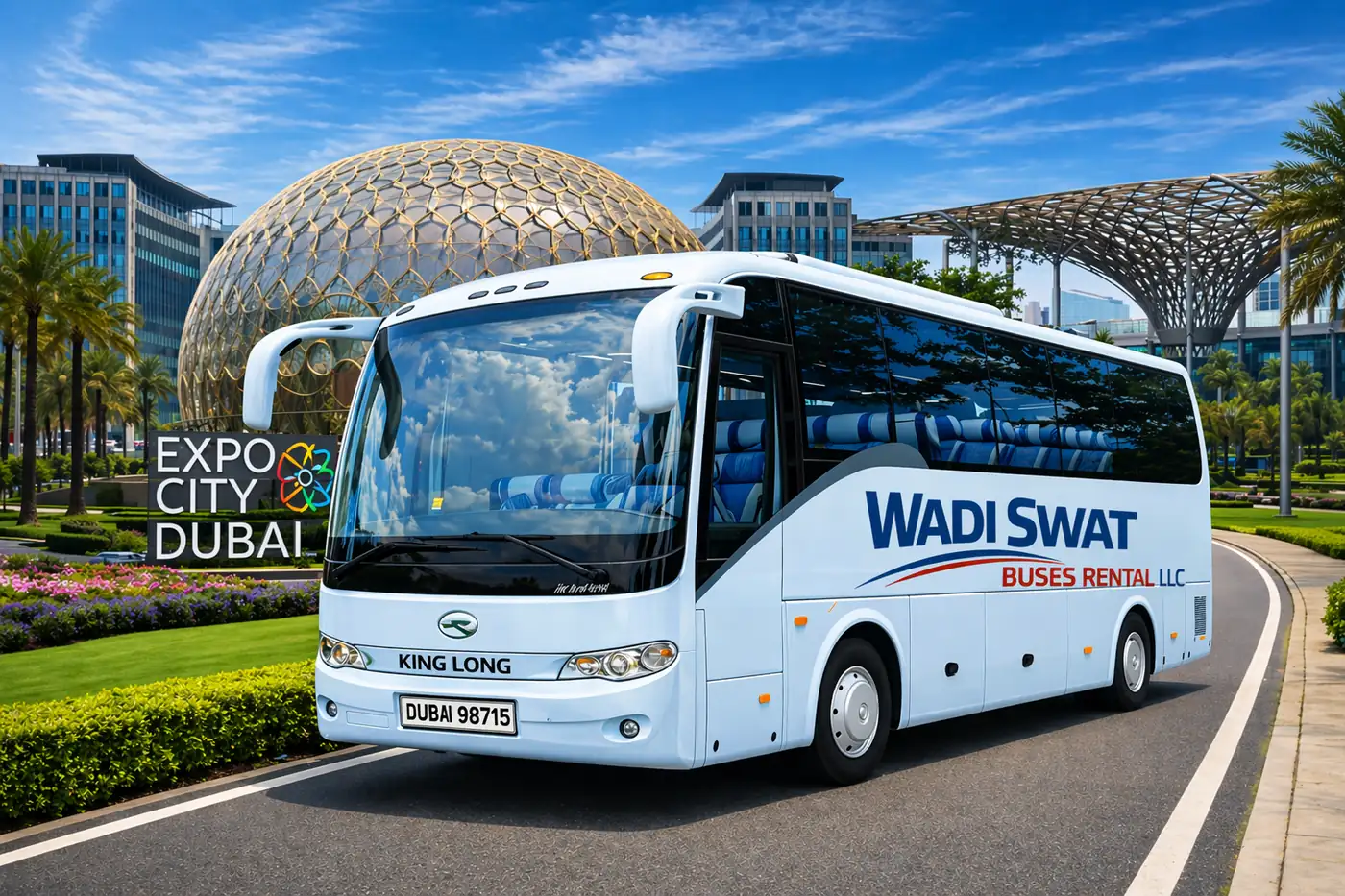
Kinglong 35 Seater Executive Coach Hire
35 Seats • Executive Bus • Driver IncludedExecutive coach for medium-size corporate groups, hotel transport, tours and event shuttle duties.
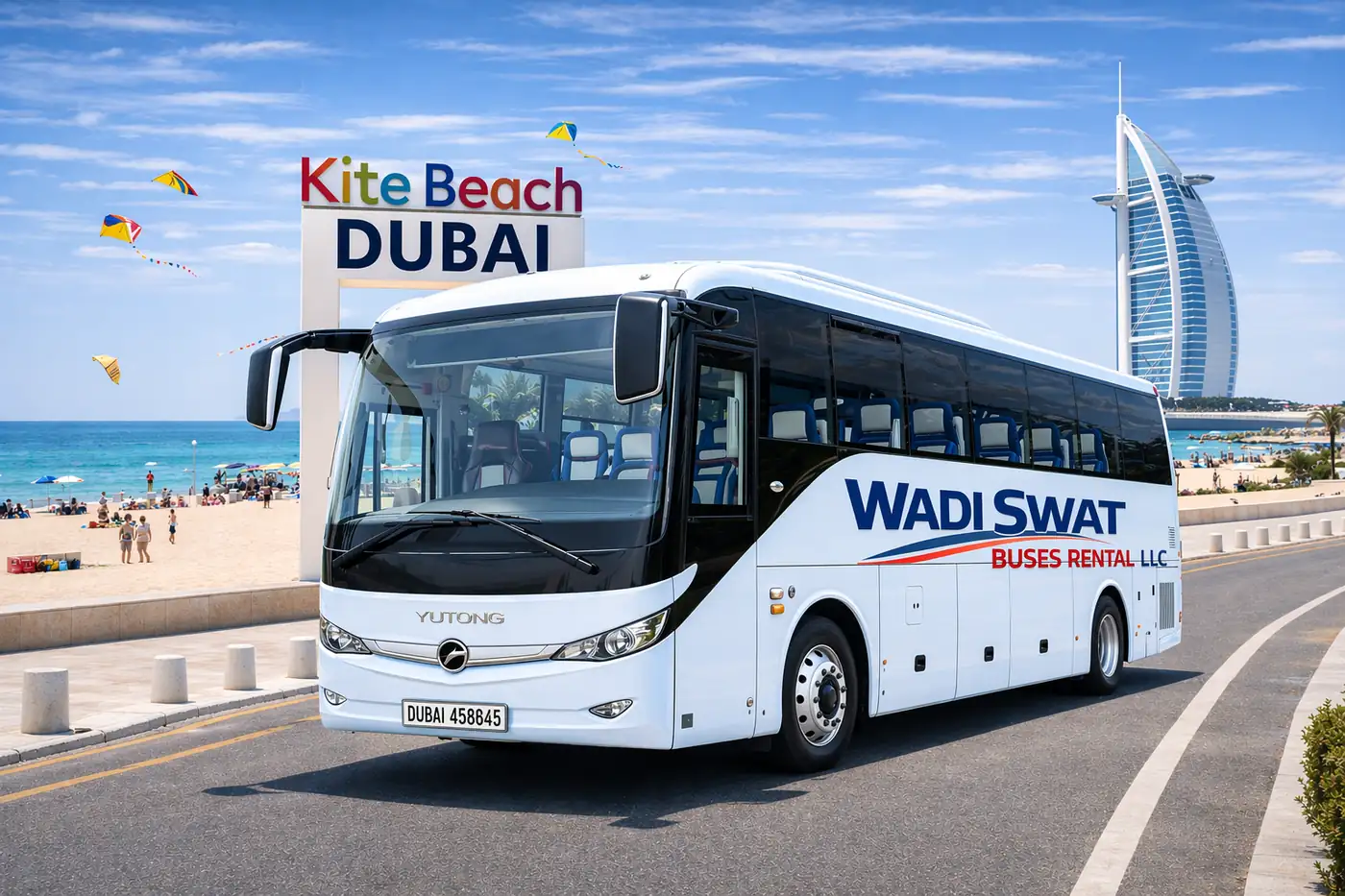
Yutong 35 Seater Coach With Driver Dubai
35 Seats • Luxury Bus • Driver IncludedPremium 35-seat coach for tours, airport groups, conferences and comfortable inter-emirate travel.
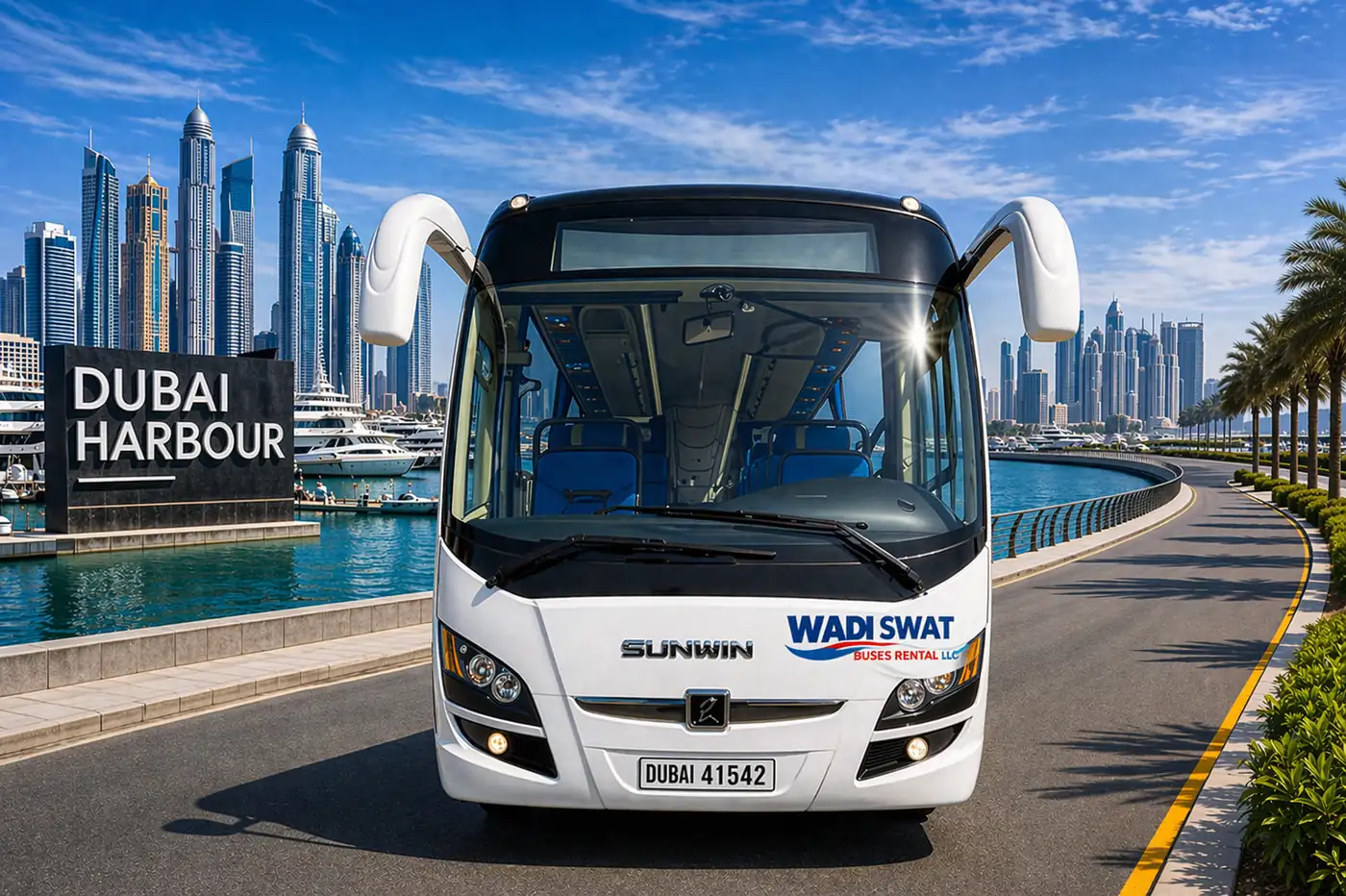
Sunwin 35 Seater Premium Bus Rental
35 Seats • Premium Bus • Driver IncludedWell-suited to hospitality groups, events, corporate travel and private medium-size group transport.
Air-Conditioned Workforce Buses for Industrial and Project Routes
Suitable for repeated employee or labour movement where high capacity, air conditioning, site access and shift discipline are required.
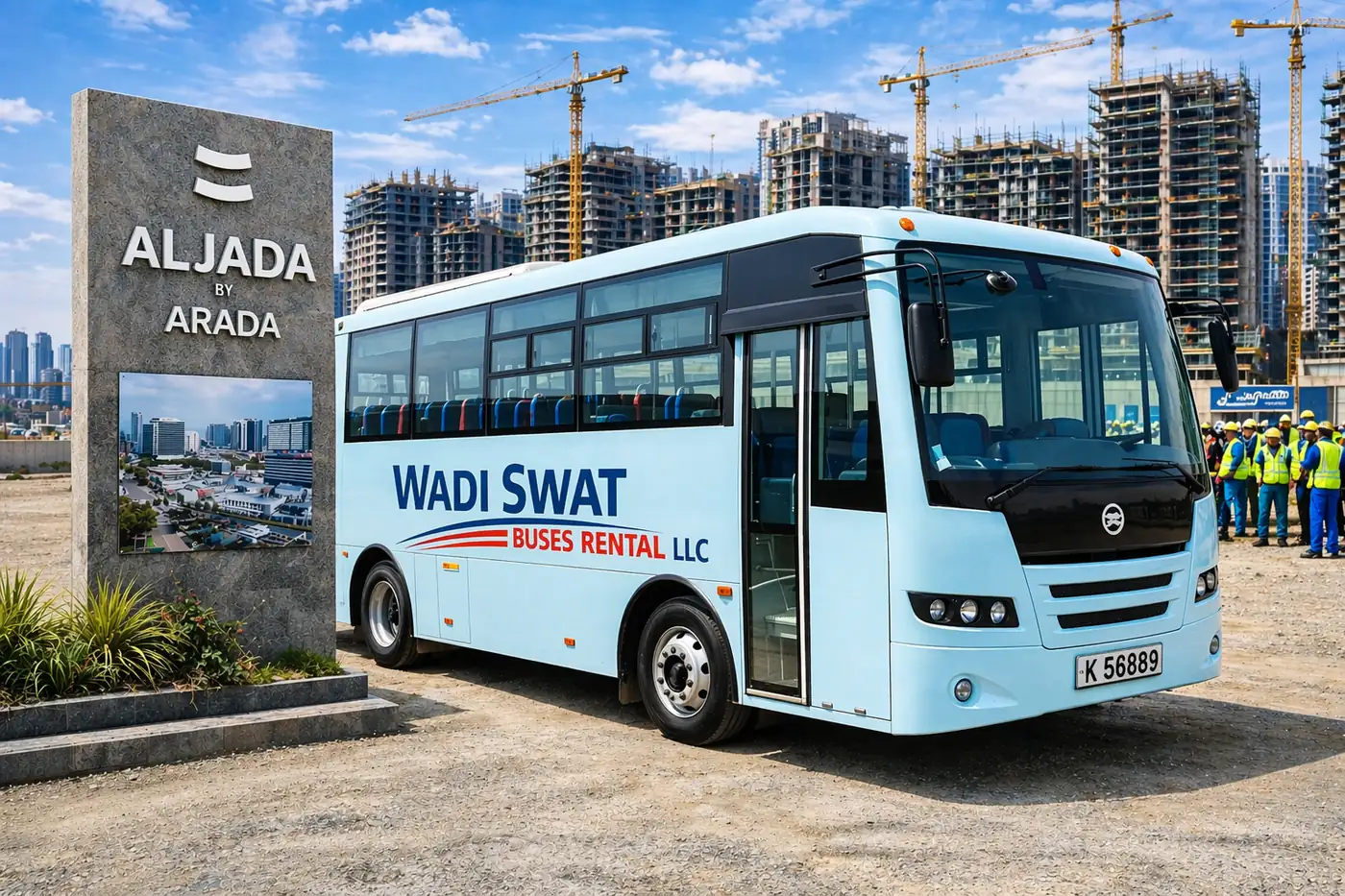
Ashok Leyland 50 Seater Labour Bus Rental Dubai
50 Seats • AC Bus • Driver IncludedAir-conditioned labour transport for staff camps, industrial sites, projects and fixed employee shift routes.
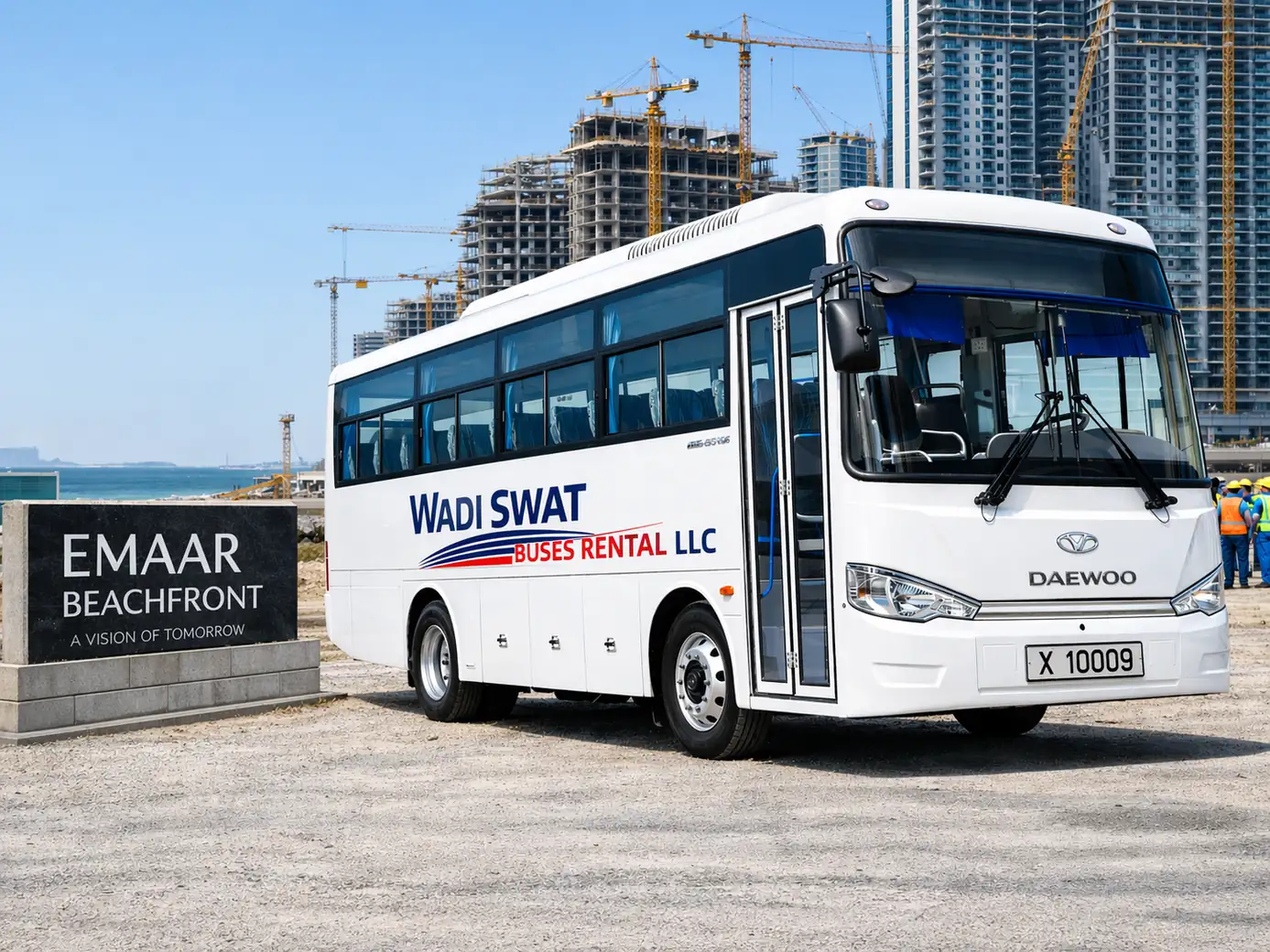
Daewoo 61 Seater AC Workforce Bus
61 Seats • AC Bus • Driver IncludedLarge AC workforce bus for construction teams, factories, labour accommodation and repeated contract routes.
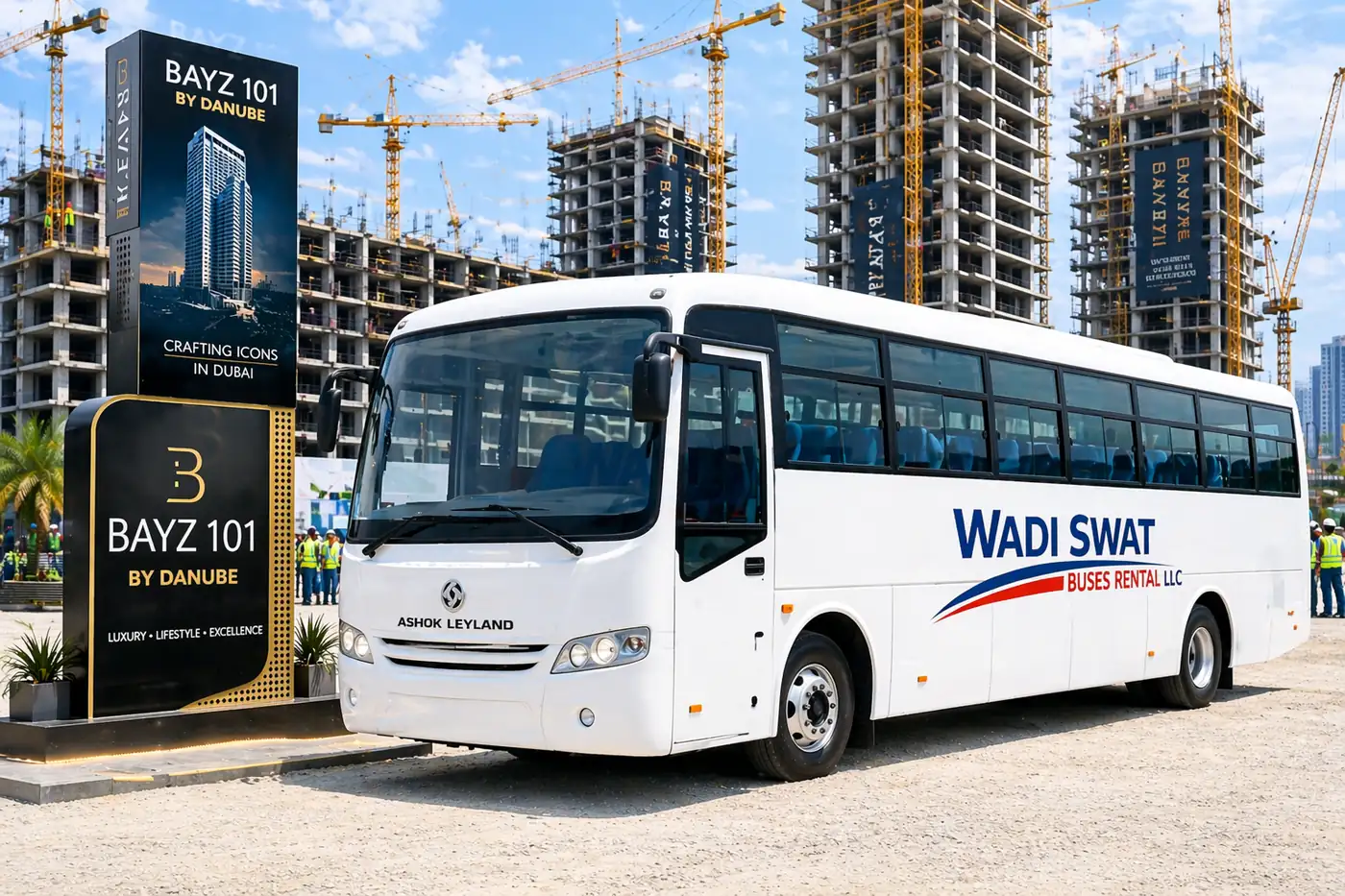
Ashok Leyland 65 Seater Labour Transport Bus
65 Seats • AC Bus • Driver IncludedHigh-capacity AC labour bus for project sites, industrial transport and scheduled workforce movement.
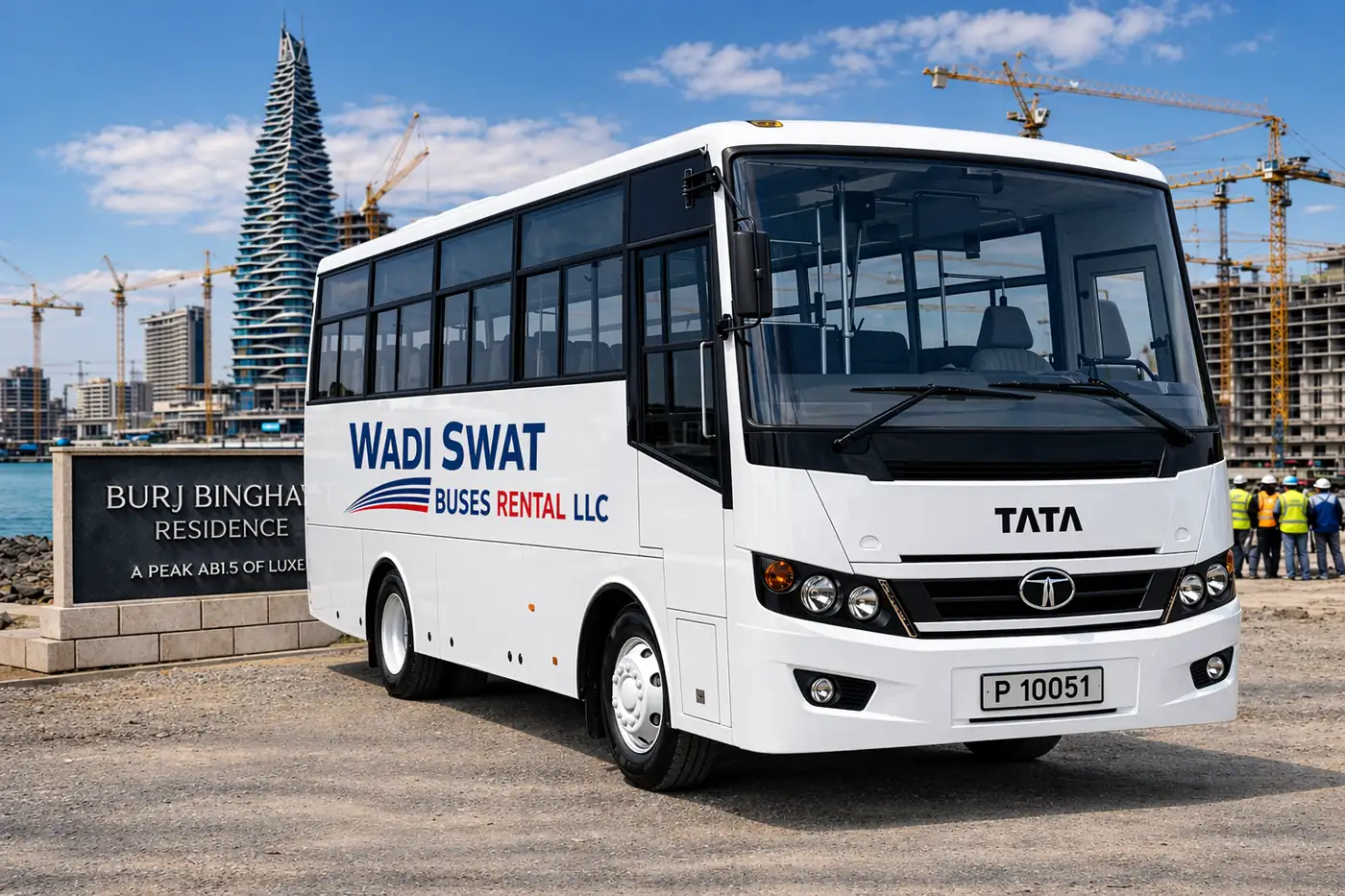
TATA 67 Seater Staff & Labour Bus Hire
67 Seats • AC Bus • Driver IncludedPractical staff and labour transport for large shifts, accommodation-to-site routes and long-term contracts.
High-Capacity Workforce, School and Tourism Vehicle Categories
These categories are not interchangeable. Workforce duties focus on capacity and shift operation; school movement requires the applicable vehicle, supervision and approvals; tourism requires itinerary, comfort, luggage and driver-duty planning.
Non-Air-Conditioned Workforce Buses for Defined High-Capacity Routes
Consider only where the service requirement permits non-air-conditioned transport and the route, passenger welfare, capacity and contract conditions are clearly agreed.
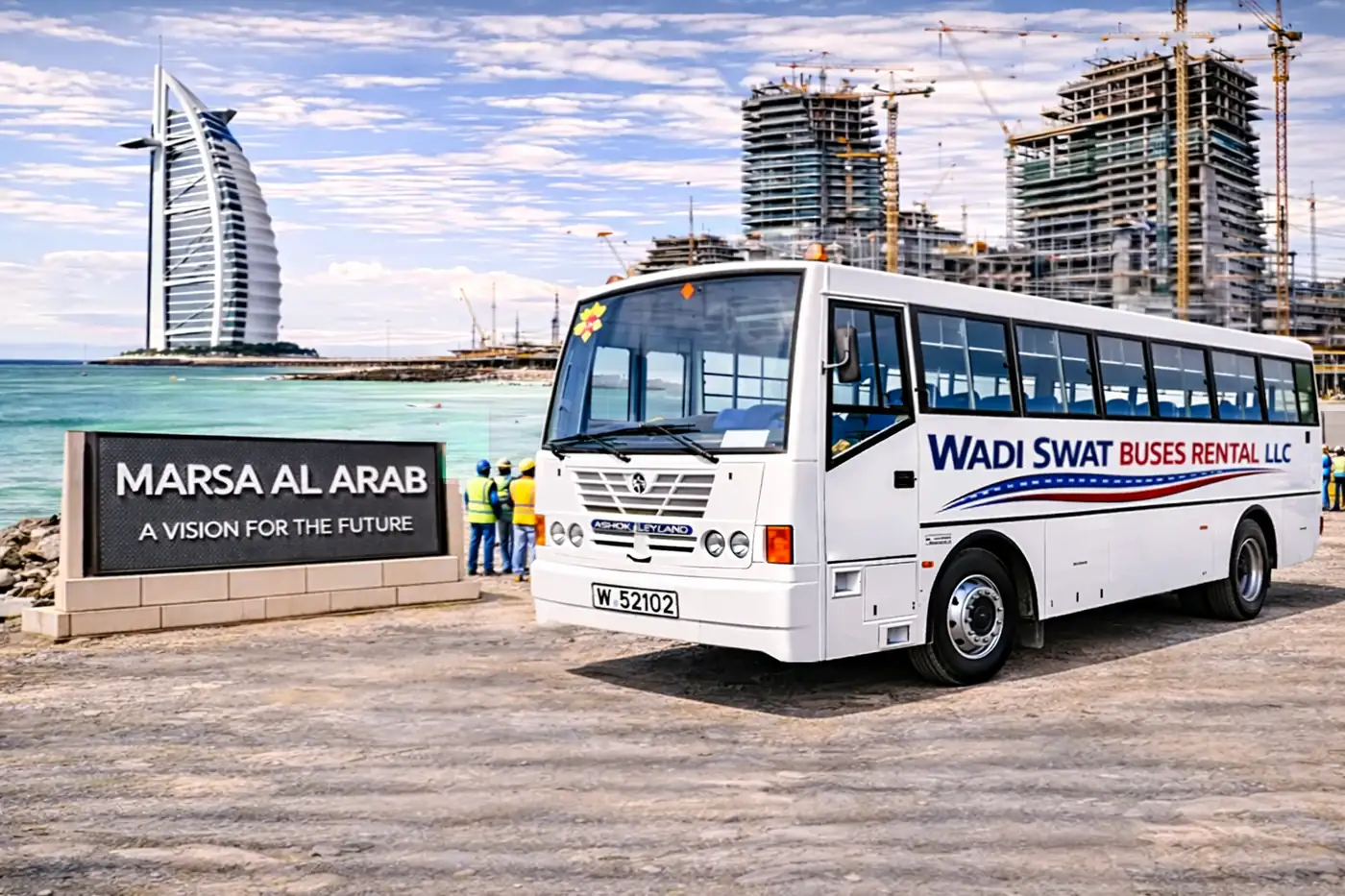
Ashok Leyland 80 Seater Labour Bus Rental Dubai
80 Seats • Non-AC Bus • Driver IncludedHigh-capacity workforce transport for approved fixed routes, labour camps, industrial sites and shift movement.
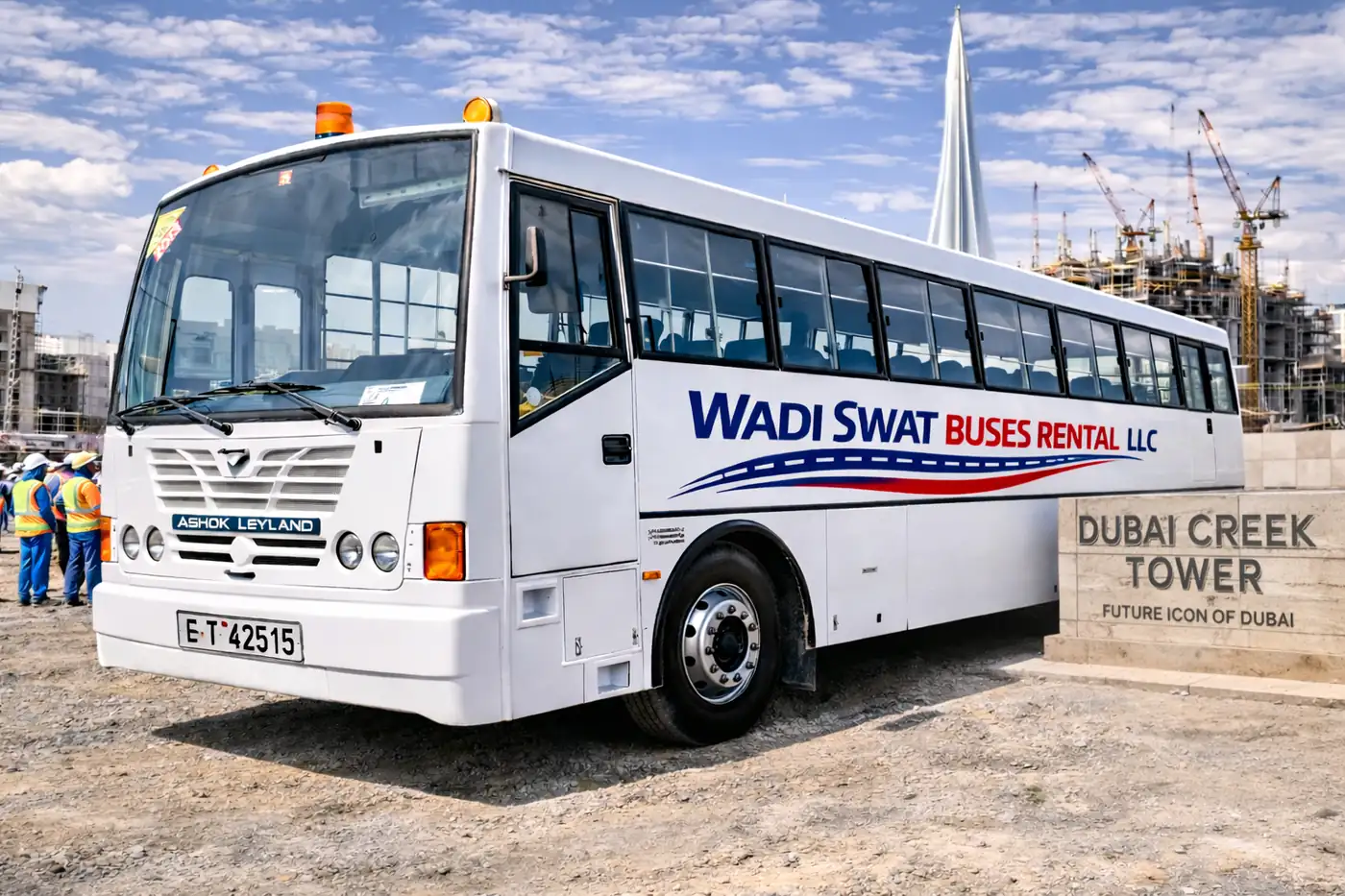
Ashok Leyland 84 Seater Workforce Transport Bus
84 Seats • Non-AC Bus • Driver IncludedLarge workforce bus for defined accommodation-to-site transport and high-volume recurring staff routes.
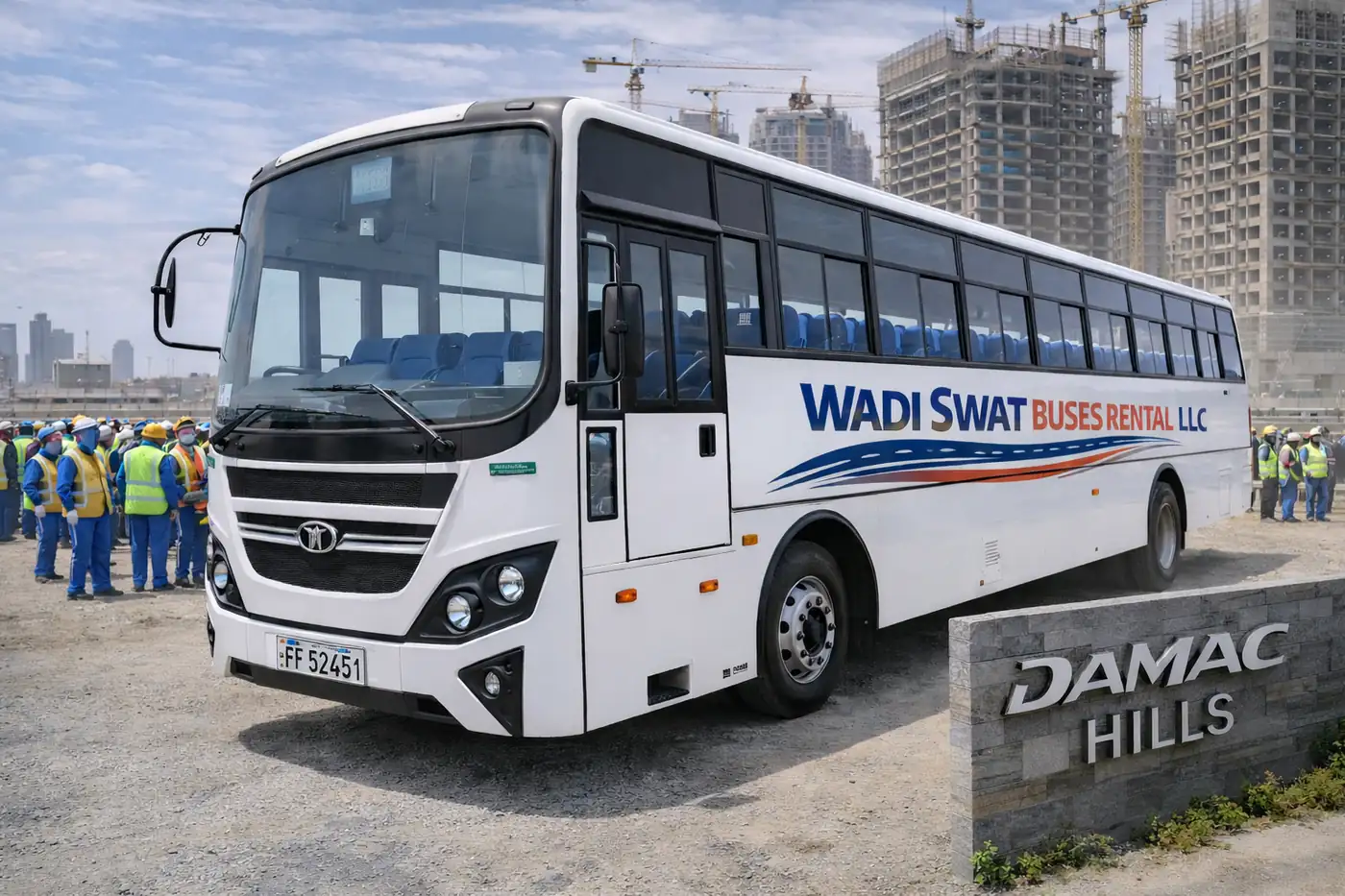
TATA 80 Seater Labour Bus Hire
80 Seats • Non-AC Bus • Driver IncludedHigh-volume labour bus for fixed project routes, staff shifts and controlled workforce transportation.
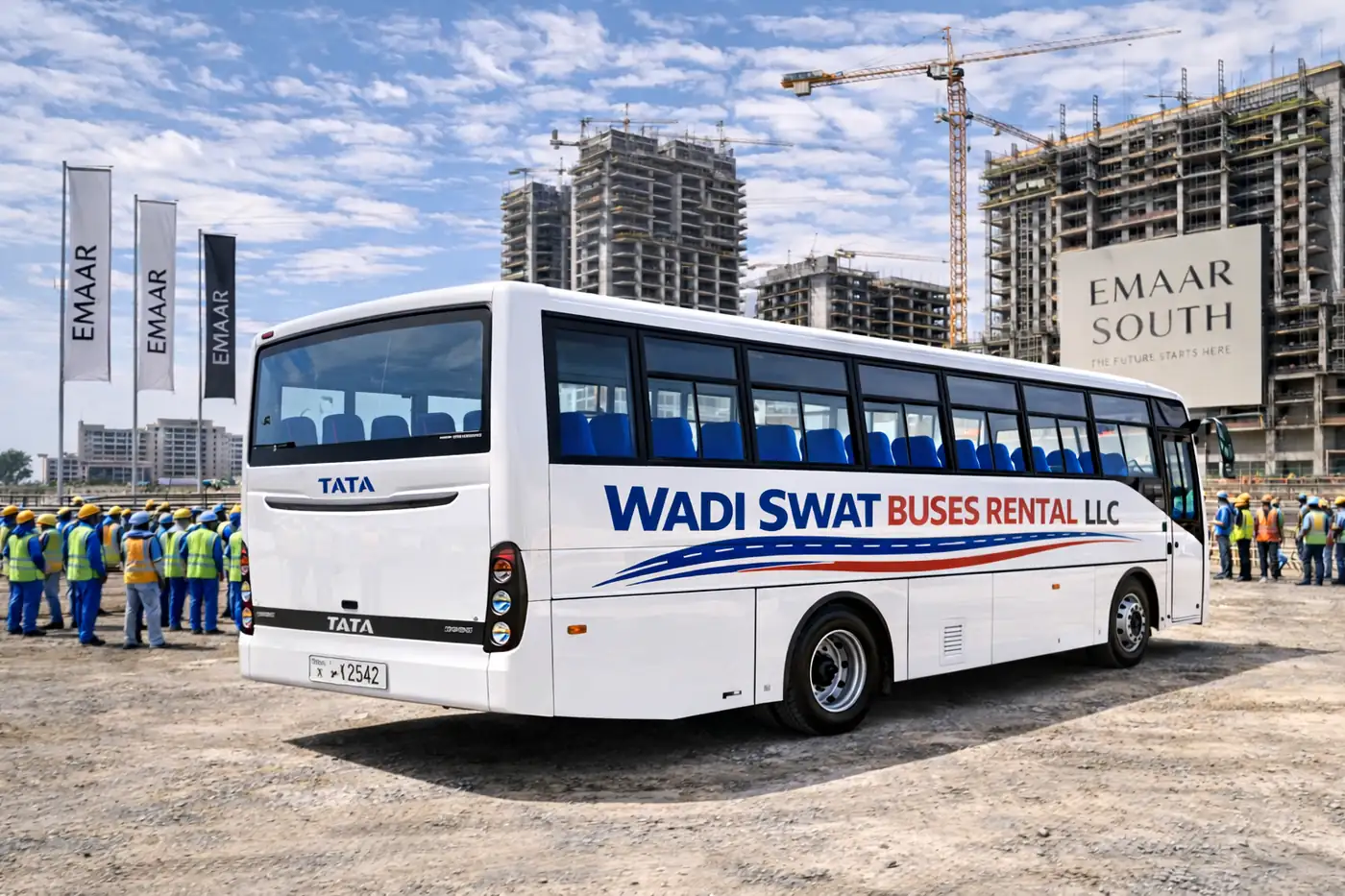
TATA 84 Seater High-Capacity Workforce Bus
84 Seats • Non-AC Bus • Driver IncludedMaximum-capacity workforce option for large teams operating on approved, clearly defined transport routes.
School Buses for Approved Education Routes and Managed Trips
School or academic movement is considered only after passenger ages, supervision, route, timetable, vehicle specification, driver requirements and applicable approvals are understood.
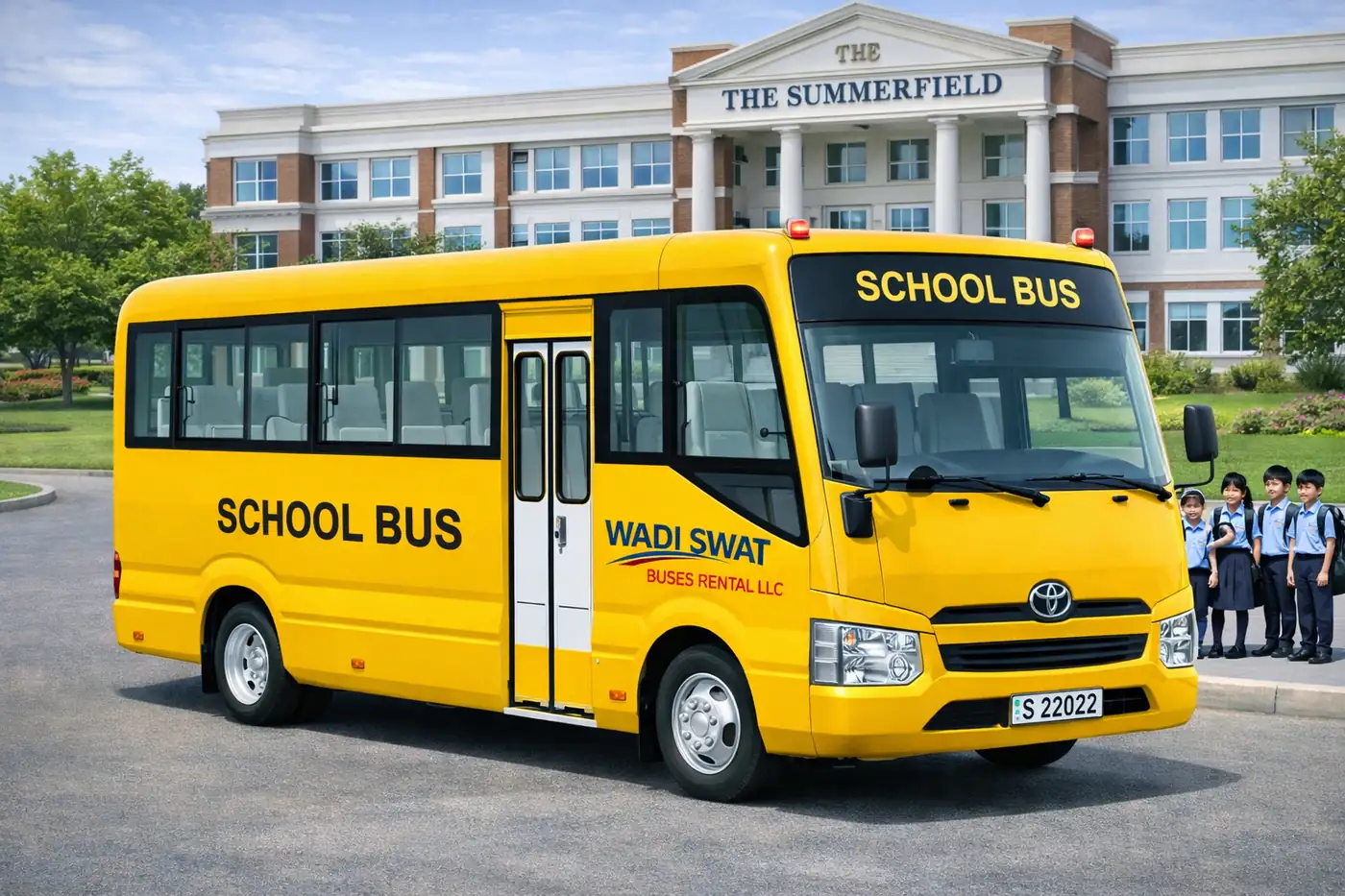
22 Seater School Bus Rental Dubai
22 Seats • School Bus • Driver IncludedCompact school transport option for approved student routes, academic trips and supervised institutional movement.
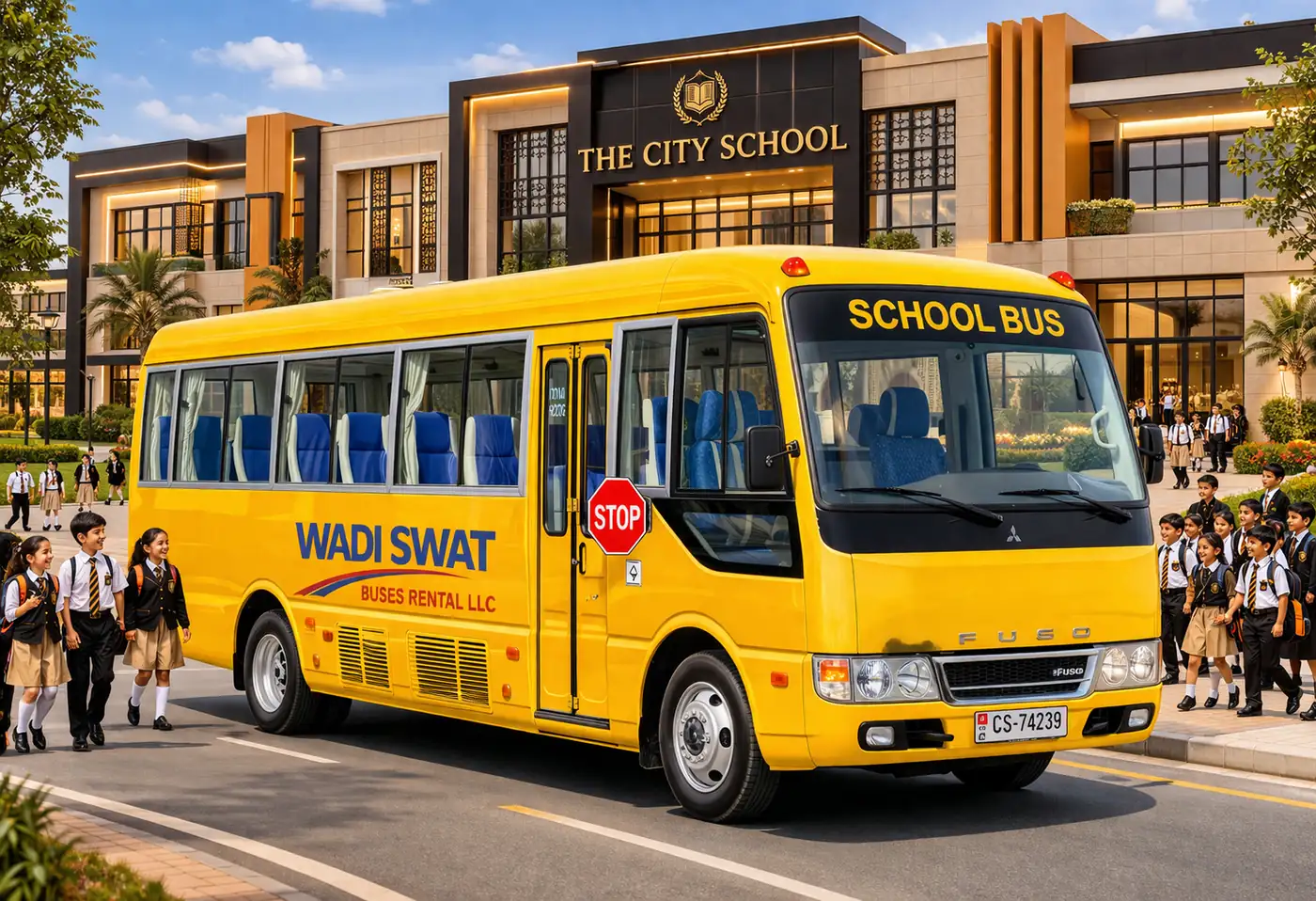
26 Seater School Transport Bus
26 Seats • School Bus • Driver IncludedMid-size school bus for daily student transport, activity trips and managed education routes.
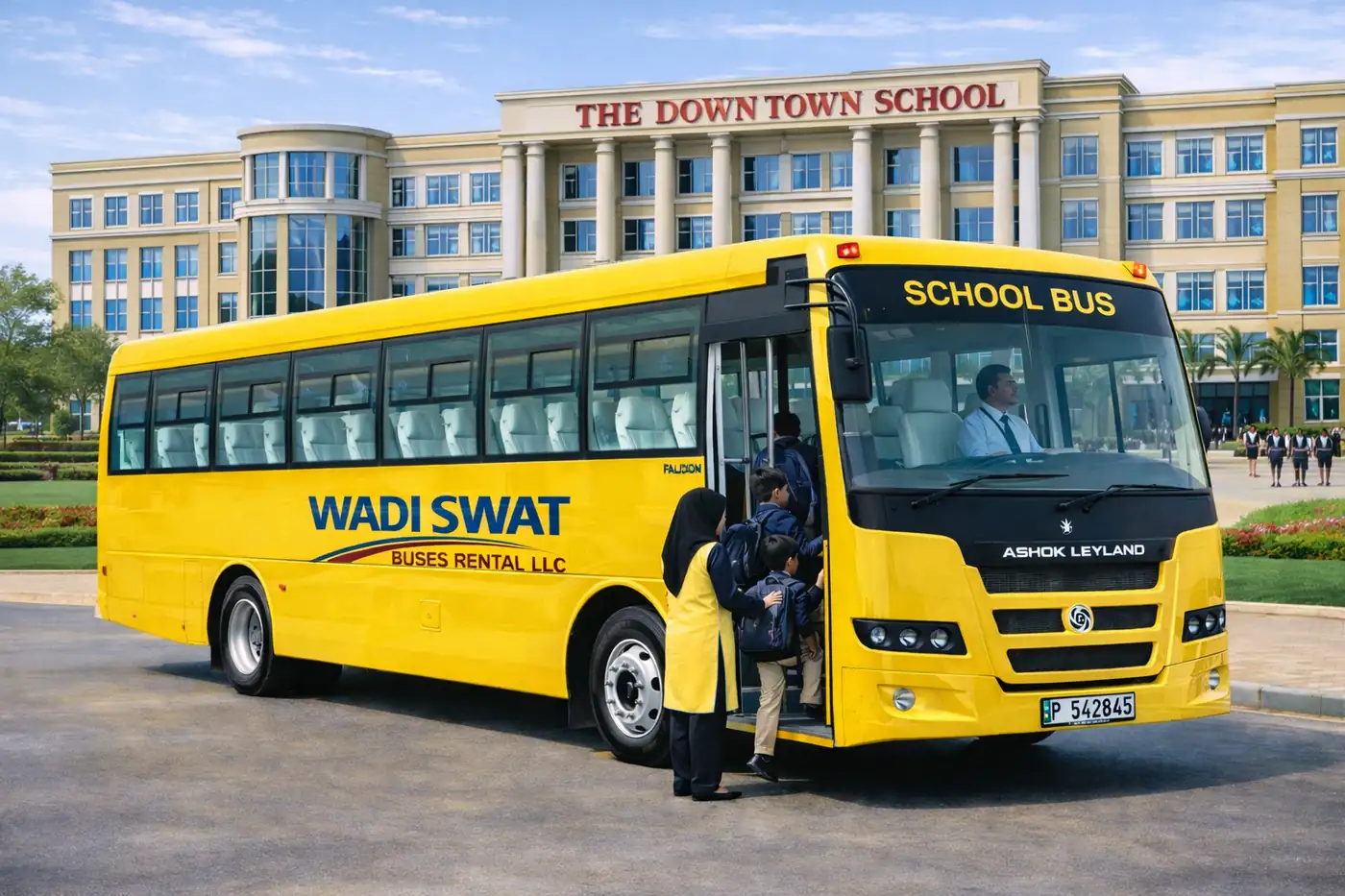
Larger school transport option for established student routes, institutions and supervised group travel.
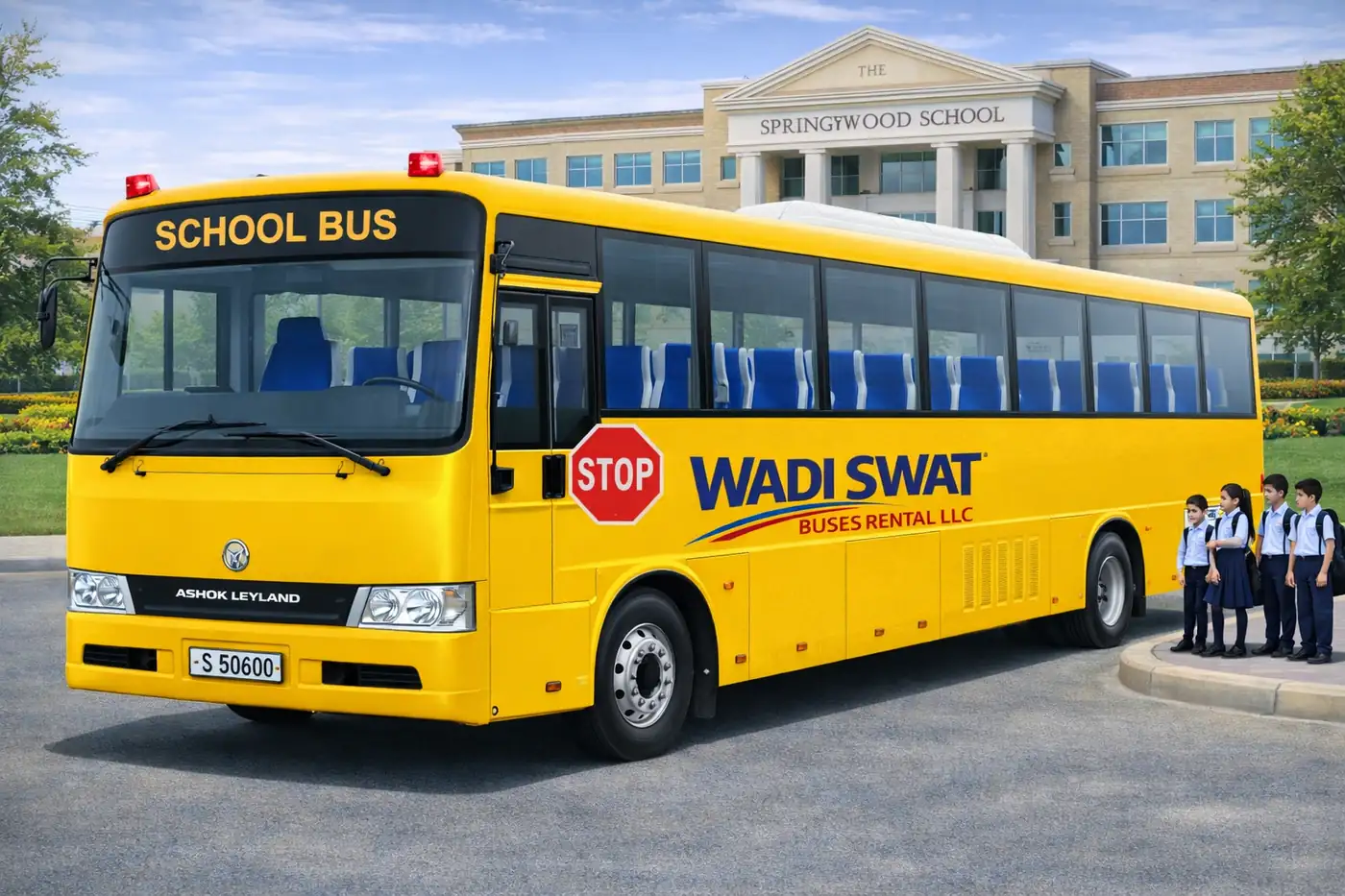
63–71 Seater School Bus for Group Transport
63–71 Seats • School Bus • Driver IncludedHigh-capacity school bus for approved routes, large student groups and organised institutional transport.
Tourist Vehicles for Itineraries, Guest Transfers and Leisure Travel
Select tourism transport from the itinerary, luggage, passenger comfort, parking, journey length, guide arrangements and final return—not from seat count alone.
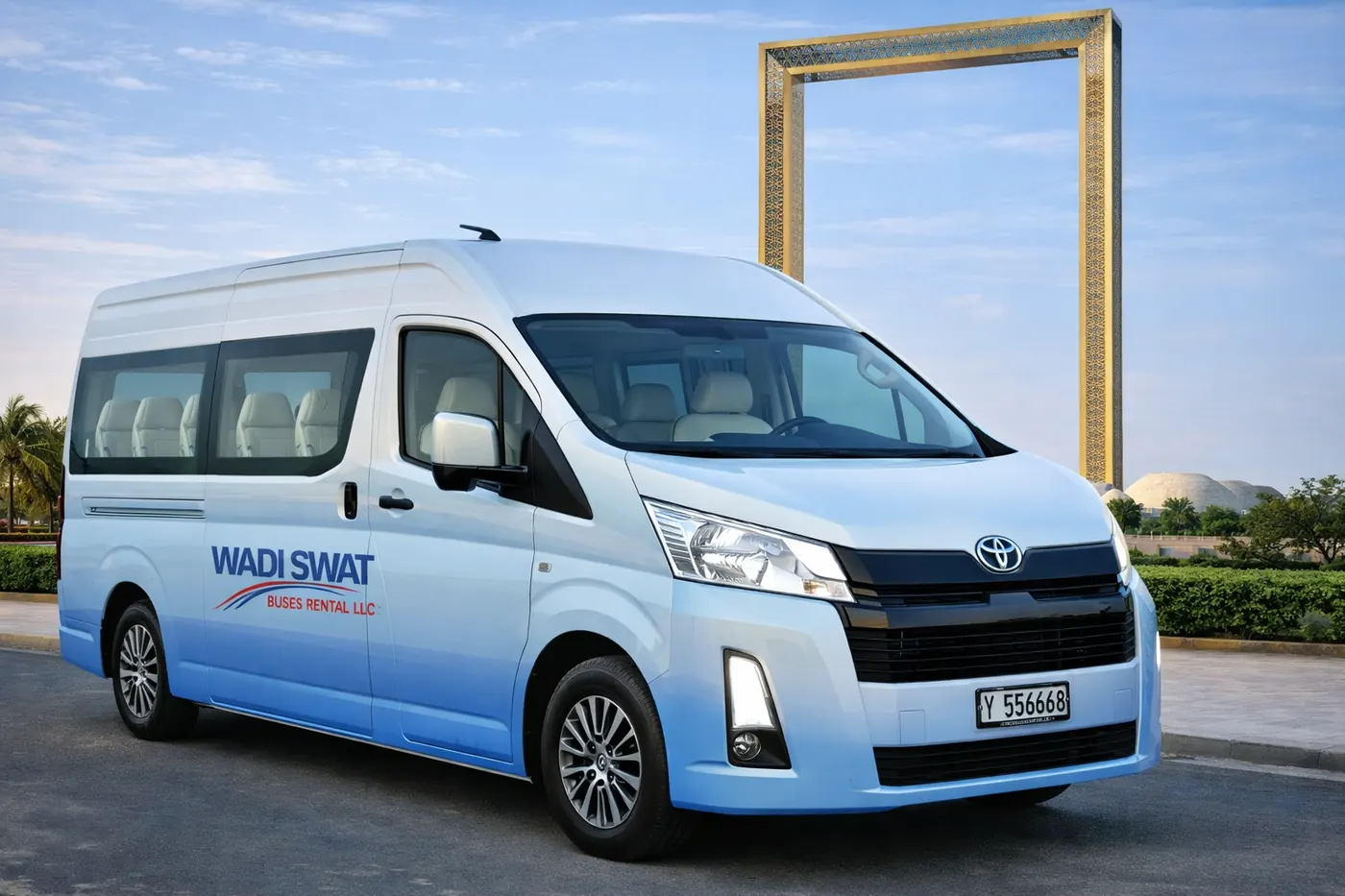
10–15 Seater Tourist Van Rental Dubai
10–15 Seats • Tourist Van • Driver IncludedTourist van for Dubai sightseeing, hotel pickup, airport transfer and private small-group itineraries.
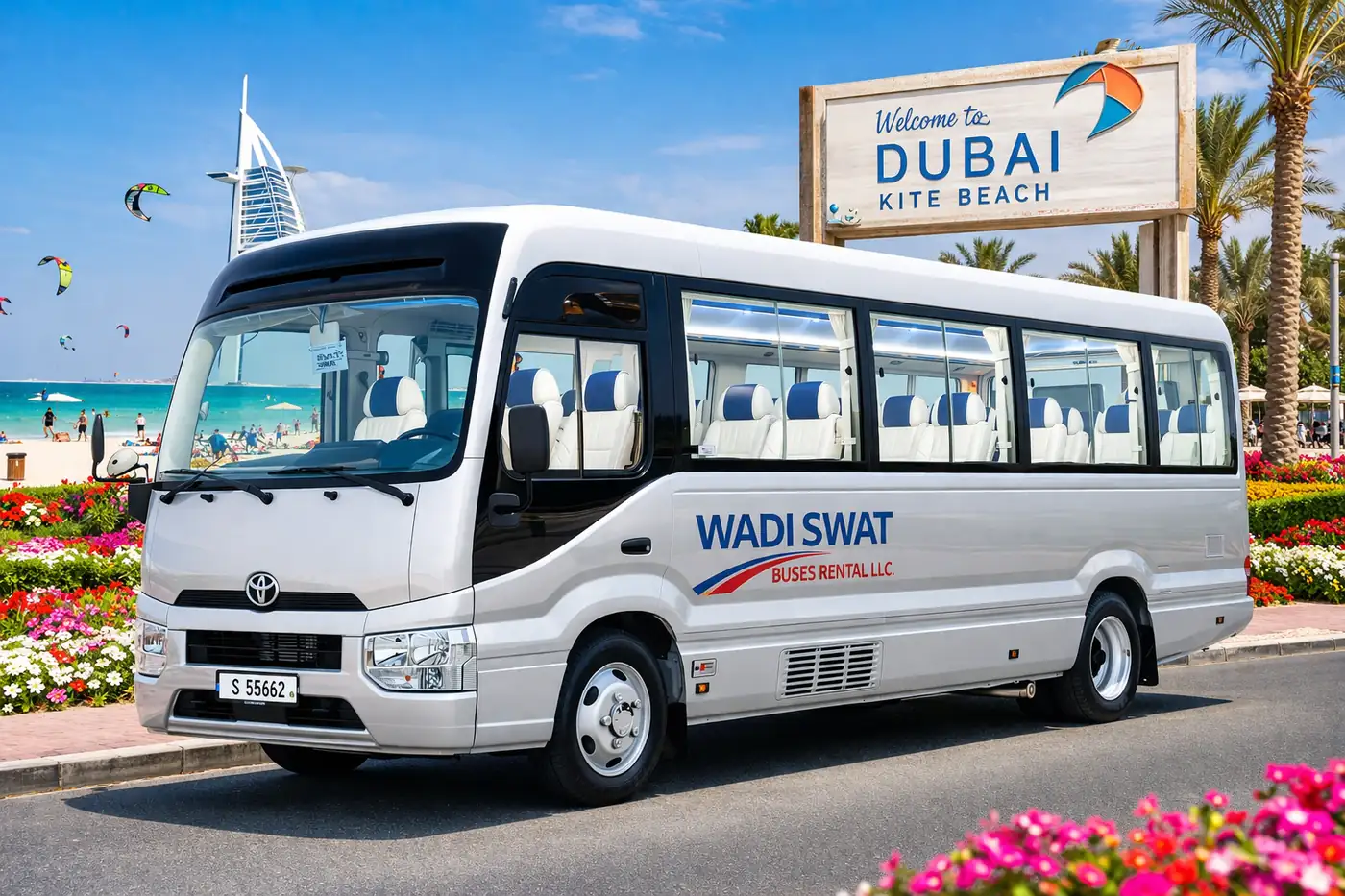
20–30 Seater Tourist Bus Hire Dubai
20–30 Seats • Tourist Bus • Driver IncludedTour bus for city sightseeing, attractions, hotel groups, airport pickup and multi-stop UAE itineraries.
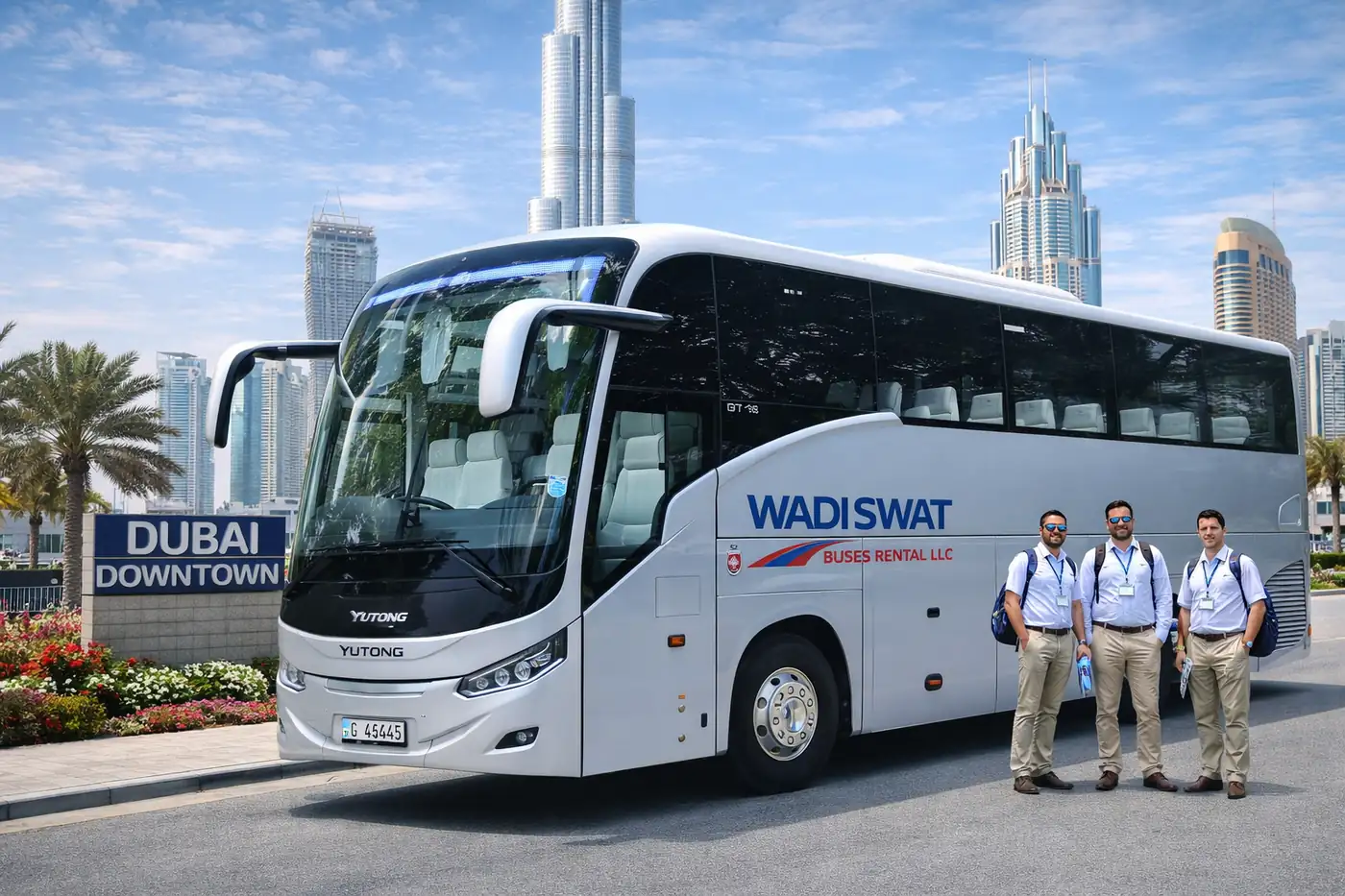
35–50 Seater Luxury Tourist Coach
35–50 Seats • Tourist Coach • Driver IncludedLuxury tourist coach for large sightseeing groups, conferences, events and comfortable long-distance tours.
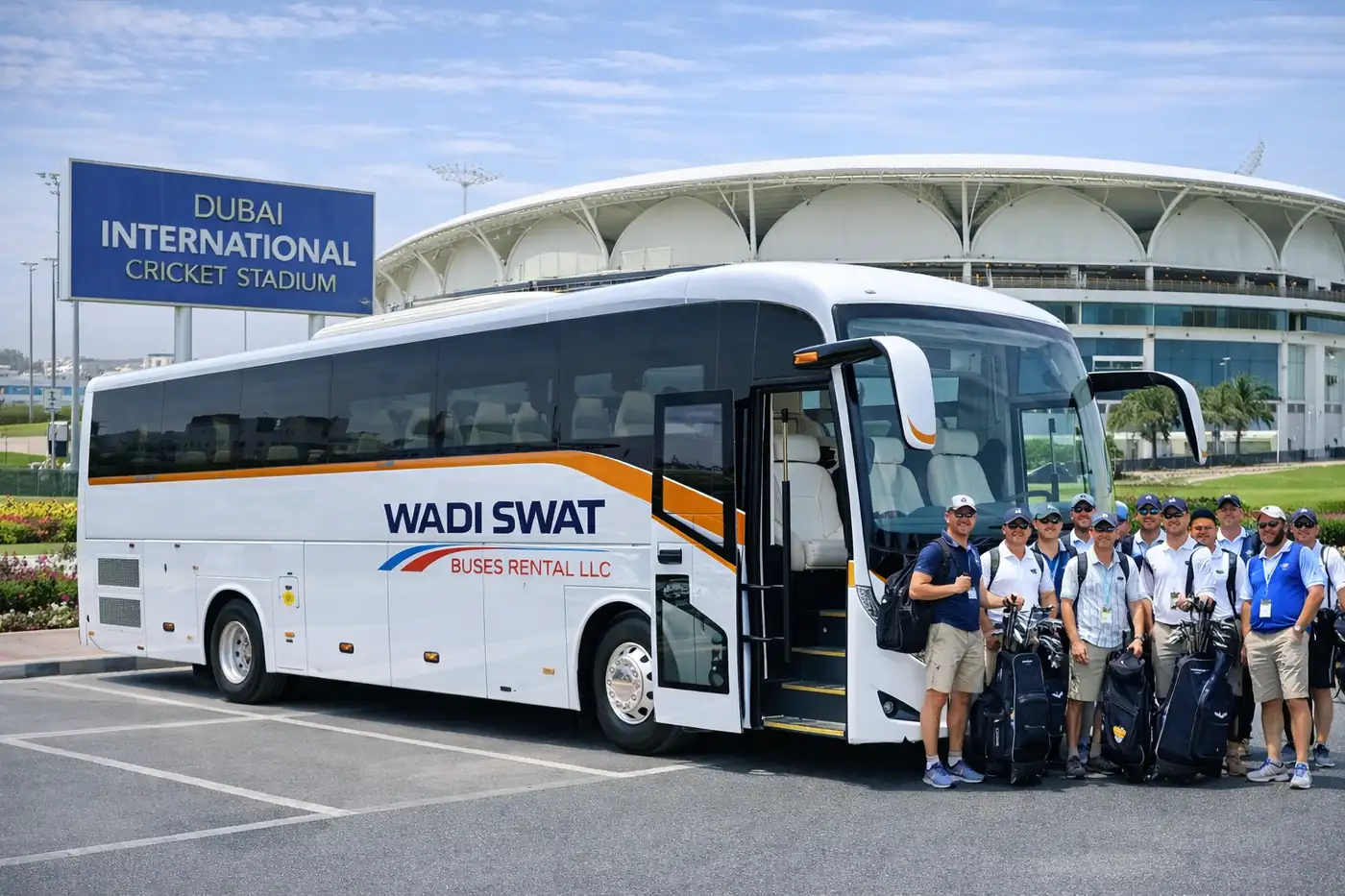
51–53 Seater Dubai Tour Bus Rental
51–53 Seats • Premium Coach • Driver IncludedFull-size tour coach for Dubai city tours, major groups, delegations and premium inter-emirate travel.
Swat Transport supports several passenger-movement needs, but each service is planned differently. The primary service groups below explain the operational questions that matter most; the shorter service cards then direct visitors to more specific information.
Start by identifying the passenger group, journey purpose and operating pattern. A staff route depends on shifts and pickup clusters, an airport movement on terminal and luggage, an event on staging and dispatch, and a tour on the full itinerary.
Choose the service description that most closely matches the duty, then send the exact route and schedule for confirmation.
For offices and business parks, provide shift times, pickup clusters, operating days, workplace entrance and the person authorised to approve attendance or route changes. Recurring routes should also state overtime, temporary stops and the process for adding employees.
Plan corporate staff routes →Project routes may involve accommodation gates, industrial zones, security checks, remote sites and strict reporting times. Confirm the shift cycle, usable capacity, air-conditioning requirement, site access and escalation contacts before service begins.
Review driver-included workforce transport →Give the terminal, flight, meeting point, passenger and luggage estimate, hotel entrance and group coordinator. Delayed arrivals, parking, waiting and separate guest waves should be considered before the vehicle and duty period are confirmed.
Plan group airport transfers →List hotels, venues, guest waves, session times, loading zones, coach holding and the person controlling dispatch. The return plan should be agreed before the first vehicle departs.
Prepare conference shuttles →State the institution, passenger ages, route, timetable, supervision, attendant needs and any applicable vehicle, driver or approval requirement before presenting the service as school transport.
Review education transport requirements →Provide the ordered itinerary, luggage, planned stops, parking, comfort expectation, guide or coordinator and realistic final return.
Plan the city itinerary →Labour Transport Services
Camp-to-site and shift routes require exact gates, passenger control, capacity, air-conditioning conditions, reporting buffers and a clear method for overtime or missed access.
Check project-gate access →Hotel Transfer Services
Useful for airport arrivals, group check-ins, city transfers and scheduled guest shuttles. Share rooming or group lists, luggage, entrance and arrival waves.
Prepare the hotel route →Plan hotel guest transport →Event Transport Services
For conferences, exhibitions, weddings and sports groups, define arrival waves, staging, coach holding, dispatch contact and return windows.
Coordinate sports-event travel →Corporate Shuttle Services
Suitable for offices, business parks and delegations using repeated timed loops. Confirm pickup points, frequency, shift or meeting times and change control.
Review shift-arrival timing →Daily Pickup and Drop Service
A repeated route for employees, students or guests. Record operating days, pickup order, reporting times, attendance updates and temporary route changes.
Explore Daily Pickup and Drop Service →Monthly Contract Transport
A continuing service with agreed vehicle category, working days, shifts, contract period, invoice cycle, notice and additional-trip rules.
Explore Monthly Contract Transport →Private Group Transport
For families, community groups, sports teams and visitors, confirm meeting points, luggage, stops, waiting and the final return.
Explore Private Group Transport →Intercity Transport Services
Cross-emirate movement needs realistic outward and return timing, comfort, luggage, rest stops, tolls and driver-duty planning.
Explore Intercity Transport Services →Van Rental With Driver
Suitable for smaller groups when usable seats, luggage and access fit the selected van. State whether the duty is a transfer, retained hire or recurring route.
Review staff-bus capacities →Minibus and Toyota Coaster Transport
Often used for medium groups, company shuttles, events, school or institutional trips and airport movement where a van is too small and a coach unnecessary.
Compare workforce buses →Luxury Coaches for Larger Groups
Useful for larger airport groups, conferences, tours, hotels and events that need luggage capacity, comfort and long-distance suitability.
Review school-bus options →Executive Transport Services
For delegations and senior guests who need professional presentation, privacy, precise timing and coordinated waiting.
Explore Executive Transport Services →Shuttle Transport Services
Timed repeated movement between hotels, offices, venues or transport points. Define frequency, dispatch control, waiting and the final loop.
Explore Shuttle Transport Services →Wedding Transport Services
Group guests by hotel or area, confirm venue access and coach parking, then agree the arrival time, waiting and separate return waves.
Plan wedding guest transport →Send your employee pickup clusters, shift start and finish times, required arrival, working days, site gate and passenger count. We review the route before confirming the vehicle, duty window and monthly or recurring commercial scope.
For ongoing service, the written quotation should state the vehicle category, driver, operating days, extra-trip rules, fuel treatment, maintenance, insurance, backup expectations, invoice or LPO requirements and who may approve route or timing changes.
Give us the pickup sequence, shift timing, workplace entrance and attendance-change process. The route is planned around the required arrival time, not only the shortest map distance.
Plan a staff transport route →For camps, industrial areas and project sites, include gate access, security checks, shift cycles, overtime approval and the contact responsible for passenger or site changes.
Review workforce transport options →For a monthly contract, confirm working days, daily duty hours, route, shifts, contract period and expected extra trips. Fuel, Salik, parking, permits, overtime, maintenance, insurance and backup terms should be written into the quote.
Review monthly contract transport →Who We Support
Use these cards to identify the customer environment closest to your requirement. Each card shows the main transport need and one detail that should be confirmed early.
Corporate Offices
Repeated employee movement depends on shift times, pickup clusters, workplace access and one administration contact for attendance and route changes.
Plan recurring staff movement →Construction and Project Sites
Project transport needs accommodation locations, site gates, shifts, security procedures, usable capacity and an escalation contact.
Plan shift transport →Hotels and Tourism Teams
Airport arrivals, guest transfers and tours may involve luggage, separate arrival waves, hotel entrances and a group coordinator.
Map the sightseeing day →Schools and Universities
Academic movement requires planned boarding, timetable control, supervision and the applicable vehicle, driver or approval requirements.
Review education transport requirements →Events and Exhibitions
Multi-vehicle movement may need arrival waves, shuttle loops, coach holding, late returns and one dispatch lead.
Prepare festival movement →Industrial and Free Zone Teams
Exact gates, early reporting, site instructions, pickup clusters and disruption handling are central to these routes.
Review workforce capacity →Medical and Care Groups
Allow for slower boarding, attendants, accessible entrances, comfort and strict appointment or shift timing.
Explore Medical and Care Groups →Private and Family Groups
Confirm the meeting point, luggage, stops, waiting and return arrangement for weddings, leisure days and family journeys.
Explore Private and Family Groups →Tell us the airport, terminal, flight time, passenger count, luggage and hotel or final destination. We match the group to a suitable van, minibus or coach with driver and confirm the waiting, parking and route scope before you book.
For Dubai International Airport, send the terminal, flight number, scheduled arrival or departure, meeting point, passengers and bag estimate. This lets us plan the correct pickup point and vehicle capacity.
For Dubai World Central, share the flight details, pickup or drop-off point, luggage and onward route. Longer access time and the final destination are included when we review the duty.
Send the exact hotel, residence or venue entrance—not only the area name—so we can check coach access, loading space, parking and the correct drop-off point.
Give us the flight departure time, hotel pickup point, passenger readiness time and luggage. We work backward from the required airport arrival so the reporting time is practical.
Airport groups often need more usable space than the passenger count suggests. Tell us how many large suitcases, cabin bags, strollers or equipment items are travelling with the group.
Your quotation should state how airport parking, waiting and delayed or changed flights are handled. If the arrival time changes, send the update before dispatch so the revised duty can be checked.
If your company has a vendor-onboarding or site checklist, send it with the enquiry. For applicable confirmed services, Swat Transport can provide the relevant trade licence, Dubai RTA Establishment Card, fleet insurance, ISO 45001 and ISO 14001 documentation, plus required vehicle and driver records through the agreed channel.
Your vehicle is also checked through maintenance scheduling, defect reporting and pre-duty readiness controls. If a disruption affects the service, operations assesses the passenger requirement, location, vehicle condition and available replacement category before confirming the recovery arrangement.
Send the procurement checklist, portal instructions and deadline. We can prepare the applicable company and Dubai RTA records for the proposed service without posting private documents publicly.
Review safety and operating standards →Tell us whether your client requires insurance copies, expiry checks, vehicle registration, driver records or project-specific limits before deployment.
Review insurance information →Where requested for vendor approval, the applicable ISO 45001 and ISO 14001 documentation can be included with the onboarding pack for review.
Review operating standards →A reported defect is assessed before the vehicle continues the duty. If replacement is required, the response is matched to the location, passenger load, timing, vehicle category and available fleet.
Review Swat service support →Before you pay, issue an LPO or approve a contract, check the quotation validity, payment timing, VAT treatment, cancellation notice, waiting or overtime rules, extra stops and the process for route or timing changes. The written quotation or contract is the commercial reference for your booking.
1. Send the complete requirement
Provide the route, date, schedule, passengers, luggage and operating format in one brief.
2. Check the proposed vehicle
Confirm the category against usable capacity, luggage, access and comfort.
3. Check inclusions and extras
Review driver, fuel, Salik, parking, permits, waiting, overtime and additional trips.
4. Review cancellation and notice
Check the notice requirement, cancellation treatment and what happens if the date or duty changes.
5. Approve changes in writing
Use the named contact path for new stops, timing changes, extra trips or a different vehicle requirement.
Accessibility, Luggage, Supervision and Site Requirements
Tell the booking team about any condition that affects usable space, boarding time, supervision or the entrance the vehicle can safely use.
Luggage and Airport Bags
State the number and approximate size of bags so passenger capacity and loading space can be assessed together.
Senior and Assisted Boarding
Mention reduced mobility, extra boarding time and the most practical entrance before the vehicle is confirmed.
Explore Senior and Assisted Boarding →Wheelchair or Accessibility Need
Explain wheelchair space, boarding assistance or another accessibility requirement so a suitable arrangement can be reviewed.
Explore Wheelchair or Accessibility Need →Multiple Pickup Points
Provide the pickup order, timing buffer and contact method for passengers at each stop.
Venue Access and Parking
Share the approved loading zone, gate, parking instruction and any coach or vehicle restriction.
Long-Distance Comfort
Confirm luggage, seating standard, planned stops, driver duty and the final return for longer journeys.
VIP Guest Handling
Nominate one coordinator and provide the approved itinerary, waiting arrangement and privacy expectation.
Back-to-Back Trips
Allow realistic travel, loading and recovery time between duties before assigning one vehicle to several movements.
Tourism, Private Groups and Cross-Emirate Itineraries
A tour quotation should cover the complete itinerary, not only the first transfer. Send the ordered stops, expected time at each location, parking, luggage, guide arrangements, driver breaks and final return. Plan Dubai city-tour transport.
Dubai City Tours
Allow time for boarding, photo stops, parking searches, traffic and the agreed final return.
Coordinate the private group →Abu Dhabi Day Trips
Review the outward and return duty, attraction timings, planned stops and passenger comfort for the longer journey.
Review Dubai route coverage →School and University Trips
Use controlled boarding, a named group leader, destination opening times and a clear return meeting point.
Review education transport requirements →Weddings and Family Events
Confirm guest groups, venues, popular-date availability and separate return waves before vehicle allocation.
Plan school-season movement →Expo, Exhibition and Venue Shuttles
Follow the organiser’s access window, loading zone, timetable and dispatch contact; approve extra loops separately.
Prepare venue transfers →Theme Parks and Leisure Routes
Book early for weekend demand, entry times, parking, luggage or stroller needs and late return requirements.
Plan the final return →Event Shuttles Planned Around Arrival Waves and Venue Access
The difficult part of event transport is often coordinating several hotels, guest waves, loading areas and return times. Nominate one dispatch contact and agree staging, late-arrival and final-return arrangements before vehicles are released. Plan tourism group shuttles.
Expo City and DWTC
Confirm the approved entrance, coach holding, shuttle loops, standby and late departures before adding them to the duty.
GITEX, Gulfood, Big 5 and Arab Health
Higher demand makes early hotel lists, delegate waves, vehicle allocation and return planning especially important.
ADNEC and Abu Dhabi Events
Follow the event programme, arrival pattern, coach holding instructions and intercity return schedule.
F1, Yas Marina and Sports Events
Check access permits, parking, road closures and organiser loading instructions before confirming vehicle numbers.
Weddings and Private Celebrations
Confirm whether vehicles wait, complete separate return waves or perform an additional trip after the original duty.
Dubai Shopping Festival and New Year
Give each vehicle a defined pickup zone, passenger group, dispatch contact and return plan.
Eid, UAE National Day and Public Holidays
Allow for road restrictions, venue rules, passenger waves and revised timetables issued for the occasion.
School Season and Annual Contracts
Confirm operating days, pickup points, supervision responsibilities, timetable changes and contract notice rules.
Tell us the exact Dubai pickup and destination, not only the district name. Tower entrances, hotel driveways, free-zone gates, airport terminals, parking, traffic direction, tolls and permit rules can change the practical route even when two locations look close on the map.
For inter-emirate movement, include the complete outward and return schedule, planned stops, luggage and comfort expectations. Early, late or remote routes may need additional operating time.
Bus Rental Across Dubai
Airport, hotel, staff, event and private-group routes across Dubai, with vehicle selection based on the exact entrance, passenger load, luggage and duty.
Explore Abu Dhabi routes →Passenger Transport in Abu Dhabi
Corporate, hotel, event and intercity movement where the longer outward and return duty, tolls and venue access must be planned. Review Abu Dhabi route planning.
Review Sharjah coverage →Passenger Transport in Sharjah
Residential, school, airport and industrial routes where traffic direction, pickup order and cross-emirate timing matter. Review Sharjah route planning.
Explore Ajman routes →Passenger Transport in Ajman
Dense pickup areas and cross-emirate commuting benefit from clear cluster points, realistic reporting buffers and a confirmed return duty. Review Ajman route planning.
Review Fujairah transport →Passenger Transport in Fujairah
East-coast hotel, tourism and corporate routes requiring longer journey, luggage and return-time planning.
Explore Ras Al Khaimah routes →Passenger Transport in Ras Al Khaimah
Resorts, Jebel Jais, events and intercity groups where highway travel, comfort, parking and the final return should be considered.
Review Umm Al Quwain coverage →Passenger Transport in Umm Al Quwain
Private groups, schools and staff routes that often connect with other emirates and need exact pickup and destination details.
Explore Passenger Transport in Umm Al Quwain →UAE Coverage Overview
Review the main service areas and the information needed before an inter-emirate route is confirmed.
Explore UAE-wide routes →Dubai Areas We Plan From Exact Pickup Points
Share the building, hotel, terminal, community gate or site entrance so the vehicle and loading point can be checked before confirmation.
Intercity Route Support
Cross-emirate travel needs realistic outward and return timing, passenger comfort, luggage, stops and driver-duty planning.
Dubai Pickup Areas: Gates, Loading Zones & Access
Dubai pickup conditions vary by building and entrance. Share the exact tower, hotel, terminal, site gate or loading area rather than only the district name.
Jebel Ali and JAFZA
Provide the gate number, permit instructions, security procedure and approved staging area.
Explore Jebel Ali and JAFZA →Dubai South and DIP
Confirm the workplace or aviation-area gate, shift time, pickup cluster and recurring route pattern.
Review airport corridors →Business Bay and Downtown
Identify the exact tower, hotel or boulevard entrance because nearby roads may have different loading restrictions.
Compare tourism coaches →Dubai Marina, JBR and Palm
Check hotel driveways, residential security, kerbside loading and coach access before allocation.
Explore industrial-area routes →DXB, DWC & Airport Corridors
For DXB include Terminal 1, 2 or 3; for DWC include the flight and pickup point. In both cases send the meeting point, parking requirement and luggage.
Plan airport movement →Al Quoz and Industrial Areas
Confirm controlled gates, loading zones, shift reporting and the site contact.
Check site-route requirements →Deira and Bur Dubai
Share the correct pickup side and any restriction created by narrow hotel or commercial streets.
Review inter-emirate planning →JLT and Community Routes
Use agreed cluster points, tower or gate references and a realistic allowance for local boarding.
Explore JLT and Community Routes →Send one complete route brief. The booking team should not have to collect the date, map pins, passenger count and timings through several separate messages.
The quotation should identify the vehicle category, operating hours, included items, exclusions and the treatment of changes. State tolls, parking, permits, waiting, overtime, accommodation, meals, peak dates and VAT where they apply.
Use the four groups below to check the enquiry before submitting it.
A complete route brief is more useful than a seat count alone.
Passenger count, exact pickup and destination pins, planned stops, luggage, boarding access and any mobility need.
Service date, reporting, required arrival, departure and return times, expected waiting, operating days and split shifts.
Airport, staff route, workforce, school, hotel, event, tour, private group or another clearly defined movement.
Preferred vehicle standard, quoted amount, inclusions, exclusions, coordinator details and who may approve later changes.
Six details that prevent quotation delays
Helpful booking and policy resources
Use these pages only for the next question that remains after the route brief is prepared.
How Booking Works
See how an enquiry is reviewed before the route, vehicle and quotation are confirmed.
Review the booking flow →Request a Quote
Use the quotation form when the route, passenger count and timing are ready.
Start a route quote →Booking Policy
Review booking conditions before confirming a recurring, event or retained-duty service.
Read booking conditions →Cancellation and Refund Policy
Check cancellation terms and notice before final approval.
Review cancellation terms →Information Needed Before Booking
Use a preparation checklist for passengers, route, timing, luggage, return and coordinator details.
Prepare the route brief →How to Book Passenger Transport in Dubai
Follow the booking steps from route brief to written approval.
Follow the booking steps →Choosing a Van, Minibus or Bus
Compare usable capacity, luggage, access and journey length when the group sits between categories.
Compare vehicle categories →Passenger Transport Pricing Factors in the UAE
See how duty hours, distance, parking, waiting and stops affect the commercial scope.
Understand price factors →Customer Feedback
Review published feedback from completed transport services where the source and context are shown.
View customer evidence →Insurance Information
Useful for procurement teams reviewing the documents relevant to a confirmed service.
Review insurance information →Safety and Operating Standards
Review the operational controls used for vehicle readiness and passenger transport planning.
Review safety standards →Why Choose Swat Transport
See the verified service capabilities and planning approach presented for decision makers.
See why companies choose Swat →Procurement and Vendor-Onboarding Readiness
Send the vendor checklist, portal requirements and document deadline before service begins. Swat Transport can then prepare the applicable current records through the agreed secure channel. Plan a monthly staff transport contract.
Company records
Current company, tax and bank information required for onboarding.
Vehicle and driver records
Applicable records for the proposed vehicle and driver allocation.
Insurance information
Evidence relevant to the confirmed service and client requirement.
Commercial documents
Quotation, validity, payment terms, VAT treatment and change conditions.
Review the requirements →Site requirements
Permits, inductions, gate passes, access rules and document deadlines.
Explore Site requirements →Controlled document sharing
Private records sent only to named procurement contacts through the agreed channel.
Review the requirements →Use this as the final handover checklist. It confirms the approved duty without repeating the earlier sales explanation.
Final route and timing
Reconfirm pickup pins, stop order, reporting time, required arrival, return plan and operating days.
Passenger and access notes
Update the final passenger count, luggage, mobility needs, gate instructions, parking and boarding contact.
Vehicle and duty scope
Keep the agreed vehicle category, hours, waiting, inclusions and exclusions with the booking reference.
Changes and escalation
Nominate one coordinator on each side and approve route, timing or extra-trip changes through the agreed process.
These answers cover the price, capacity, driver, inclusions, A/C and service questions customers commonly search before requesting a Dubai bus rental quotation.
On Wadi Swat's current published vehicle cards, a 23-seat Toyota Coaster is AED 670–1,275 per day, a 30-seat Toyota Coaster is AED 695–1,345, 34–35 seat models span AED 715–1,370, and 50-seat luxury coaches span AED 810–2,295 depending on the model. Smaller vans start lower. Your final quote depends on route, duty hours, waiting, date, fuel treatment, Salik, parking, permits and availability.
For rental in Dubai, our published Toyota Coaster 30 Seater planning rate is AED 90–105 per hour, AED 695–1,345 per day and AED 3,470–6,715 per week, with the driver included. If you mean purchasing a 30-seat bus rather than renting one, that is a separate dealer/manufacturer price and is not the Wadi Swat rental rate.
Wadi Swat does not publish a dedicated 32-seat model. For a 32-passenger rental requirement, we normally check an available 34-seat Mitsubishi Rosa or 35-seat bus; the current published 34–35 seat model cards span about AED 90–155 per hour and AED 715–1,370 per day. Luggage and access can change the vehicle selected.
If you mean rental, treat 32 passengers as a 34–35-seat vehicle requirement unless an exact 32-seat unit is specifically confirmed. Our current 34–35-seat rental cards range from AED 715–1,370 per day depending on the model. If you mean buying a bus, the purchase price depends on manufacturer, engine, specification and UAE homologation and should be obtained from the dealer.
For Dubai rental, the Toyota Coaster 23 Seater on our published rate cards is AED 80–95 per hour, AED 670–1,275 per day and AED 3,360–6,370 per week, with driver included. If you mean buying a new 23-seat Toyota Coaster, Toyota UAE currently lists the 2026 2.7L model from AED 218,900 and the 4.0L model at AED 229,900.
If you mean rental, price depends on capacity and duty: our current cards range from smaller passenger vehicles below AED 600 per day to premium 50-seat luxury coaches reaching AED 2,295 per day. If you mean purchase, a current UAE reference is Toyota's 2026 23-seat Coaster from AED 218,900; larger coach purchase prices vary widely by brand and specification.
For rental, a 52-seat request is normally priced within our 50–53 seater luxury-coach category. Current published 50-seat model cards range from AED 105–320 per hour and AED 810–2,295 per day, depending on the coach model and standard. We confirm the actual registered capacity and luggage fit before assigning a coach.
Wadi Swat does not publish a separate fixed 40-seat model. For around 40 passengers, a 35-seater is too small, so we normally check a 50–53 seater coach; current published luxury-coach cards range from AED 810–2,295 per day depending on the model. The final quote also depends on route, hours, waiting and inclusions.
For Dubai rental, our published 50-seat luxury-coach cards vary by model: Higer starts at AED 810–1,460 per day, Scania at AED 855–1,645, Yutong at AED 950–1,830 and Mercedes at AED 1,090–2,295. The driver is included on these passenger-transport cards; route-specific extras are confirmed in writing.
We do not advertise a dedicated 42-seater minibus as a standard fleet category. For a group of around 42 passengers, we normally check an available 50–53 seater full-size coach because a 35-seater bus would not provide enough capacity. Our published 50–53 seater luxury coach rates currently range from approximately AED 810 to AED 2,295 per day, depending on the vehicle model. The final rental price depends on the route, duty hours, waiting time, luggage, Salik, parking, permits and availability.
Yes, Wadi Swat's passenger-transport service is supplied with a licensed, RTA-permitted driver. We do not offer self-drive buses under this passenger-transport service. The driver and assigned vehicle are confirmed together for the agreed route, operating hours and passenger requirement.
Our homepage covers 7–10 seater minivans, 12–15 seater passenger vans, 23–30 seater Coasters and minibuses, 34–35 seater buses, 50–53 seater luxury coaches and larger staff or workforce buses. If your search is for 32, 40, 42 or 52 seats, we confirm the nearest suitable registered capacity rather than promising an exact seat count that may not be in the available fleet.
The driver is included on Wadi Swat's driver-included passenger-transport services. Fuel, Salik, parking, airport or venue charges, permits, waiting, overtime, additional trips, driver meals or accommodation and VAT should be identified in the written quotation as included, excluded or separately chargeable; do not assume every supplier treats these items the same way.
Yes, subject to vehicle and route availability. Selected Dubai transfers start from AED 300, while hourly and daily rates are shown on the vehicle cards. Half-day or five-hour duties are quoted from the actual route, waiting and operating hours rather than automatically calculated as half of a full-day rate.
Yes. Wadi Swat handles DXB and DWC airport transfers, hotel guest movement, corporate travel, Dubai city routes and inter-emirate journeys including Dubai–Abu Dhabi. Send the terminal or exact entrance, flight or reporting time, passenger and luggage count, stops, waiting and return plan so the route can be priced correctly.
Yes, we arrange group transport for weddings, family events, conferences, exhibitions and other organised private or corporate movements. If you specifically need a party or nightlife bus with entertainment lighting, audio or a specialised interior, state those features separately because a standard luxury coach should not be assumed to include party-bus equipment.
Passenger vans, minibuses and luxury coaches are selected with passenger comfort in mind, while workforce transport includes separate AC and non-AC categories. For Dubai summer travel or longer UAE journeys, state if strong rear-cabin cooling, higher comfort or additional luggage space is important so the assigned vehicle standard can be confirmed before booking.
Send the service date, exact pickup and destination pins, reporting and return times, passenger count, large-bag estimate, planned stops, waiting and required vehicle standard. For staff routes add shifts, working days, contract period and site gates; for airports, hotels or events add the terminal, entrance, parking, permit or loading-zone details that affect the duty.
Send the pickup and destination pins, service date, reporting and return times, passenger count, luggage, stops, waiting and service period. For recurring transport, add operating days, shifts and contract duration. The booking team will review the duty, clarify missing information and prepare the appropriate quotation.





